



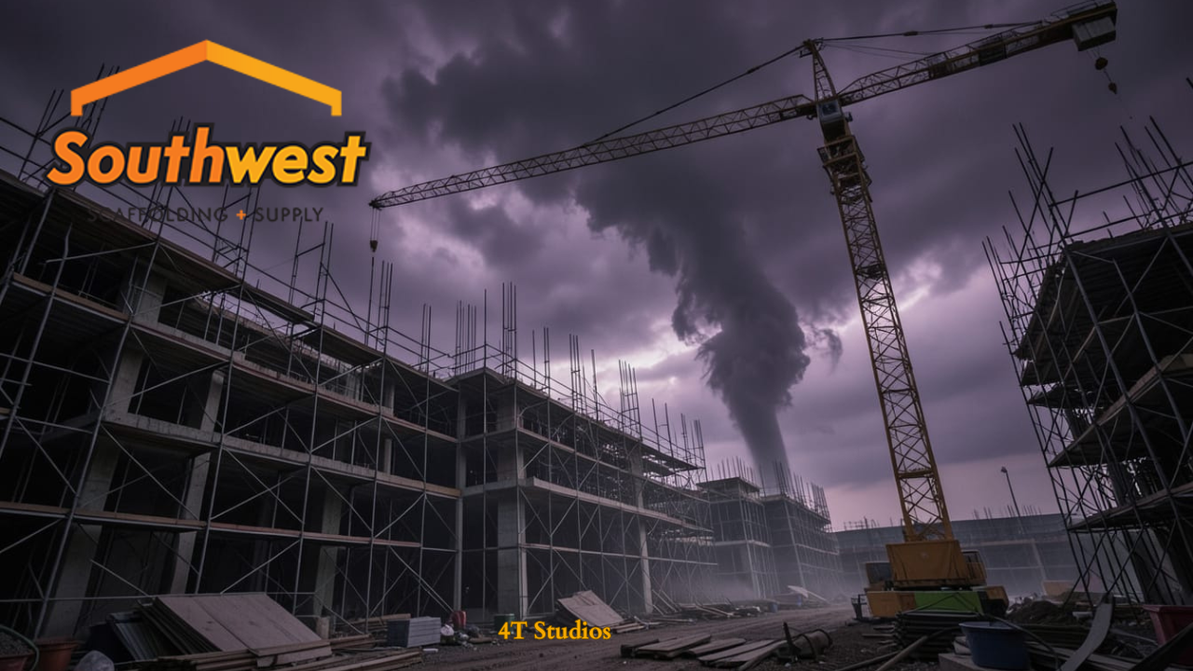
Scaffold Fails & Fixes :Wind Load Mistakes
In Texas, wind isn’t an “if.”
It’s a when.
A calm morning can turn into 30–50 mph gusts by afternoon.
Storm systems roll in fast.
Frontal changes happen overnight.
And elevated scaffold systems are directly exposed.
Welcome to Episode 5 of Scaffold Fails & Fixes — where we break down one of the most underestimated jobsite risks: wind load mistakes.
Why Wind Load Matters on Scaffolding
Scaffolding is a temporary structure.
Temporary does not mean lightweight.
It means engineered for specific conditions.
When wind hits a scaffold system, it creates:
-
Lateral pressure
-
Uplift forces
-
Increased sway
-
Stress at tie-in points
-
Stress at base plates and mud sills
The taller the scaffold, the greater the wind impact.
Add debris netting, shrink wrap, or tarps — and you’ve essentially created a sail.
Common Wind Load Mistakes Contractors Make
1️⃣ Skipping Proper Tie-Ins
Scaffold should be tied to the structure at required intervals.
When tie-ins are skipped or improperly spaced, wind load transfers directly to the frame system.
Result: sway, shifting, or collapse risk.
2️⃣ Ignoring Debris Netting & Wrap Impact
Netting and plastic sheeting significantly increase wind resistance.
Contractors often install containment without recalculating wind load or adding additional anchoring.
What was stable yesterday may not be stable once wrapped.
3️⃣ No Pre-Storm Plan
Storms are predictable in Texas.
Yet many jobsites lack:
-
Wind-speed monitoring
-
A dismantling protocol
-
Material removal procedures
-
Inspection routines after high-wind events
Hope is not a storm strategy.
4️⃣ Overlooking Height-to-Base Ratios
As scaffold height increases, stability requirements increase.
Without proper base width, tie-ins, and bracing, taller systems become more vulnerable in gust conditions.
What Happens When Wind Wins
Wind-related scaffold failures can result in:
-
Full structural collapse
-
Worker injury
-
Falling debris hazards
-
Property damage
-
OSHA citations
-
Insurance claims
-
Project shutdowns
Beyond safety — these incidents damage contractor reputation fast.
In storm-prone regions, clients expect elevated safety standards.
The Fix: Engineered Wind Planning
Professional scaffold planning in Texas should include:
✔ Engineered tie-in spacing
✔ Wind load calculations
✔ Additional anchoring when using netting or wrap
✔ Daily inspection protocols
✔ Storm-prep dismantling procedures
✔ Clear crew communication before severe weather
Scaffold safety doesn’t stop at installation.
It includes environmental conditions.
The Texas Reality
High winds, thunderstorms, and seasonal storm fronts are part of doing business here.
Wind load isn’t rare.
It’s regional.
Planning for it isn’t overkill.
It’s professional.
Tomorrow on Scaffold Fails & Fixes:
Improper Access Points — When Climbing Becomes the Hazard.
Related reading: How Wind Affects Scaffolding Stability · What Causes Scaffolding Collapses?
Recent Posts
-
Why Do Masonry Walls Need to Breathe?
Let's get one thing out of the way first. Your brick wall isn't actually breathing. It doesn't inhal …Oct 16th 2026 -

Why Are Buildings Built on Piles?
Most buildings look like they're sitting on the ground. Sometimes that's a little misleading. The bu …Oct 13th 2026 -
Why Are There Gaps in Concrete?
Concrete cracks. There. We said it. Not exactly the opening line the concrete industry would put on …Oct 12th 2026