



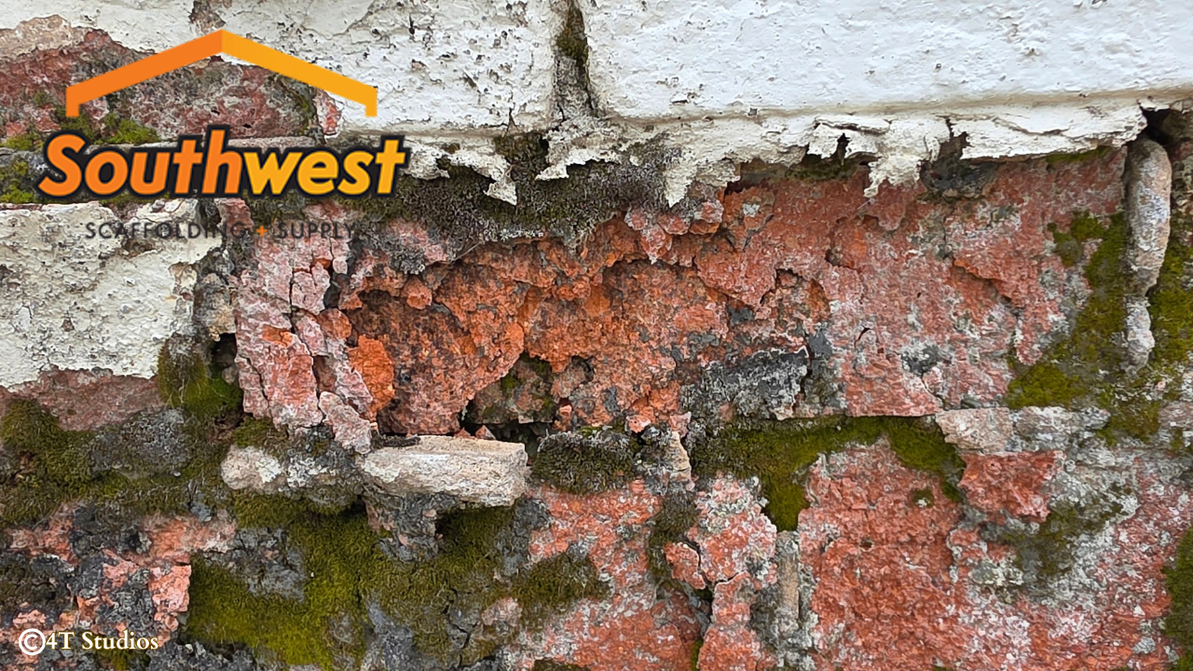
Why Do Masonry Walls Need to Breathe?
Let's get one thing out of the way first.
Your brick wall isn't actually breathing.
It doesn't inhale.
It doesn't exhale.
And if yours starts doing either one, you have a considerably different problem than the one we're discussing today.
When people in construction say masonry needs to "breathe," we're talking about moisture movement.
Brick, block, stone, and mortar are not completely waterproof materials. Moisture can enter masonry, move through portions of the wall system, and eventually needs a way to get back out.
That's true of historic masonry.
It's also true of modern masonry.
How we manage that moisture has changed considerably over the years, but one basic rule hasn't:
Water needs somewhere to go.
Welcome back to Why Is It Built Like That?
This time we're talking masonry.
Masonry Is Not a Waterproof Wall
This surprises a lot of people.
Brick looks solid.
Stone looks even more solid.
Mortar gets hard.
So it's easy to assume a masonry wall should stop water completely.
It doesn't.
Masonry materials are porous to varying degrees.
They can absorb moisture.
Wind-driven rain can wet the exterior surface. Water can enter through cracks, failed joints, openings around windows and doors, poorly detailed transitions, damaged flashing, and other vulnerable areas.
Moisture can also move as vapor.
Then there is moisture from the ground.
Masonry in contact with damp soil can pull moisture upward through tiny pores in the materials through capillary action.
That's part of what we deal with when we see rising damp in older buildings.
The important thing to understand is that moisture getting into masonry isn't automatically a failure.
The bigger problem is often what happens when the moisture can't get back out.
Historic Walls Handled Water Differently
Older masonry buildings were often built as mass masonry walls.
The masonry itself was the wall.
You may have multiple wythes of brick or thick stone construction rather than the type of cavity wall assembly we commonly see today.
Those buildings often used lime-based mortars that were relatively vapor permeable and more forgiving than many harder modern cement-rich mortars.
Moisture could enter the wall.
Then, under the right conditions, it could dry back out.
That doesn't mean historic buildings never had moisture problems.
They absolutely did.
It means the materials and wall assembly handled moisture differently.
Problems often begin when we take a wall designed to work one way and "improve" it with materials that force it to work another way.
Sometimes Waterproofing Makes Things Worse
This is the part that catches people.
There's a wet masonry wall.
The obvious answer seems to be:
Seal it.
Stop the water.
Problem solved.
Except sometimes it isn't.
If moisture is already entering the masonry from another source, a low-permeability coating or incompatible sealer can reduce the wall's ability to dry through that surface.
Now the water is still getting in.
It just has fewer ways to get out.
Moisture can remain trapped inside the masonry longer.
That can contribute to staining, deterioration, biological growth, damage to finishes, and other problems.
In freezing climates, trapped moisture can become especially destructive when it freezes and expands.
And if soluble salts are moving through the wall with the moisture, we can get efflorescence or, worse, crystallization occurring within the masonry itself.
The product meant to "protect" the wall can sometimes become part of the problem.
That's why masonry repair isn't simply a matter of finding the strongest or most waterproof product on the shelf.
You have to understand the wall first.
Mortar Matters More Than People Think
Here's where masons start getting a little twitchy.
Someone has an old building with soft historic brick and lime-based mortar.
The joints need repair.
So somebody grabs a hard, high-cement mortar because stronger must be better.
Right?
Not necessarily.
Mortar isn't supposed to win a fight with the brick.
In many traditional masonry walls, the mortar joint serves as the more sacrificial part of the system.
It accommodates some movement and weathering, and moisture can often move through the mortar more readily than through the masonry units.
That's useful because mortar joints can be repointed.
Replacing the faces of hundreds or thousands of damaged historic bricks is a different conversation entirely.
If the replacement mortar is much harder or less permeable than the surrounding historic masonry, moisture behavior can change.
Instead of drying primarily through the joint, moisture may be forced through the brick.
Over time, the brick can pay the price.
Sometimes the "better" mortar isn't better at all.
It's simply stronger than the material it was supposed to work with.
Modern Masonry Still Has to Deal With Water
This is why I don't like saying only old masonry walls breathe.
Modern masonry hasn't somehow convinced water to stop being water.
We've just developed different ways to manage it.
Many modern brick veneer walls are designed with a cavity or drainage space behind the brick.
Water that gets through the outer masonry can move downward.
Flashing directs it outward.
Weeps provide drainage.
Other components of the wall assembly manage air and moisture in ways that older mass masonry walls did not.
That's why those little openings you see near the bottom of a brick wall are important.
They're not unfinished mortar joints.
They're part of the drainage system.
Plugging them because "there are holes in the wall" is not an improvement.
Please leave them alone.
Paint Can Change the Equation Too
Painting masonry isn't automatically wrong.
But painting masonry without understanding moisture can create problems.
What kind of masonry is it?
What mortar was used?
Where is moisture coming from?
What condition is the wall in?
What type of coating is being applied?
How vapor permeable is it?
Has the building already been painted?
What's happening on the other side of the wall?
Those questions matter.
A coating that works perfectly well on one masonry assembly may be a terrible choice for another.
This is one reason restoration work requires investigation before somebody starts applying products.
The wall doesn't care what the label says.
It cares what the product actually does.
Find the Water Before You Blame the Wall
When we see moisture damage, the masonry often gets blamed first because that's where the symptoms show up.
But the source may be somewhere else.
Failed flashing.
Roof leaks.
Bad gutters.
Missing downspouts.
Poor grading.
Leaking plumbing.
Failed sealant around openings.
Water collecting at the base of the wall.
A parapet problem several feet above the visible damage.
I've seen plenty of masonry problems where the brick wasn't the original problem at all.
It was simply where the water finally announced itself.
That's why throwing a waterproof coating over the visible symptom can be such an expensive mistake.
You haven't necessarily stopped the water.
You may have just hidden the evidence.
Let the Wall Tell You How It Was Built
Masonry lasts an incredibly long time when the materials work together.
There are brick and stone structures that have survived for centuries.
They didn't survive because nobody ever let them get wet.
They survived because good masonry systems manage moisture, movement, loads, and weather in ways appropriate to their construction.
Historic mass masonry does that differently from modern cavity-wall construction.
Stone behaves differently from brick.
Different bricks absorb water differently.
Different mortars behave differently.
There isn't one magic product that belongs on every masonry wall.
There isn't one mortar mix that belongs in every joint.
And there definitely isn't one bucket of sealer that solves every moisture problem.
At Southwest Scaffolding, masonry is a familiar sight. Scaffold goes up around brick, block, stone, restoration projects, new construction, industrial work, and repairs every day.
But getting workers safely to the wall is only one part of doing the job correctly.
You still have to understand what you're working on when you get there.
So why do masonry walls breathe?
Because masonry and masonry wall systems have to manage moisture.
The methods have changed.
The materials have changed.
The wall assemblies have changed.
But water hasn't.
It gets in.
And good masonry gives it a way to get back out.
Sometimes the smartest thing you can do for a masonry wall isn't finding a way to seal it tighter.
It's figuring out where the water is coming from and where it was supposed to go in the first place.
Recent Posts
-
Why Do Masonry Walls Need to Breathe?
Let's get one thing out of the way first. Your brick wall isn't actually breathing. It doesn't inhal …Oct 16th 2026 -

Why Are Buildings Built on Piles?
Most buildings look like they're sitting on the ground. Sometimes that's a little misleading. The bu …Oct 13th 2026 -
Why Are There Gaps in Concrete?
Concrete cracks. There. We said it. Not exactly the opening line the concrete industry would put on …Oct 12th 2026