



Why Do Roads Buckle in Extreme Heat?
It's 100 degrees outside.
Your steering wheel is approximately the temperature of the sun.
The air conditioner is doing its best.
Then you see it.
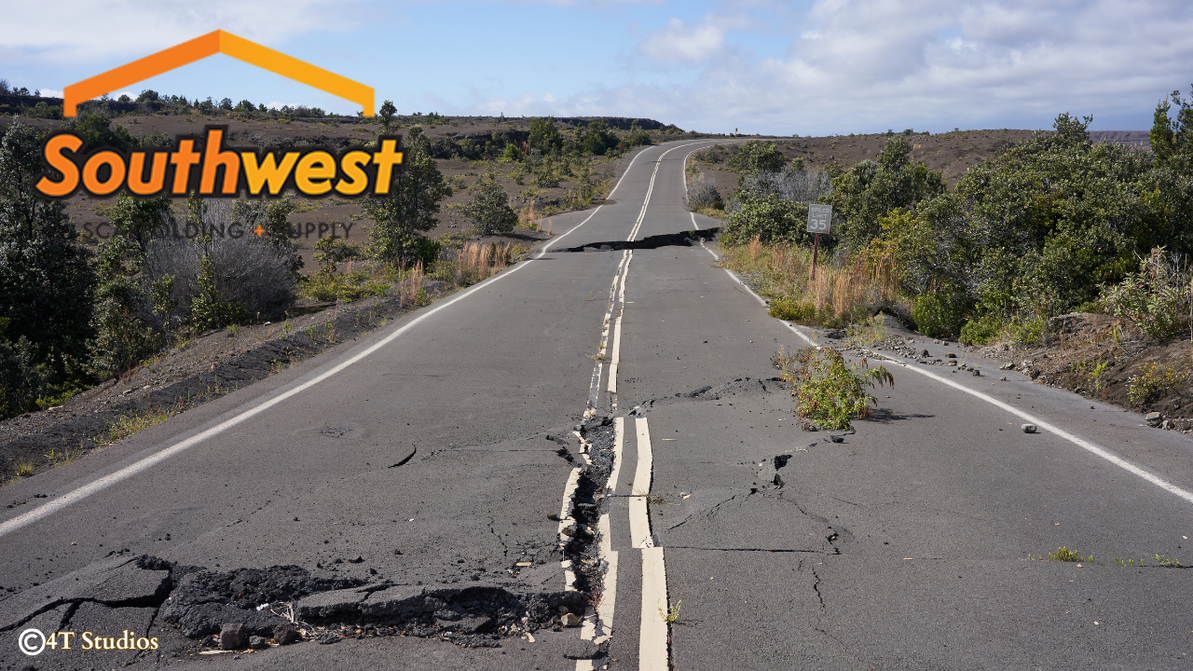
A section of pavement ahead looks like somebody pushed the road together from both ends and made it pop upward.
Sometimes it happens fast enough to become a traffic hazard.
The road buckled.
But why?
Concrete looks pretty solid.
How does a material strong enough to carry tractor-trailers suddenly decide to stand up in the middle of the highway?
The short answer is heat.
The better answer is heat plus nowhere to go.
Welcome back to Why Is It Built Like That?
Today we're looking at what happens when pavement gets hot, expands, and runs out of room.
Roads Move More Than They Look Like They Do
We tend to think of roads as permanent, motionless surfaces.
They aren't.
Like most construction materials, pavement responds to changes in temperature.
Concrete expands when it gets warmer and contracts when it cools.
The movement of one section may be small.
But highways aren't one little piece of concrete sitting in your backyard.
They stretch for miles.
Engineers know movement is going to happen, so concrete pavement is built with joints designed to accommodate movement, control cracking, or separate different sections of pavement.
Sound familiar?
We talked about this in Why Are There Gaps in Concrete?
Those joints aren't decorative.
They're giving the concrete somewhere to move.
Problems start when it can't.
Imagine Pushing From Both Ends
Put a long row of blocks tightly together on a table.
Now push inward from both ends.
Something eventually has to happen.
If the blocks can't move outward, one may lift.
A pavement blowup works on a similar basic principle.
As concrete heats up, it expands.
Normally, the pavement system is designed to accommodate that movement.
But joints can become restricted.
Debris can fill spaces.
Materials can deteriorate.
Repairs can change how sections interact.
Adjacent slabs can press against one another.
As compressive forces build, eventually part of the pavement can move upward or break.
And suddenly the highway has a speed bump nobody ordered.
The Air Temperature Isn't the Pavement Temperature
This part is easy to overlook.
When the weather report says it's 100 degrees outside, that doesn't mean the pavement is sitting at exactly 100 degrees.
Road surfaces absorb heat from the sun.
On a bright summer day, pavement temperatures can climb well above the surrounding air temperature.
Now think about how many heating and cooling cycles a highway experiences during its life.
Hot days.
Cool nights.
Summer.
Winter.
Rain.
Drought.
Sun.
Shade.
Over and over again.
The pavement is constantly responding to the environment.
Usually we never notice.
Until it can't move the way it was intended to.
Joints Have a Job
Concrete pavement joints exist for a reason.
Some help control where cracking occurs.
Others allow movement or separate different parts of the pavement system.
But a joint only works properly if it can still perform the job it was designed to do.
Over time, joints can deteriorate.
Sealants age.
Edges break down.
Dirt, sand, stones, and other debris can work into openings.
Water gets involved.
Maintenance and repairs alter conditions.
If movement becomes restricted, the expanding concrete begins pushing against resistance.
And concrete is very good at pushing.
Eventually something weaker may give.
That might mean cracking.
Spalling.
Movement at the joint.
Or in dramatic cases, a buckle or blowup.
Why Doesn't Every Road Buckle During a Heat Wave?
Because heat alone isn't necessarily enough.
If hot weather automatically caused pavement to buckle, every highway in Texas would turn into a motocross track by July.
Road design accounts for temperature changes.
Materials, joints, reinforcement, base conditions, drainage, pavement age, maintenance history, and local climate all affect performance.
Some pavement systems are more vulnerable than others.
Older concrete may have decades of repairs and deterioration behind it.
Joints may no longer behave as originally intended.
Water may have affected the supporting materials underneath.
A previous repair may create a different condition at one location.
Then an extreme temperature increase comes along and adds one more stress.
The heat may be the final push.
But it isn't always the whole story.
What's Under the Road Matters Too
Construction people know the surface is only part of the road.
Underneath the pavement are base materials and soil that help support everything above.
Those materials matter.
Water can weaken support.
Soil can settle.
Erosion can create voids.
Freeze-thaw cycles in colder climates can cause additional movement and deterioration.
Poor drainage can create long-term problems that eventually show up at the surface.
So when pavement moves, cracks, settles, or buckles, looking only at the concrete may not tell you the entire story.
Sometimes the problem you see on top started underneath.
That's a recurring theme in construction.
Buildings.
Walls.
Foundations.
Roads.
The visible damage isn't always where the problem began.
Asphalt Moves Too
Concrete isn't the only pavement affected by heat.
Asphalt behaves differently.
On extremely hot days, asphalt can soften.
Heavy traffic can then contribute to rutting, shoving, or other deformation.
You've probably seen wheel paths worn into asphalt where heavy vehicles repeatedly travel.
That's a different mechanism from the dramatic upward blowups we can see in concrete pavement, but temperature is still part of the story.
Road engineers aren't designing for one condition.
They're designing materials that have to survive blazing summer heat, traffic loads, rain, cold weather, and years of repeated punishment.
Roads have a rough life.
Literally.
Why Not Just Leave Bigger Gaps?
Because every solution creates another problem.
Make joints too large and you've created rougher transitions, maintenance issues, water-entry concerns, and other complications.
Make things too tight and movement can become restricted.
Construction is rarely about allowing unlimited movement.
It's about allowing the right amount of movement in the right place.
That's true in concrete.
Bridges.
Buildings.
Masonry.
Steel structures.
And highways.
Good engineering manages movement rather than pretending it doesn't exist.
What Happens When a Road Buckles?
A pavement blowup can create an immediate hazard.
Imagine traveling at highway speed and suddenly encountering a raised or broken section of concrete.
Transportation crews may need to close lanes, remove the damaged pavement, repair the affected area, and restore a safe driving surface.
And because extreme heat doesn't particularly care about the road department's schedule, these failures can happen at inconvenient times.
Hot afternoon.
Heavy traffic.
Everybody trying to get home.
Perfect.
Construction emergency activated.
Roads Are Engineered to Move
That's probably the part most drivers never think about.
A highway may look like a solid ribbon stretching across the landscape.
But it isn't just sitting there doing nothing.
The materials are heating.
Cooling.
Expanding.
Contracting.
Carrying traffic.
Shedding water.
Transferring loads into the layers below.
Day after day.
Year after year.
At Southwest Scaffolding, our work may spend more time going upward than traveling down highways, but the same principles show up throughout construction.
Materials move.
Structures move.
Temperature matters.
And when movement is restrained, forces start looking for somewhere else to go.
That's why bridges have expansion systems.
It's why concrete has joints.
It's why masonry systems have movement details.
And it's why a perfectly flat highway can occasionally decide to become a ramp.
So why do roads buckle in extreme heat?
Because the pavement expands.
And when that movement becomes restricted, pressure builds until something gives.
Once again, construction comes back to a surprisingly simple lesson:
If something is going to move anyway, you'd better give it somewhere to go.
Recent Posts
-
Why Do Roads Buckle in Extreme Heat?
It's 100 degrees outside. Your steering wheel is approximately the temperature of the sun. The air c …Oct 29th 2026 -

Why Do Cranes Need Counterweights?
Cranes are impressive machines. They can pick up steel, concrete, equipment, materials, and loads we …Oct 26th 2026 -

Why Are Cooling Towers Shaped Like That?
Some structures are instantly recognizable. You can see a massive cooling tower from miles away. Wid …Oct 21st 2026