



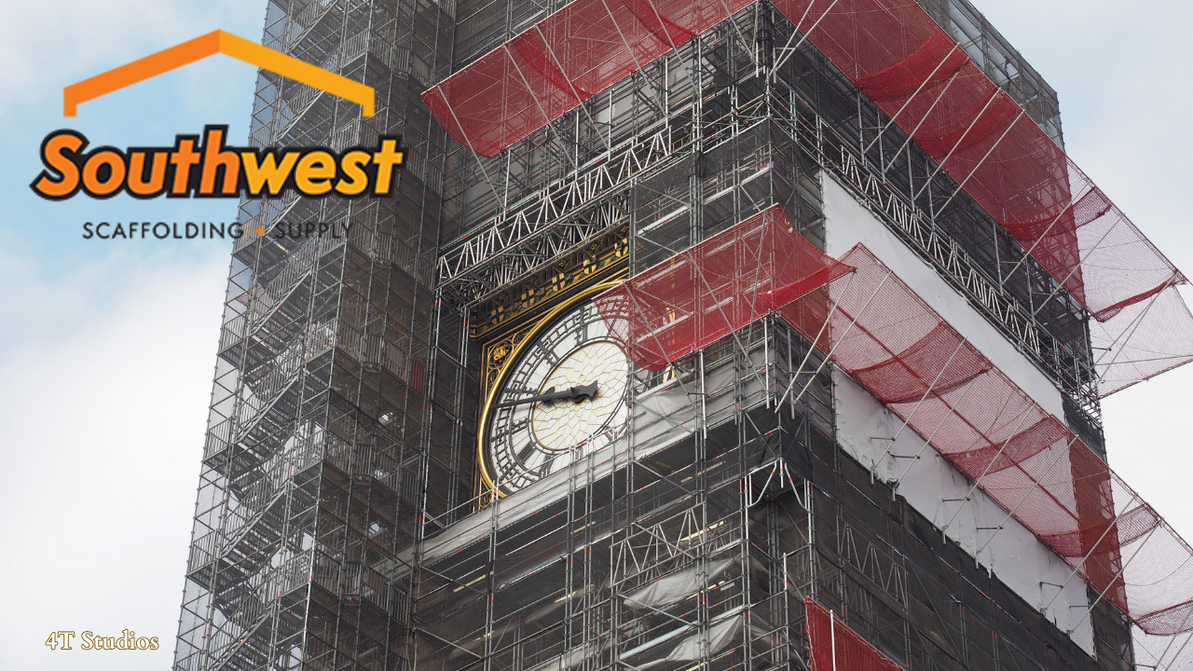
Scaffolding Big Ben
Scaffolding Big Ben
Few landmarks say London quite like Big Ben.
Technically, Big Ben is the nickname of the Great Bell inside Elizabeth Tower at the Palace of Westminster. But for generations, people around the world have used the name to describe the entire clock tower.
And when you're responsible for maintaining a structure that recognizable, putting scaffolding around it is no small undertaking.
The tower is more than 160 years old. It contains historic masonry, intricate architectural details, massive clock faces, metalwork, glass, and one of the world's most famous clocks.
All of it requires maintenance.
Between 2017 and 2022, Elizabeth Tower underwent the most extensive conservation project in its history.
For several years, much of the tower disappeared behind scaffolding.
For tourists, it may have been disappointing.
For construction people, it was fascinating.
Welcome back to Scaffolding Around the World.
This time, we're heading to London.
First, You Have to Reach It
Historic restoration usually begins with one very practical problem.
How do you reach the work?
Elizabeth Tower rises more than 300 feet above the Palace of Westminster.
The upper portions contain the four famous clock faces, intricate stonework, decorative details, roofing, and the belfry containing Big Ben and the other bells.
Restoring those areas required workers to safely reach nearly every part of the exterior.
That meant creating an enormous temporary access system around one of Britain's most important historic structures.
Scaffolding wasn't simply something happening alongside the restoration.
It was what allowed much of the restoration to happen at all.
A Scaffold Around a National Landmark
Scaffolding a modern building is one thing.
Scaffolding a historic landmark is another.
Every connection has to be considered.
Every load matters, which is why scaffold designers work backward from the rated capacity of the frames and platforms they're working with.
Historic surfaces need protection.
Workers need platforms positioned where repairs can actually be performed.
Materials and tools have to move through the structure.
At the same time, the scaffold has to function within an active government complex in the middle of London.
There isn't exactly unlimited room for staging.
This is where scaffolding becomes more than simply temporary equipment.
It becomes part of the engineering and logistics of the restoration itself.
Sometimes You Don't Know What You'll Find
One of the realities of historic restoration is that drawings and inspections can only tell you so much.
Sometimes you don't fully understand the condition of a building until workers can physically reach it.
Once close access became available, restoration specialists could examine areas that were difficult to inspect from a distance.
That's when the true condition of historic materials becomes clearer.
Cracks.
Weathering.
Corrosion.
Failed coatings.
Damaged stone.
Previous repairs.
Water-related deterioration.
Old buildings have a way of keeping secrets.
Scaffolding gives restoration teams the opportunity to finally get close enough to find them.
The Clock Faces Needed Attention Too
The four clock dials are among the most recognizable features of the tower.
Each one is enormous.
From the street, the details look almost delicate.
Up close, the scale becomes much more obvious.
During the restoration, the clock faces themselves received significant conservation work.
Components were repaired and restored, glass was replaced where needed, and decorative details were carefully addressed.
The famous clock mechanism also underwent major work.
This wasn't simply repairing the outside of a tower.
It was conserving a working piece of engineering history.
Historic Colors Came Back
Restoration sometimes reveals something unexpected.
As specialists studied historic paint layers and original details, they discovered that parts of the tower's decorative scheme had changed over time.
The restoration returned blue and gold details to the clock dials, replacing darker finishes that many people had grown accustomed to seeing.
It's one of the fascinating parts of preservation.
Sometimes restoring a building doesn't make it look the way people remember it.
It makes it look more like the people who built it intended.
London Weather Doesn't Stop
Historic preservation has another enemy.
Weather.
Rain.
Moisture.
Wind.
Temperature changes.
All of those forces continue acting on the structure whether restoration work is happening or not.
Temporary coverings and access systems can help protect workers and portions of the building during repairs, but they also introduce their own engineering considerations.
As we've discussed throughout this series, covering scaffolding changes how wind interacts with it.
The more exposed the structure, the more important those forces become.
And at more than 300 feet above London, exposure certainly matters.
Working Above an Active City
Then there is everything happening below.
London doesn't stop because Big Ben needs repairs.
Pedestrians still move through the area.
Traffic continues.
Parliament continues operating.
Tourists still arrive.
That makes public protection an important part of planning.
Tools.
Materials.
Debris.
Worker access.
Deliveries.
Everything has to be managed within a busy urban environment.
Sometimes the hardest part of a construction project isn't the work itself.
It's everything happening around the work.
Five Years Behind Scaffolding
For several years, visitors to London saw something very different from the familiar tower.
Scaffolding.
Lots of it.
Much of Elizabeth Tower disappeared behind temporary access and protective coverings while restoration specialists worked. The Statue of Liberty went through much the same during her centennial restoration.
Some people complained that the landmark was hidden.
But that's the interesting thing about preservation.
Sometimes you have to temporarily hide history in order to protect it.
When the scaffolding finally came down, the public could once again see the tower's restored stonework, clock faces, decorative details, and historic colors.
The scaffold disappeared.
The work remained.
Temporary Access, Lasting Results
That's one of our favorite things about scaffolding.
It's almost never supposed to be part of the finished project.
A scaffold may surround a building for months or even years.
Thousands of hours of work may happen from those platforms.
Then everything comes down.
If the job was done well, eventually people barely remember the scaffold was there.
They simply see the building.
At Southwest Scaffolding, we understand that temporary access often makes permanent work possible.
Whether you're restoring a commercial building or one of the world's most recognizable landmarks, someone has to safely reach the work before the work can begin. That's true whether the job calls for a complete scaffolding set or a small platform built for one repair.
Because even Big Ben needs a little help keeping time.
Recent Posts
-

Why Are Cooling Towers Shaped Like That?
Some structures are instantly recognizable. You can see a massive cooling tower from miles away. Wid …Oct 21st 2026 -
Why Are Water Towers So High?
Every small town seems to have one. A giant tank sitting way up in the air with the town's name pain …Oct 19th 2026 -
Why Do Masonry Walls Need to Breathe?
Let's get one thing out of the way first. Your brick wall isn't actually breathing. It doesn't inhal …Oct 16th 2026