


"Let's Just Add Another Section"
There's a familiar conversation that happens on construction sites.
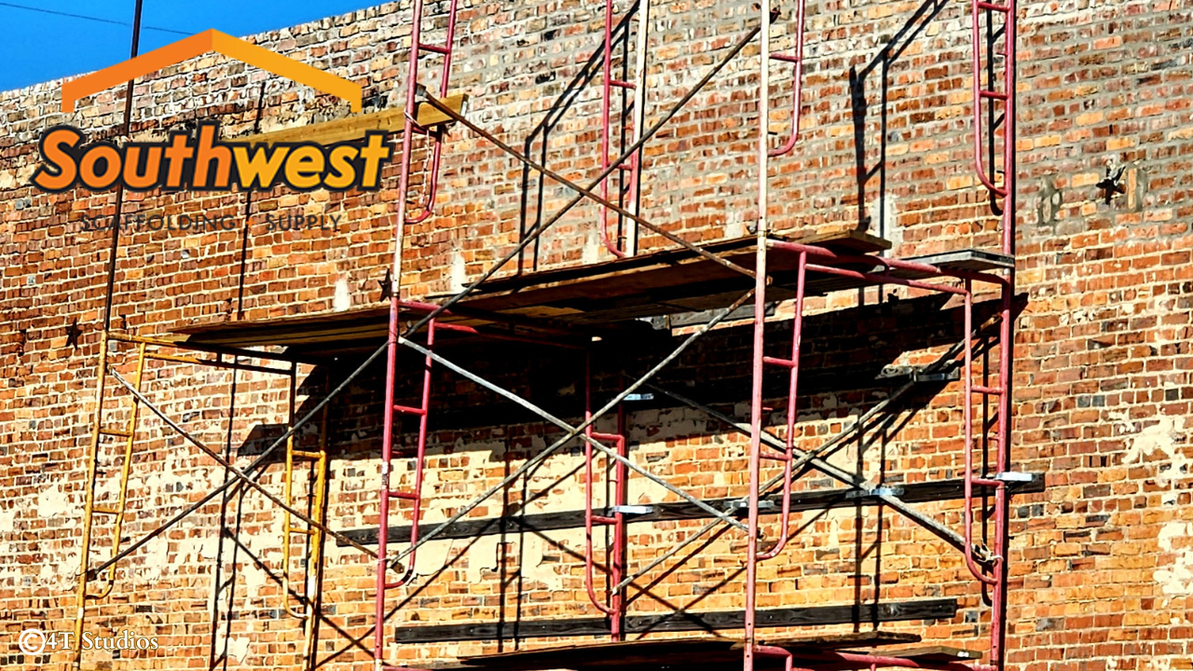
The scaffold is up.
The crew is working.
Everything seems to be going along just fine.
Then somebody looks at the next section of the building and realizes the scaffold is about six feet too short.
No problem.
"We can just add another section."
Just.
One of the most expensive little words in construction.
Because adding another section of scaffold isn't quite like adding another shelf to a bookcase.
You're making a structure taller.
You're changing how it carries loads.
You're changing how it responds to wind.
You're potentially changing its support and anchorage requirements.
And you're asking people to work even farther above the ground.
But sure. Just add another section.
Welcome back to Construction Myths That Need to Die.
Today we're talking about what happens when a seemingly simple adjustment turns into a much bigger structural decision.
Taller Changes the Equation
Let's start with the obvious.
A scaffold that is 20 feet tall is not the same structure as one that is 40 feet tall.
Even if you're using the same components.
As height increases, the scaffold's behavior and stability requirements can change.
Its overall configuration matters.
The height-to-base relationship matters.
Bracing matters.
Ties and anchorage matter.
Foundation support matters.
Wind exposure matters.
The loads being carried matter.
And the requirements for the particular scaffold system matter.
You can't assume that because a configuration was appropriate at one height, it remains appropriate simply because you stacked another section on top.
The additional height changes the structure as a whole.
This is why scaffold design and erection requirements exist.
The goal isn't to build until somebody decides it's tall enough.
The goal is to build a configuration that's appropriate for the work and the conditions.
Every Section Adds More Than Height
Here's something that gets overlooked.
Another section doesn't just give you another platform.
It adds components.
It adds weight.
It changes the forces being transferred through the structure.
It may change the loading on lower components.
It can increase wind exposure.
It can affect how the scaffold needs to be tied or otherwise stabilized.
And depending on the system, it may change the requirements for access, bracing, and overall configuration.
Think about a building.
You wouldn't look at a two-story structure and casually announce that you're going to add another floor because the crew needs a little more room.
You'd consider the foundation, structural capacity, connections, loads, and engineering.
Scaffolding deserves the same respect.
Temporary doesn't mean that structural principles take a vacation.
What About the Base?
Remember our earlier article, "The Ground Looks Level Enough"?
This is where that conversation comes back.
Every additional section adds to the demands placed on the supporting structure.
The scaffold's weight increases.
The work being performed may add additional loading.
All of that eventually transfers down to the base.
If the foundation was only evaluated for a particular configuration, increasing the height without reassessing the setup can create problems.
Are the base plates and supporting surfaces adequate?
Are the screw jacks being used within their allowable adjustment limits?
Is the ground capable of supporting the revised loading?
Are there any signs of settlement?
Are the supporting conditions still appropriate?
Adding height at the top doesn't magically improve what's happening at the bottom.
And if the base wasn't properly planned in the first place, adding more scaffold isn't going to make the original problem disappear.
The Ties May Need to Change
This is one of the biggest considerations when changing scaffold height.
Scaffold ties and other restraints help control movement and provide stability.
Their arrangement depends on the scaffold type, height, configuration, loading, and applicable requirements.
When the scaffold gets taller, the existing tie arrangement may no longer be adequate for the new configuration.
Additional ties may be required.
Their locations may need to change.
The supporting building structure must also be suitable for the forces being transferred into it.
And here's another important point:
Not every part of a building is an acceptable place to attach a scaffold tie.
Decorative features, weak masonry, window frames, and other convenient-looking attachment points aren't automatically suitable anchors.
The tie arrangement needs to be appropriate for the actual scaffold and the structure supporting it.
This isn't a place for guesswork.
Wind Gets a Bigger Vote
We already discussed why "It's Not That Windy" is a dangerous assumption.
Now imagine that same scaffold, only taller.
More height can mean greater exposure to wind.
The surrounding building may block wind at lower levels while the upper sections experience different conditions.
Add sheeting, tarps, netting, or containment systems, and the forces can change considerably.
A scaffold that was originally configured without sheeting may need a different evaluation if someone decides to enclose it.
And no, adding another section doesn't somehow make the scaffold heavier in a way that automatically solves wind problems.
The entire configuration needs to be considered.
Wind doesn't care whether the additional height was in the original plan.
It acts on whatever structure is standing there.
The Equipment Has Limits Too
Here's another reason you can't simply keep stacking.
Scaffold systems have manufacturer requirements and limitations.
Components are designed for particular uses and configurations.
Mixing incompatible parts, using damaged components, or exceeding allowable adjustment limits can compromise the system.
Not all frames, braces, connectors, platforms, and accessories are interchangeable.
Even components that appear similar may have different dimensions, capacities, or connection requirements.
A section that physically fits doesn't necessarily mean it belongs in that configuration.
That's an important distinction.
Fits together and works together are not the same thing.
The scaffold system needs to be compatible, properly erected, and suitable for the intended loads and conditions.
Who Approved the Change?
This is where things can get uncomfortable.
Maybe the original scaffold was planned by one company.
Maybe another contractor is using it.
Maybe the crew needs more height.
Maybe the project manager is trying to keep the schedule moving.
Somebody decides to add another section.
Who evaluated the change?
Who determined whether the revised configuration was appropriate?
Who is responsible for making sure the scaffold is properly modified and inspected before workers use it?
Those questions matter.
Under OSHA requirements, scaffolds must be erected, moved, altered, or dismantled under the supervision and direction of a competent person qualified in the applicable work, and by trained employees.
A scaffold shouldn't be modified by whoever happens to have a wrench and five spare minutes.
Unauthorized alterations can compromise a properly erected scaffold.
And the person who decides to make the change may not understand everything that was considered when the original configuration was planned.
That's why communication between the scaffold provider, contractor, competent person, and people using the equipment matters.
The Top Is Not the Only Place to Look
When somebody says they're adding another section, most people naturally look upward.
Will it reach?
Will the platform be high enough?
Can the crew get to the work?
But the evaluation needs to go beyond the new top section.
What happens to the lower structure?
Are the connections adequate?
Is the bracing correct?
Are the ties properly located?
Is the base still suitable?
Does the new configuration change the intended loading?
Is access still safe?
Are guardrails and platforms appropriate at every working level?
Have environmental conditions changed?
Are there overhead obstructions or electrical hazards?
The whole scaffold needs to be considered.
Not just the part somebody wants to add.
Sometimes the Right Answer Is a Different Scaffold
This is something contractors need to remember.
If the existing scaffold can't safely accommodate the additional height, the answer isn't always to modify it.
It may require a different configuration.
Additional support.
A revised tie arrangement.
A different scaffold system.
A new design.
Or a completely different access solution.
There are situations where adding height is perfectly reasonable.
That's not the issue.
The issue is assuming that because a scaffold can physically be extended, it can automatically be extended safely.
Those are two very different things.
Good planning identifies the required working height before erection whenever possible.
It saves time, reduces unnecessary modifications, and helps ensure the equipment is suitable from the beginning.
The Schedule Doesn't Get to Design the Scaffold
We understand the pressure.
The crew is waiting.
The work is ready.
The scaffold is almost tall enough.
Nobody wants to stop everything and reconsider the setup.
But changing a scaffold's configuration is not simply a production decision.
It's a structural and safety decision.
The cost of doing it correctly should be part of the project.
The time required to plan, modify, and inspect the revised setup isn't wasted time.
It's part of providing safe access.
At Southwest Scaffolding, scaffold planning starts with understanding what the customer needs to reach, how the work will be performed, what loads will be involved, and what conditions the scaffold will face.
That includes the required working height.
Because it's a whole lot easier to plan for the right configuration before the first frame goes up than to discover halfway through the project that somebody needs another six feet.
So the next time someone says:
"We can just add another section."
Maybe you can.
But before anybody starts stacking, ask the important questions.
Has the revised configuration been evaluated?
Can the base support it?
Are the bracing and ties adequate?
Are the components compatible?
Have the loads and wind exposure been considered?
Has the modified scaffold been inspected?
Because another section may look like a small addition.
But it changes the structure from the ground up.
Scaffolding isn't a tower of building blocks.
And the fact that you can stack it higher doesn't mean you should.
Recent Posts
-
"Let's Just Add Another Section"
There's a familiar conversation that happens on construction sites. The scaffold is up. The crew is …Nov 13th 2026 -

"It's Not That Windy"
There's a scientific instrument found on nearly every construction site. It's highly sophisticated. …Nov 12th 2026 -

"That Scaffold Isn't Going Anywhere"
There's a particular kind of confidence that shows up on construction sites. Someone walks past a sc …Nov 11th 2026