



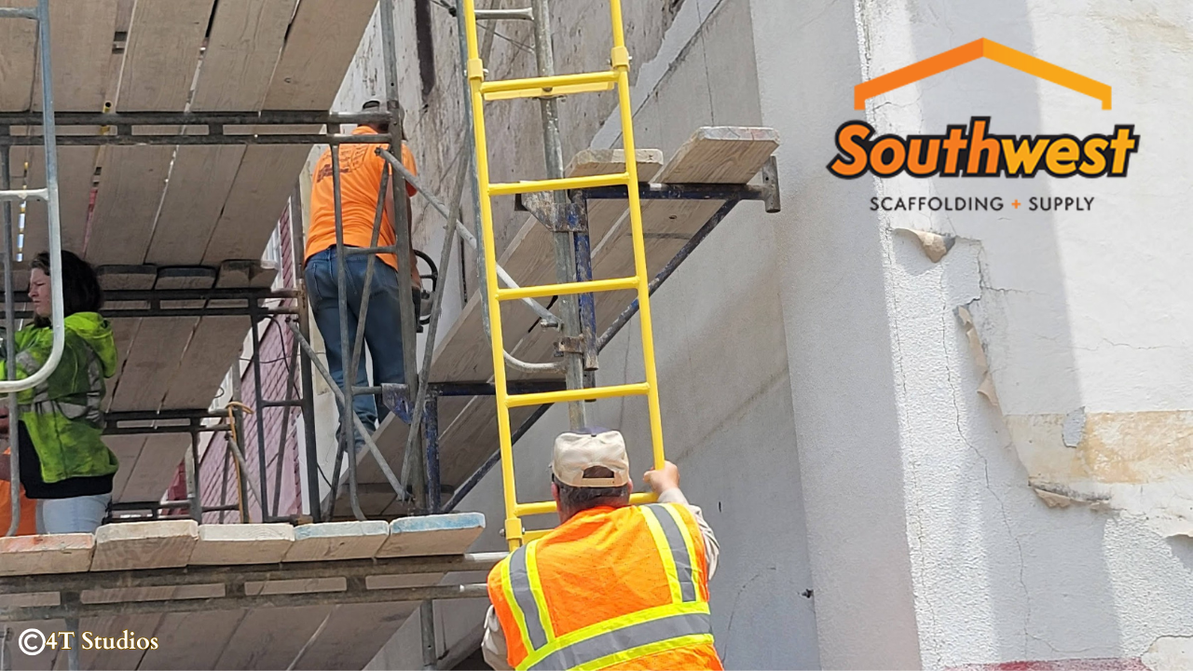
Scaffolding Ladders and Gates: Improving Accessibility
Getting workers safely to their work area has always been one of the biggest challenges in construction.
Early scaffolding systems focused mostly on height and support. Access was often an afterthought. Workers climbed the scaffold frames themselves, used makeshift ladders, or stepped over rails to move between levels.
As projects became larger and safety standards improved, the industry realized that safe access was just as important as the scaffold structure itself.
Today, scaffolding ladders and gates are considered essential components on many job sites.
Early Scaffold Access Was Basic and Risky
For centuries, workers climbed scaffolding however they could.
Wooden ladders were often tied directly to scaffold frames, while some crews simply climbed the structure itself. These methods worked, but they created serious risks, especially on taller projects.
Falls during access and movement became a major issue as construction projects expanded in size and complexity.
Builders needed safer and more reliable ways for workers to move through scaffold systems.
The Introduction of Integrated Access Systems
As scaffolding evolved, manufacturers began designing systems specifically for worker access.
Integrated ladders allowed crews to move vertically through scaffold levels without climbing the outside of the structure. Gates were introduced to protect access openings while still allowing workers to move efficiently.
This was a major improvement for both safety and workflow.
Modern scaffold gates help:
- Prevent accidental falls
- Maintain guardrail protection
- Improve controlled access between levels
- Support OSHA compliance
These systems are now standard on many commercial and industrial job sites.
Why Proper Access Matters
Safe access affects more than just safety reports.
When workers can move efficiently through a scaffold system, productivity improves. Crews spend less time navigating obstacles and more time focused on the work itself.
Poor access can slow down:
- Material movement
- Worker efficiency
- Task coordination
- Project timelines
That is why experienced contractors pay attention to how scaffolding is entered and exited, not just how it is built.
OSHA and Modern Safety Standards
Organizations like the Occupational Safety and Health Administration (OSHA) established clearer standards for scaffold access over time.
These regulations address:
- Proper ladder positioning
- Safe access points
- Guardrail protection
- Fall prevention requirements
Modern ladders and gates are designed to help crews meet these expectations while improving overall job site organization.
The Shift Toward Efficiency
Today’s scaffold access systems are built for both speed and consistency.
Manufacturers now design ladders and gates that integrate directly into scaffold systems, reducing setup time and improving reliability. Crews no longer need to improvise access solutions on site.
That consistency matters on busy projects where safety, timing, and coordination all affect profitability.
Southwest Scaffolding
At Southwest Scaffolding, contractors can find scaffold ladders, gates, and access components designed for real job site conditions. Reliable access systems help crews stay safer, move more efficiently, and keep projects moving forward.
Whether the project is commercial, masonry, industrial, or residential, having the right scaffold access setup makes a difference.
Key Takeaways
- Early scaffold access methods created major safety risks
- Integrated ladders and gates improved worker movement and protection
- Proper access systems improve both safety and efficiency
- Modern scaffold access solutions support OSHA compliance and job site productivity
Coming Next in the Series
Pulley Systems: How Material Lifting Changed the Modern Job Site
Recent Posts
-

Why Do Cranes Need Counterweights?
Cranes are impressive machines. They can pick up steel, concrete, equipment, materials, and loads we …Oct 26th 2026 -

Why Are Cooling Towers Shaped Like That?
Some structures are instantly recognizable. You can see a massive cooling tower from miles away. Wid …Oct 21st 2026 -

Why Are Water Towers So High?
Every small town seems to have one. A giant tank sitting way up in the air with the town's name pain …Oct 19th 2026