



History and Evolution of the Modern Level
Construction depends on accuracy.
Whether laying brick, framing walls, setting forms, or installing scaffolding, builders need reliable ways to measure alignment and maintain consistency throughout a project. Long before digital tools and lasers existed, craftsmen developed simple but effective methods for determining level and plumb.
Those early tools eventually evolved into the modern construction level.
Today, levels remain one of the most essential tools used across nearly every trade in the construction industry.
Early Builders Needed Precision
Ancient builders understood the importance of alignment long before modern measuring equipment existed.
Structures like pyramids, temples, aqueducts, and stone walls required careful planning and surprisingly accurate leveling methods. Early craftsmen often used water-based systems, weighted plumb lines, and handmade measuring devices to establish consistent elevation and vertical alignment.
Even basic errors could create major structural problems over time.
Precision has always mattered in construction.
The Development of Traditional Levels
As building methods advanced, levels became more refined and portable.
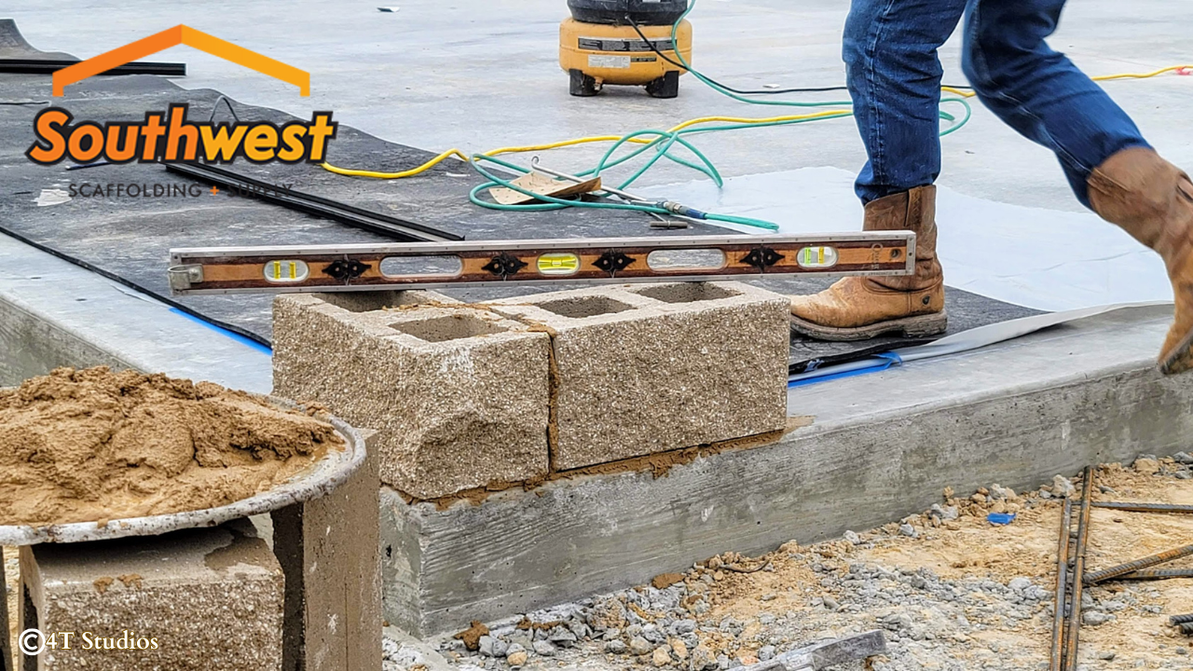
Wooden spirit levels eventually became common throughout masonry and carpentry work. These tools used liquid-filled vials with air bubbles to indicate level and plumb positions.
The design was simple, reliable, and highly effective.
Builders could now quickly verify:
- Horizontal alignment
- Vertical plumb
- Surface consistency
- Structural accuracy
This dramatically improved construction quality across multiple trades.
Why Levels Matter in Masonry
In masonry, accuracy affects both appearance and structural performance.
Even small alignment errors become more noticeable as walls grow taller or longer. Reliable levels help masons maintain:
- Straight courses
- Proper corner alignment
- Consistent joint spacing
- Structural stability
For professional masonry crews, levels are used constantly throughout the day to maintain both speed and precision.
The Rise of Modern Measuring Technology
Construction technology continued evolving throughout the twentieth century.
Manufacturers introduced:
- Aluminum levels
- Magnetic levels
- Digital measuring tools
- Laser leveling systems
Laser technology especially changed large-scale construction by allowing crews to establish level reference points across much greater distances with improved accuracy.
Despite these advancements, traditional hand levels remain widely used because of their reliability and simplicity.
Efficiency and Workflow on Modern Job Sites
Reliable measuring tools improve more than just accuracy.
They also reduce:
- Rework
- Material waste
- Setup delays
- Coordination issues between crews
When layouts are accurate from the beginning, projects move more smoothly and efficiently.
That matters on busy job sites where small mistakes can quickly become expensive problems.
Why Quality Levels Matter
A poorly calibrated or damaged level creates unnecessary risk on any project.
Reliable tools help contractors maintain consistency while reducing the chance of layout errors that affect production or final appearance.
Professional-grade levels are designed for:
- Durability
- Long-term accuracy
- Job site abuse
- Repetitive daily use
Dependable tools help crews work faster and more confidently.
Southwest Scaffolding
At Southwest Scaffolding, contractors and masonry crews can find professional measuring tools and construction equipment designed for demanding job site conditions. Reliable tools help support better accuracy, smoother workflow, and higher-quality workmanship throughout the project.
The right equipment helps crews stay efficient while maintaining precision.
Key Takeaways
- Builders have relied on leveling tools for centuries
- Accurate measurement improves both structural quality and appearance
- Modern levels evolved from simple water and plumb systems
- Reliable tools help contractors reduce errors and improve workflow
Coming Next in the Series
Chisels: The Hand Tools That Helped Shape Masonry History
Recent Posts
-

Why Do Masonry Walls Need to Breathe?
Let's get one thing out of the way first. Your brick wall isn't actually breathing. It doesn't inhal …Oct 16th 2026 -

Why Are Buildings Built on Piles?
Most buildings look like they're sitting on the ground. Sometimes that's a little misleading. The bu …Oct 13th 2026 -
Why Are There Gaps in Concrete?
Concrete cracks. There. We said it. Not exactly the opening line the concrete industry would put on …Oct 12th 2026