



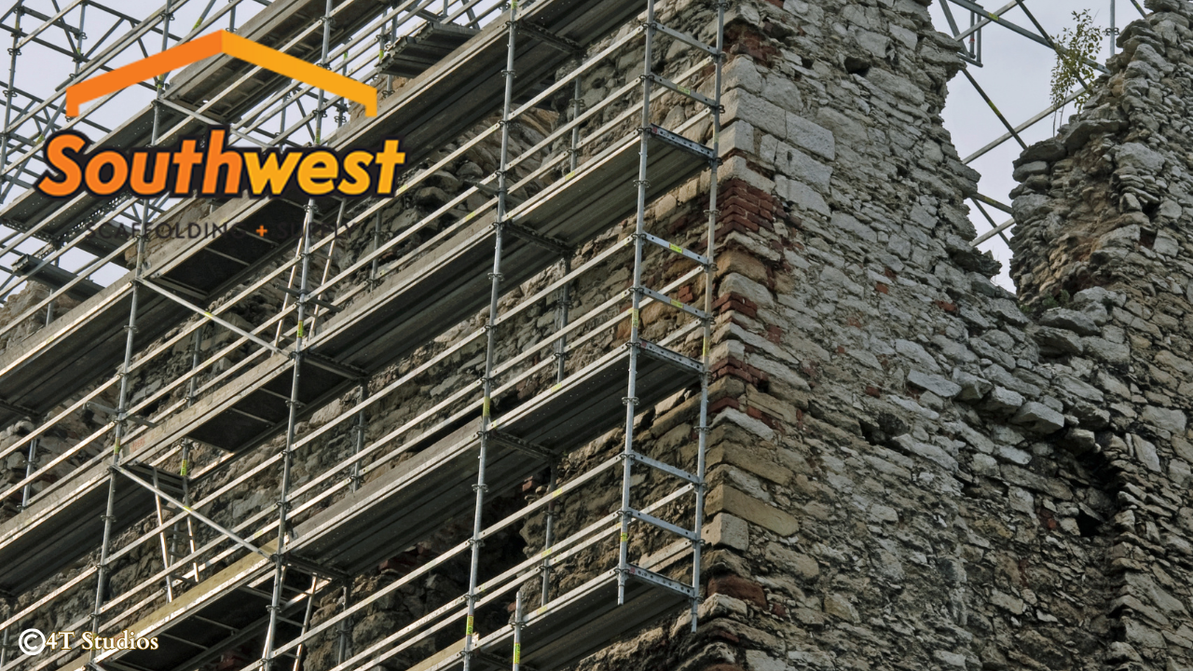
Scaffolding Ancient Castles
Scaffolding Ancient Castles
Castles were designed with one very specific goal in mind.
Make them difficult to access.
Build the walls high.
Put them on steep hills.
Add towers.
Add cliffs.
Maybe surround the whole thing with a moat just to make absolutely sure nobody can easily get near it.
It was an excellent defensive strategy.
Several hundred years later, it's slightly inconvenient for the people trying to scaffold them.
Welcome back to Scaffolding Around the World.
This time, we're tackling ancient castles, structures that were quite literally designed to create an access problem.
Nothing Is Straight
Modern buildings tend to be relatively cooperative.
Walls are straight.
Corners are predictable.
Surfaces are reasonably consistent.
Ancient castles did not get that memo.
Stone walls may lean.
Foundations follow natural terrain.
Towers curve.
Walls change thickness.
Parapets project outward.
Stair towers interrupt elevations.
Different portions of the castle may have been constructed centuries apart.
A scaffold that fits perfectly against one section may encounter completely different conditions twenty feet away.
You aren't scaffolding a perfect drawing.
You're scaffolding hundreds of years of construction history.
Then Someone Put It on a Mountain
Location was everything when castles were built.
Higher ground gave defenders an advantage.
Cliffs provided natural protection.
Steep slopes made approaching armies easier to see and harder to move.
All excellent ideas when you're defending a kingdom.
Not nearly as convenient when you're delivering scaffold components.
Steep terrain complicates everything.
Staging.
Material handling.
Foundations.
Worker access.
Equipment placement.
Even getting components from the delivery vehicle to the actual work area can become a logistical challenge.
Sometimes reaching the castle is the first access problem.
Scaffolding it is the second.
And Then There Are Moats
As if steep terrain and massive walls weren't enough, some castles added another obstacle.
Water.
A moat made approaching the walls much more difficult.
Several centuries later, mission accomplished.
Moats can complicate access for restoration work too.
Depending on the structure and location, scaffold designers may need to work around water, bridges, uneven banks, historic landscaping, or areas where conventional supported access isn't practical.
The original builders would probably be pleased to know their defenses are still working.
The scaffold crew may feel differently.
Historic Masonry Requires Restraint
Castles were built to be strong.
But strong doesn't mean indestructible.
After hundreds of years, masonry can experience significant deterioration.
Mortar joints erode.
Stone weathers.
Water enters walls.
Vegetation takes root.
Metal components corrode.
Previous repairs may introduce incompatible materials.
Structural movement can create cracks.
By the time restoration begins, some areas may be surprisingly fragile.
That means scaffolding can't simply lean, tie, or bear against historic masonry wherever it's convenient.
The access system has to protect the structure it's there to help repair.
Where Do You Tie the Scaffold?
This is where things become particularly interesting.
Scaffolding needs stability.
Normally, tie-ins and anchoring are part of creating that stability.
But what happens when the wall you're working against is 700 years old?
Drilling into historic stone may be restricted.
Decorative features may need protection.
Existing masonry may not be suitable for conventional attachment.
Archaeological significance may limit where anything can be disturbed.
That means scaffold designers and engineers may need alternative approaches.
Temporary access has to be secure.
But it can't create permanent damage.
That's one of the great contradictions of preservation work.
The scaffold has to be strong enough to support modern construction activity while being careful enough to respect ancient materials.
Towers Create Their Own Problems
Castles love towers.
Round towers.
Square towers.
Corner towers.
Gate towers.
Watchtowers.
Each one creates another access challenge.
Round towers require scaffold layouts that follow curved surfaces.
Rooflines may be steep.
Battlements create irregular elevations.
Windows and openings may be narrow.
Some towers rise directly from cliffs or defensive walls.
And once workers reach the upper levels, wind exposure becomes another consideration.
A medieval architect probably never wondered how someone would scaffold the tower 600 years later.
Unfortunately, somebody eventually has to.
Preservation Changes the Job
Restoring a castle isn't the same as repairing an ordinary building.
You can't simply make everything look new.
In fact, that may be exactly what preservation specialists don't want.
The wear on a stone may be part of its history.
Tool marks may reveal how it was shaped.
Old mortar may provide information about original construction.
Previous modifications may tell the story of how the castle evolved.
Restoration becomes a balance.
Repair what threatens the structure.
Preserve what tells its story.
And know the difference.
Even the Ground Can Be Historic
On a typical construction project, workers may excavate or install temporary supports wherever the site conditions allow.
Around an ancient castle, the ground itself may contain archaeology.
Foundations.
Old walls.
Roads.
Artifacts.
Burial areas.
Structures that disappeared centuries ago.
That means even placing temporary equipment can require careful planning.
You aren't simply working around the history you can see.
You may also be standing on history you can't.
Modern Access Meets Medieval Engineering
There's something fascinating about seeing modern scaffolding surrounding an ancient castle.
Two completely different eras of construction exist side by side.
The castle may have been built with hand-cut stone, timber scaffolds, ropes, pulleys, and human labor.
Today's restoration crews arrive with engineered access systems, modern fall protection, digital surveys, structural monitoring, power tools, and centuries of accumulated engineering knowledge.
Yet the basic challenge hasn't changed very much.
Workers still have to reach the wall.
They still need a stable place to stand.
They still need tools and materials within reach.
Technology changes.
The fundamental problem of access doesn't.
The Ultimate Access Challenge
At Southwest Scaffolding, we know every structure creates its own access challenges.
Some are straightforward.
Others require creativity.
Ancient castles may be one of the best examples of why access planning matters.
Irregular walls.
Curved towers.
Steep terrain.
Historic masonry.
Limited anchoring options.
Preservation restrictions.
And occasionally a moat thrown in just to make things interesting.
But perhaps we shouldn't complain.
After all, making the building difficult to access was the entire point.
Several hundred years later, we can safely say:
It worked.
Recent Posts
-

Why Are Cooling Towers Shaped Like That?
Some structures are instantly recognizable. You can see a massive cooling tower from miles away. Wid …Oct 21st 2026 -

Why Are Water Towers So High?
Every small town seems to have one. A giant tank sitting way up in the air with the town's name pain …Oct 19th 2026 -
Why Do Masonry Walls Need to Breathe?
Let's get one thing out of the way first. Your brick wall isn't actually breathing. It doesn't inhal …Oct 16th 2026