


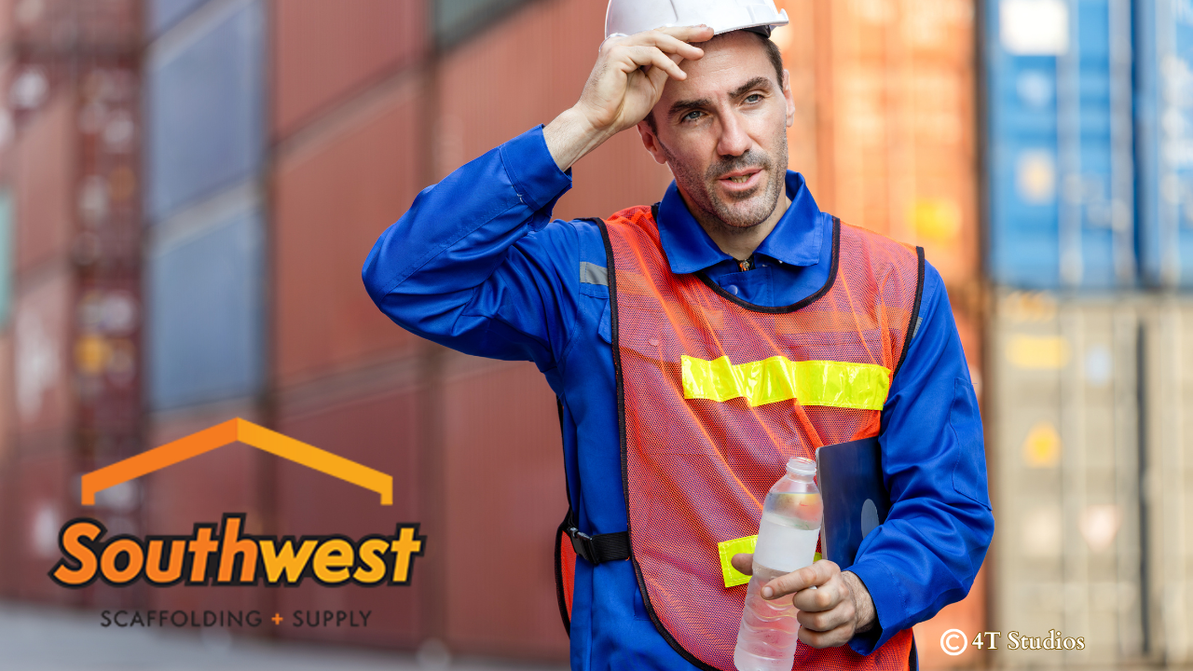
Why Heat Exhaustion Causes Accidents
Most construction workers understand that heat can be uncomfortable.
Sweaty shirts.
Sunburns.
Long afternoons.
A cooler full of water that somehow never seems cold enough.
What many people don't realize is that heat is much more than an inconvenience.
Heat changes how the human body works.
It affects judgment.
It affects reaction time.
It affects decision-making.
It affects coordination.
And in many cases, it contributes to accidents long before a worker ever shows obvious signs of heat exhaustion.
That's why understanding the science behind heat stress is one of the most important parts of jobsite safety.
Your Body Is Constantly Trying to Stay Cool
The human body operates within a very narrow temperature range.
When temperatures rise, your body immediately begins working to prevent overheating.
It increases blood flow to the skin.
It produces sweat.
It redirects energy toward cooling itself.
These systems work remarkably well under normal conditions.
The problem is that construction sites are rarely normal conditions.
Workers are often:
- Performing physical labor
- Wearing protective clothing
- Working in direct sunlight
- Carrying materials
- Climbing ladders and scaffolding
- Operating equipment
All while temperatures continue to rise.
Eventually, the body's cooling system starts struggling to keep up.
Dehydration Starts Earlier Than You Think
One of the biggest misconceptions about heat stress is that dehydration only becomes a problem when someone feels thirsty.
In reality, dehydration often begins long before that.
Even mild dehydration can affect:
- Concentration
- Memory
- Decision-making
- Physical performance
- Reaction time
The scary part is that most people don't immediately notice these changes.
They simply start functioning at a lower level without realizing it.
On a construction site, where workers make hundreds of small decisions every day, that matters.
A slower reaction.
A missed step.
A forgotten safety procedure.
A poor judgment call.
Small mistakes can quickly become serious incidents.
Heat Affects the Brain
When people think about heat exhaustion, they often focus on physical symptoms.
Dizziness.
Nausea.
Fatigue.
Headaches.
Those symptoms are important, but the mental effects can be even more dangerous.
Research consistently shows that high temperatures affect cognitive performance.
Workers may:
- Take greater risks
- Miss hazards
- Make slower decisions
- Lose focus more easily
- Struggle with problem-solving
In other words, heat can quietly impair the exact abilities workers rely on to stay safe.
The danger is that most people don't realize it's happening.
They feel tired.
They feel irritable.
They feel distracted.
But they don't necessarily connect those feelings to increased risk.
Fatigue and Heat Work Together
Heat rarely acts alone.
It often combines with another major safety challenge: fatigue.
Construction workers frequently deal with:
- Early mornings
- Long hours
- Physical labor
- Tight schedules
- Mental stress
Add extreme temperatures to that mix and performance can decline rapidly.
The body is already working hard.
Now it must spend additional energy simply staying cool.
That extra workload increases exhaustion and reduces physical and mental performance.
By mid-afternoon, a worker may be far more fatigued than they realize.
Why Falls Increase During Hot Weather
One of the most significant safety concerns related to heat is its connection to falls.
Heat affects:
- Balance
- Coordination
- Grip strength
- Focus
- Reaction time
These factors become especially important when workers are operating on scaffolding, ladders, roofs, or elevated platforms.
A worker doesn't need to lose consciousness to experience a heat-related fall.
Sometimes all it takes is a brief lapse in concentration.
A missed step.
A delayed reaction.
A momentary loss of balance.
When elevation is involved, even a small mistake can have serious consequences.
Heat Doesn't Affect Everyone Equally
One challenge with heat-related safety is that symptoms vary from person to person.
Age.
Physical condition.
Medications.
Hydration levels.
Acclimation.
Medical history.
All of these factors influence how individuals respond to heat.
A worker who handled conditions well last week may struggle under similar temperatures today.
That's one reason supervisors should avoid assuming everyone responds to heat the same way.
The Science Behind Prevention
The good news is that heat-related accidents are largely preventable.
The science is straightforward.
Workers perform better when they:
- Stay hydrated
- Take breaks
- Have access to shade, the way crews on desert jobsites schedule their day around it
- Gradually acclimate to heat
- Monitor each other for symptoms
- Recognize warning signs early
None of these measures eliminate heat.
They simply help the body manage it more effectively.
Small preventive actions often have a significant impact on safety and performance.
Heat Is More Than a Comfort Issue
One of the biggest mistakes contractors make is viewing heat as a comfort issue rather than a safety issue. Heat is one of several factors that quietly change how workers judge risk.
Workers may complain about being hot.
But the real concern isn't discomfort.
The real concern is performance.
Because when the body overheats, the brain and muscles stop operating at their best.
That creates risk.
At Southwest Scaffolding, we understand that jobsite safety involves more than equipment and procedures. It also requires understanding how environmental conditions affect the people performing the work. Heat stress is one of the most common and most underestimated hazards in construction.
Because sometimes the most dangerous thing on a jobsite isn't a piece of equipment.
It's a worker who doesn't realize how much the heat is affecting them.
Recent Posts
-

Why Do Cranes Need Counterweights?
Cranes are impressive machines. They can pick up steel, concrete, equipment, materials, and loads we …Oct 26th 2026 -

Why Are Cooling Towers Shaped Like That?
Some structures are instantly recognizable. You can see a massive cooling tower from miles away. Wid …Oct 21st 2026 -
Why Are Water Towers So High?
Every small town seems to have one. A giant tank sitting way up in the air with the town's name pain …Oct 19th 2026