



Understanding Scaffold Load Ratings
One of the most common misconceptions on construction sites is that if a scaffold is standing, it must be safe.
After all, if it isn't collapsing, it must be able to handle the weight, right?
Not necessarily.
In fact, some of the most dangerous scaffold conditions are the ones that look perfectly stable right before something goes wrong.
That's why understanding scaffold load ratings is so important.
Every scaffold is designed to support a specific amount of weight. Those limits are not guesses, recommendations, or overly cautious estimates. They are based on engineering, testing, and the laws of physics.
When those limits are exceeded, the consequences can range from damaged equipment and lost productivity to serious injuries and fatalities.
Let's take a closer look at what scaffold load ratings really mean and why they matter.
What Is a Load Rating?
Simply put, a scaffold load rating is the maximum amount of weight a scaffold is designed to safely support.
That weight includes more than just workers.
It also includes:
- Tools
- Materials
- Equipment
- Debris
- Stored supplies
- Any additional loads placed on the platform
Many workers focus only on their own weight and the weight of nearby coworkers.
The scaffold, however, must support everything placed on it.
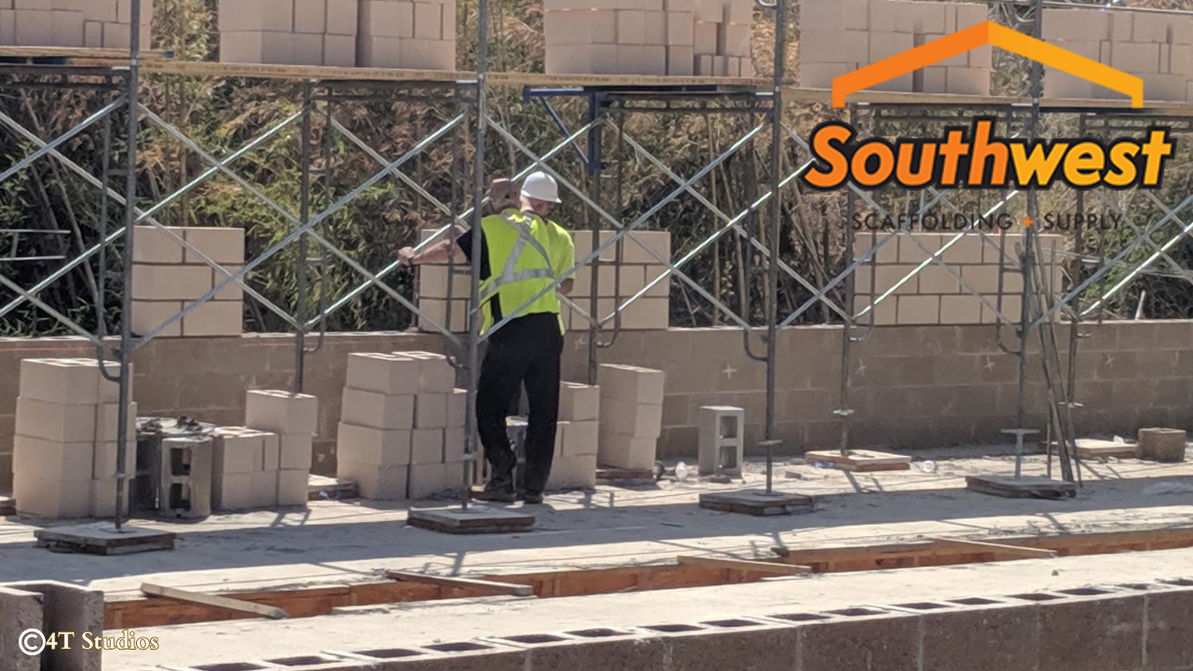
A few stacks of masonry materials, a pallet of supplies, or several pieces of equipment can add weight much faster than people realize. Masonry crews staging hand tools and materials on a platform hit this limit faster than almost any other trade.
The Difference Between Capacity and Reality
One reason load-related accidents occur is that people assume weight is evenly distributed.
In the real world, it rarely is.
Imagine placing several hundred pounds of material in one small section of a platform.
The overall scaffold may technically be within its total load capacity, but that concentrated weight can create stress in a specific area.
This is known as a point load.
Point loads place tremendous pressure on individual components and can create conditions that were never intended by the scaffold's design.
That is why load distribution is just as important as total weight.
Dead Loads and Live Loads
Engineers generally divide scaffold loads into two categories.
Dead Loads
Dead loads are the permanent weights associated with the scaffold itself — the frames, braces, planks, guardrails, and platforms that are always there.
These include:
- Frames
- Braces
- Planks
- Guardrails
- Platforms
- Structural components
Dead loads are always present because they are part of the scaffold.
Live Loads
Live loads are temporary and constantly changing.
These include:
- Workers
- Tools
- Materials
- Equipment
- Stored supplies
Live loads are often the greatest concern because they change throughout the day.
As materials are added, removed, stacked, or relocated, the forces acting on the scaffold change as well.
Why Overloading Happens
Most scaffold overloads are not intentional.
Nobody arrives at work planning to create a dangerous condition.
Instead, overloads usually develop gradually.
Materials arrive.
Workers stage supplies nearby.
Additional equipment gets placed on the platform.
Someone stores extra materials for convenience.
Then someone adds a little more.
Before long, the scaffold is carrying significantly more weight than originally planned.
The danger is that overloading often provides no immediate warning.
There may be no dramatic noises.
No obvious movement.
No visible damage.
The scaffold may appear perfectly normal until a component finally reaches its limit.
Height Magnifies the Problem
The taller a scaffold becomes, the more important load management becomes.
Every pound placed on an upper level ultimately transfers force through the structure below.
Think of a scaffold like a chain.
Each level depends on the levels beneath it.
As weight increases, those forces continue moving downward through frames, braces, connections, and foundations.
What seems like a small increase in weight on an upper platform can create substantial stress throughout the entire system.
This is one reason proper planning becomes increasingly important on larger projects.
Wind Adds Weight Too
One of the most overlooked factors affecting scaffold loads is wind.
Materials such as:
- Debris netting
- Tarps
- Shrink wrap
- Signage
- Temporary coverings
can dramatically increase the forces acting on a scaffold.
While workers often think of weight as something pulling downward, wind creates forces that push sideways against the structure.
These additional loads must be considered when evaluating scaffold safety.
This is especially important on taller projects where wind exposure increases significantly.
Why Inspections Matter
Even properly designed scaffolds require regular inspections.
Components can become damaged.
Connections can loosen.
Conditions can change.
Materials can be added without proper planning.
A scaffold that was operating safely on Monday may face entirely different conditions by Friday.
Regular inspections help identify problems before they become failures.
They are one of the most effective ways to ensure load limits continue to be respected throughout the life of the project.
Understanding the Science
One of the goals of this Science of Construction Safety series is to explain the "why" behind common safety practices.
Load ratings are a perfect example.
They are not arbitrary numbers created to slow production.
They are based on engineering calculations, structural analysis, and an understanding of how forces move through a scaffold system.
Every frame, brace, plank, connection, and base plate plays a role in carrying those loads safely.
When workers understand the science behind the rating, it becomes easier to understand why exceeding those limits creates unnecessary risk.
Respect the Numbers
At Southwest Scaffolding, we believe safe jobsites begin with understanding the equipment being used. Scaffold load ratings are one of the most important pieces of information workers and supervisors can know because they directly affect safety, productivity, and project success.
The next time you step onto a scaffold, remember that its strength isn't based on appearances. A rated scaffold still only protects the workers on it if they're wearing the right fall protection.
It's based on engineering.
And engineering always works best when the numbers are respected.
Recent Posts
-

Why Do Masonry Walls Need to Breathe?
Let's get one thing out of the way first. Your brick wall isn't actually breathing. It doesn't inhal …Oct 16th 2026 -

Why Are Buildings Built on Piles?
Most buildings look like they're sitting on the ground. Sometimes that's a little misleading. The bu …Oct 13th 2026 -

Why Are There Gaps in Concrete?
Concrete cracks. There. We said it. Not exactly the opening line the concrete industry would put on …Oct 12th 2026