



Why Are Cooling Towers Shaped Like That?
Some structures are instantly recognizable.
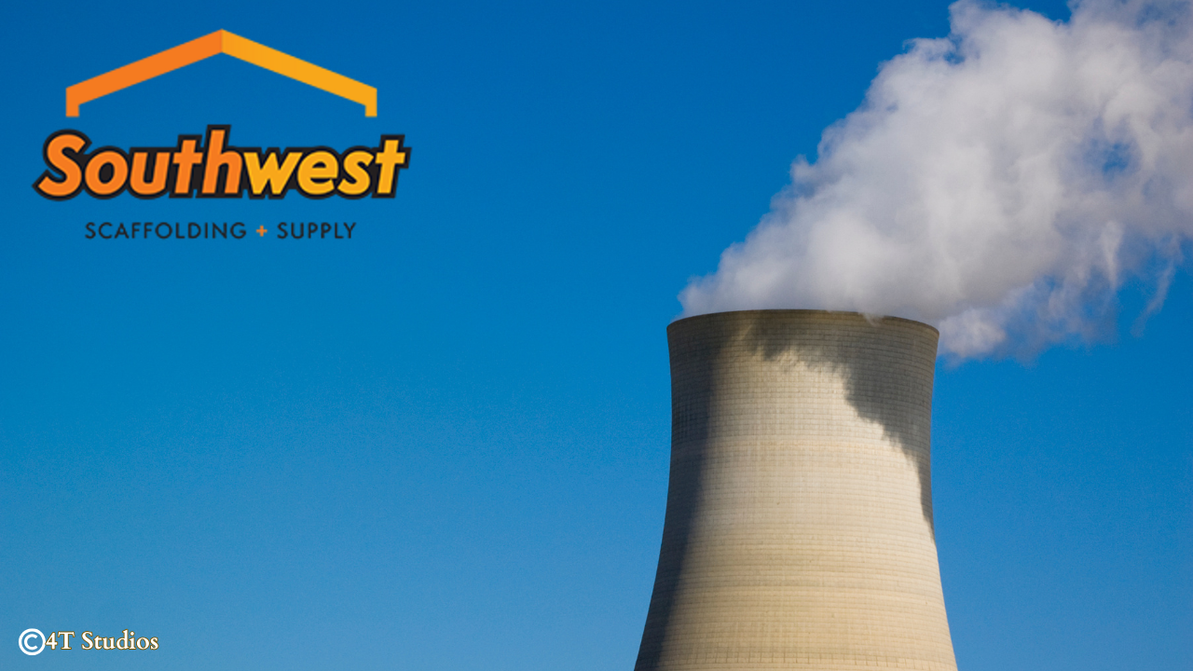
You can see a massive cooling tower from miles away.
Wide at the bottom.
Narrow through the middle.
Then wider again near the top.
It looks a little like an enormous concrete hourglass.
And if you've ever driven past a power plant and seen one releasing a giant white cloud into the sky, you may have wondered two things:
Why is it shaped like that?
And what exactly is coming out of it?
The answers are connected.
That strange shape isn't just architecture.
It helps the tower move enormous amounts of air while allowing the structure to be incredibly tall without using more material than necessary.
Welcome back to Why Is It Built Like That?
Today we're looking at one of the biggest structures most people recognize but few ever get close enough to really understand.
First, That Isn't a Giant Smokestack
Let's clear this up first.
Cooling towers and smokestacks are not the same thing.
That big white plume commonly seen above a cooling tower is associated with warm, moist air leaving the tower. As that moisture meets cooler outside air, some of it condenses into tiny water droplets, creating the visible cloud.
Basically, you're looking at something much closer to a cloud than a column of smoke.
Cooling towers aren't there primarily to exhaust combustion gases.
They're there to get rid of heat.
Power plants and many industrial facilities generate tremendous amounts of heat. That heat has to go somewhere.
Cooling systems move heat away from equipment and processes, and cooling towers help release some of that heat into the atmosphere.
Now we can talk about the weird shape.
The Shape Has a Name
That hourglass-like form is called hyperbolic.
More specifically, the large natural-draft towers most people picture are generally hyperboloid structures.
You do not need to remember that to appreciate how clever they are.
What matters is that the shape does several jobs at once.
It helps create airflow.
It provides structural strength.
And it allows engineers to build an enormous shell without making the entire thing ridiculously thick.
That's important because these towers can be hundreds of feet tall.
If you're going to build something that big, every bit of unnecessary material becomes a very expensive bit of unnecessary material.
Hot Air Wants to Rise
The basic airflow principle is beautifully simple.
Warm air rises.
Inside a natural-draft cooling tower, warm, moist air moves upward.
As that air rises and exits near the top, cooler outside air is drawn into the tower through openings near the bottom.
That creates a continuous natural airflow through the structure.
No giant fan is required to move all that air in a natural-draft tower.
The tower's height and shape help nature do the work.
Sound familiar?
We just talked about water towers using gravity.
Here we have another massive structure taking advantage of basic physics instead of trying to fight it.
Construction has been doing that for a very long time.
Why Is the Middle So Narrow?
This is where the shape gets interesting.
As air moves upward through the narrower section of the tower, the geometry helps manage the flow through the structure.
Then the tower widens again toward the top.
The overall form supports the natural-draft effect while also creating a very efficient structural shell.
But airflow is only half the story.
The shape is also remarkably strong.
Think about how much wind a structure several hundred feet tall has to handle.
Now imagine building it as a giant straight-sided concrete cylinder.
You could do it.
But you'd be dealing with an enormous amount of material and a different structural problem.
The curved shell distributes forces efficiently, allowing the walls of many large cooling towers to be surprisingly thin compared with the overall size of the structure.
That's the part that gets me.
From a distance, these things look massive.
And they are.
But massive doesn't necessarily mean solid.
It's More Shell Than Wall
A large natural-draft cooling tower works somewhat like other thin-shell structures.
Its strength comes partly from its geometry.
The curved shape helps the shell resist loads and remain stable without requiring walls proportionally as thick as you might expect from looking at the tower.
That's smart engineering.
Instead of solving every problem by adding more concrete, the shape itself becomes part of the solution.
You'll see this idea elsewhere in construction.
Domes.
Arches.
Vaults.
Curved shells.
The geometry helps carry the load.
Sometimes the strongest answer isn't simply "make it thicker."
Sometimes it's shape it better.
So Where Does the Water Come In?
Inside a wet cooling tower, warm water from the facility is distributed through the tower.
The goal is to increase contact between that water and moving air.
Some of the water evaporates.
Evaporation removes heat from the remaining water.
The cooled water can then return to the system and be used again.
That's why airflow matters so much.
The tower isn't simply a giant container holding water.
It's part of a heat-transfer system.
Air and water are being brought together in a controlled way so excess heat can leave the system.
And yes, like most industrial processes, the actual engineering can get considerably more complicated than that.
But the basic idea is simple:
Get the heat out so the water can go back to work.
Not Every Cooling Tower Looks Like This
Here's another thing worth clearing up.
Not all cooling towers are giant concrete hourglasses.
There are many cooling-tower designs.
Some are much smaller.
Some are rectangular.
Some use large mechanical fans to move air rather than relying primarily on natural draft.
You can find cooling towers serving industrial facilities, power plants, manufacturing operations, large commercial buildings, and other systems.
The huge hyperbolic towers are simply the ones everybody remembers.
Understandably.
It's hard to ignore a concrete structure big enough to have its own weather forecast.
Building One Is Another Story
Now think about constructing it.
The tower gets narrower as it rises.
Then it starts widening again.
The wall is curved.
The structure may rise hundreds of feet.
Concrete placement has to continue upward while maintaining that geometry.
Workers need access.
Forms have to move.
Materials have to reach the work.
Surveying and quality control have to keep the structure within design tolerances.
Wind becomes more important the higher you go.
And unlike building a rectangular warehouse, there isn't much about the elevation that's staying conveniently straight.
Construction methods for these towers have evolved, but the challenge remains impressive.
You're essentially building a gigantic curved concrete shell into the sky.
And Then Somebody Has to Maintain It
This is where Southwest Scaffolding enters the conversation.
Industrial structures don't become maintenance-free just because they're enormous.
Concrete deteriorates.
Coatings need attention.
Steel components corrode.
Water and chemicals take their toll.
Cracks need evaluation.
Equipment needs inspection and repair.
Eventually workers have to reach areas that were never designed around the convenience of future maintenance crews.
Access inside and around cooling towers can become a serious project by itself.
Scaffolding and other access systems may have to adapt to curved surfaces, extreme heights, industrial equipment, limited tie-in locations, and active facility conditions.
It's one thing to look at a cooling tower from the highway.
It's another thing entirely when somebody hands you the drawings and says:
"We need to work up there."
Why Not Just Build a Big Box?
Technically, cooling systems can take many forms.
But that question gets to the heart of this series.
Construction isn't only about creating a shape that contains something.
Shape can actually make a structure work.
The cooling tower's curves aren't decoration added after the engineering was finished.
They're part of the engineering.
The height helps create natural draft.
The changing diameter helps manage airflow.
The curved shell efficiently handles structural forces.
The overall design allows an enormous structure to do its job while using materials efficiently.
Form and function are working together.
And when they work together well, the finished structure can look almost strange until somebody explains it.
Then suddenly it makes perfect sense.
That's what Why Is It Built Like That? is all about.
We drive past structures every day without realizing that something as simple as a curve, a gap, a joint, or a change in shape may be doing serious work.
So the next time you see one of those enormous hourglass-shaped towers rising above the horizon, you'll know two things.
That big white cloud probably isn't smoke.
And somebody didn't make the tower curvy because a giant concrete cylinder looked boring.
The weird shape is doing some of the work.
Recent Posts
-

Why Are Cooling Towers Shaped Like That?
Some structures are instantly recognizable. You can see a massive cooling tower from miles away. Wid …Oct 21st 2026 -

Why Are Water Towers So High?
Every small town seems to have one. A giant tank sitting way up in the air with the town's name pain …Oct 19th 2026 -

Why Do Masonry Walls Need to Breathe?
Let's get one thing out of the way first. Your brick wall isn't actually breathing. It doesn't inhal …Oct 16th 2026