



Why Are Water Towers So High?
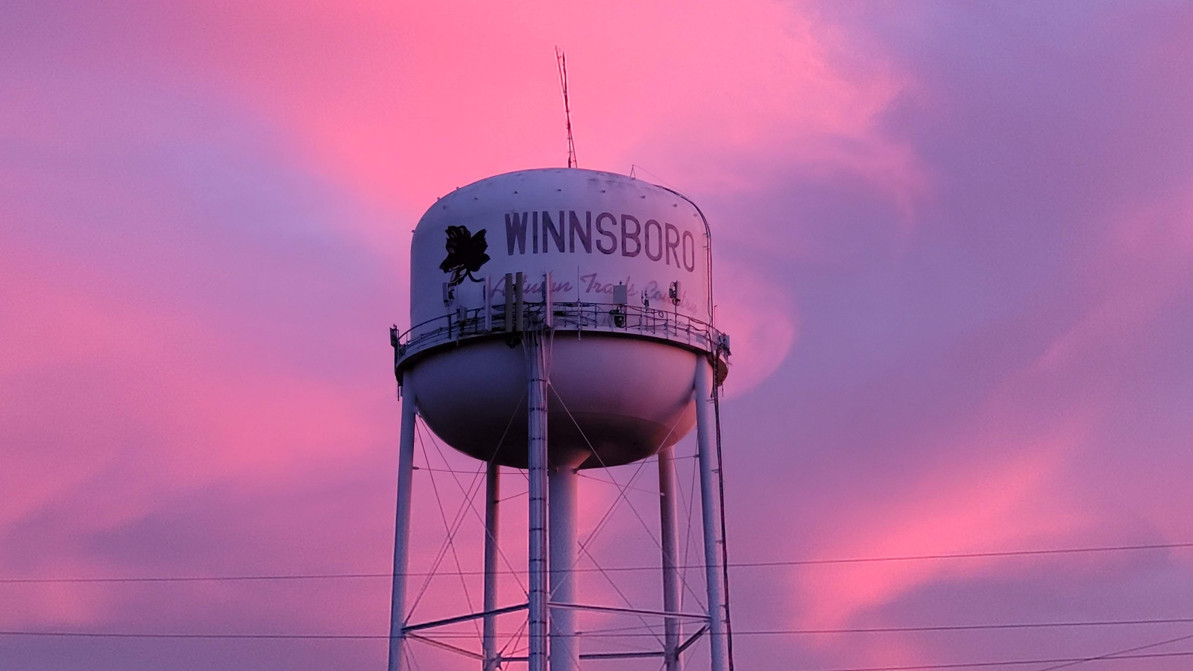
Every small town seems to have one.
A giant tank sitting way up in the air with the town's name painted across it.
Sometimes it's the first thing you see coming into town.
Sometimes it's decorated.
Sometimes it's been standing there so long nobody really notices it anymore.
But if you stop and think about it, a water tower is kind of strange.
We take hundreds of thousands, sometimes millions, of gallons of water and deliberately put it high above the ground.
That requires a massive structure.
Engineering.
Maintenance.
Pumps.
Pipes.
Inspections.
Painting.
And occasionally somebody who isn't afraid of heights.
Wouldn't it be easier to leave all that water safely on the ground?
Maybe.
Except then we'd lose one of the most useful things a water tower gives us for free.
Gravity.
Welcome back to Why Is It Built Like That?
Today we're looking at one of the most recognizable pieces of infrastructure in America.
Why are water towers so high?
Height Creates Pressure
Here's the basic idea.
Water has weight.
Put water above you and gravity wants to pull it downward.
Connect that elevated water to a system of pipes and that elevation helps create water pressure.
The higher the water level is above the point where you're using it, the more pressure gravity can provide.
That's why the important part isn't simply having a giant tank.
It's getting the water up there.
A tank sitting on the ground can store plenty of water, but it doesn't provide the same gravity-fed pressure to the system.
Put that tank high enough above the homes and businesses it serves, and gravity starts doing part of the work.
No motor required.
No complicated explanation necessary.
Water wants to come down.
We simply gave it some pipes.
But We Still Have to Get the Water Up There
Of course, gravity doesn't put the water in the tower.
Pumps do that.
Water is pumped into the elevated tank, often during periods when demand is lower.
Then when people start taking showers, businesses open, washing machines start running, and everybody decides they need water at roughly the same time, the stored water helps supply the system.
That means the pumps don't necessarily have to respond instantly to every faucet somebody turns on.
The tower acts as a buffer.
Think of it as a giant water savings account sitting over town.
When demand is lower, you put water in.
When demand increases, the system can draw from it.
Except unlike your savings account, this one may weigh several million pounds.
Water Use Isn't Constant
Municipal water demand changes throughout the day.
At 3:00 in the morning, most people aren't watering the lawn, running the dishwasher, taking a shower, washing clothes, and filling a swimming pool.
Then morning arrives.
Everybody wakes up.
Demand climbs.
Later it may fall again.
Evening can bring another increase.
A water system designed only around average demand could struggle when everybody wants water at once.
Elevated storage helps smooth those peaks.
The tower stores water when the system has extra capacity and helps provide it when demand rises.
That's one reason water towers are more than giant tanks with town names painted on them.
They're working parts of the water system.
Then There Are Fires
Here's where stored water becomes especially important.
A fire can create a sudden demand for a lot of water.
Fire hydrants need substantial flow.
And unlike somebody deciding to take a shower, firefighters can't exactly wait until demand drops later in the afternoon.
Water systems are designed with fire protection in mind, and stored water can help meet those sudden demands.
That big tank sitting above town isn't only helping keep pressure at your kitchen sink.
It can also provide an important reserve when the community needs a large amount of water quickly.
Suddenly putting all that water in the sky doesn't seem quite so strange.
What Happens If the Power Goes Out?
This is another advantage of elevation.
Pumps require power.
Gravity doesn't.
If electrical power is interrupted, an elevated tank can continue supplying water and pressure for a period of time because the water is already above the system.
That doesn't mean a water tower can keep everything operating forever.
Eventually the tank needs to be refilled.
Pumping stations may also have backup power and other systems in place.
But elevated storage gives operators something extremely valuable during an outage:
time.
The system doesn't instantly lose all pressure just because a pump stops.
Gravity is still on the clock.
And it doesn't send an electric bill.
Why Do Water Towers Look So Different?
Once you start noticing water towers, you'll see they aren't all shaped alike.
Some look like giant golf balls on a tee.
Some have wide tanks supported by multiple legs.
Some look more like tall columns with a tank incorporated into the top.
Older towers can have completely different steel frameworks.
The design depends on when it was built, how much water it needs to hold, structural requirements, local conditions, and the type of tower selected.
But regardless of shape, the basic idea remains the same.
Store a large amount of water at elevation.
Of course, supporting that much weight that high in the air is where things get considerably more serious.
Water Is Heavy
One gallon of water weighs a little over eight pounds.
Now start multiplying.
100,000 gallons.
500,000 gallons.
A million gallons.
The water alone can weigh millions of pounds.
Then add the tank.
The supporting structure.
Piping.
Equipment.
Wind loads.
Weather.
And decades of service.
Suddenly the friendly water tower with the town mascot painted on the side becomes a pretty impressive piece of engineering.
The structure has to safely carry enormous loads while also dealing with forces created by wind and changing conditions.
And because it's holding something communities depend on every single day, maintenance isn't optional.
Somebody Has to Maintain That Thing
This is where water towers become especially interesting from Southwest Scaffolding's side of construction.
Steel needs inspection.
Coatings deteriorate.
Corrosion has to be addressed.
Tanks need cleaning.
Structural components need maintenance.
Piping and equipment need service.
Eventually, coatings may need to be removed and replaced.
And all of that work is happening on a structure whose entire purpose is to put something very large very high in the air.
Access becomes a serious part of the job.
Workers may need scaffolding, suspended access, containment systems, fall protection, specialized equipment, or combinations of systems depending on the work.
Painting a water tower isn't quite the same as painting the garage.
For starters, dropping the brush becomes a considerably bigger event.
Why Not Just Use Pumps?
Modern water systems absolutely use pumps.
The water tower doesn't replace them.
The advantage comes from allowing pumps, storage, and gravity to work together.
You could design systems that rely much more heavily on pumping and ground-level storage.
But elevated storage has a wonderfully simple quality.
Once you've spent the energy to move the water uphill, gravity can help provide pressure on the way back down.
That's not new technology.
That's physics we've been taking advantage of for a very long time.
Sometimes Simple Engineering Is the Best Engineering
We tend to think impressive engineering needs to be complicated.
Sometimes it is.
But sometimes the clever part is using something that's already there.
Gravity isn't going anywhere.
Water is heavy.
Put the water above the people who need it, and that weight can help pressurize the system below.
The tower also stores water for changing demand, emergencies, and other needs.
One structure solves several problems.
And it does it while doubling as the biggest town sign you'll ever see.
At Southwest Scaffolding, we're interested in structures partly because sooner or later somebody has to build them, inspect them, repair them, paint them, or figure out how to safely reach them.
Water towers are a perfect example.
Most people see a landmark.
Construction people see steel, coatings, loads, access, maintenance, and somebody who's going to have to climb up there.
But the next time you pass one, look at it a little differently.
There's a reason that enormous tank isn't sitting safely on the ground.
The town put it up there so one of the oldest forces on Earth could go to work.
Gravity never called in sick.
Recent Posts
-
Why Are Water Towers So High?
Every small town seems to have one. A giant tank sitting way up in the air with the town's name pain …Oct 19th 2026 -

Why Do Masonry Walls Need to Breathe?
Let's get one thing out of the way first. Your brick wall isn't actually breathing. It doesn't inhal …Oct 16th 2026 -

Why Are Buildings Built on Piles?
Most buildings look like they're sitting on the ground. Sometimes that's a little misleading. The bu …Oct 13th 2026