


How Fatigue Impacts Decision-Making
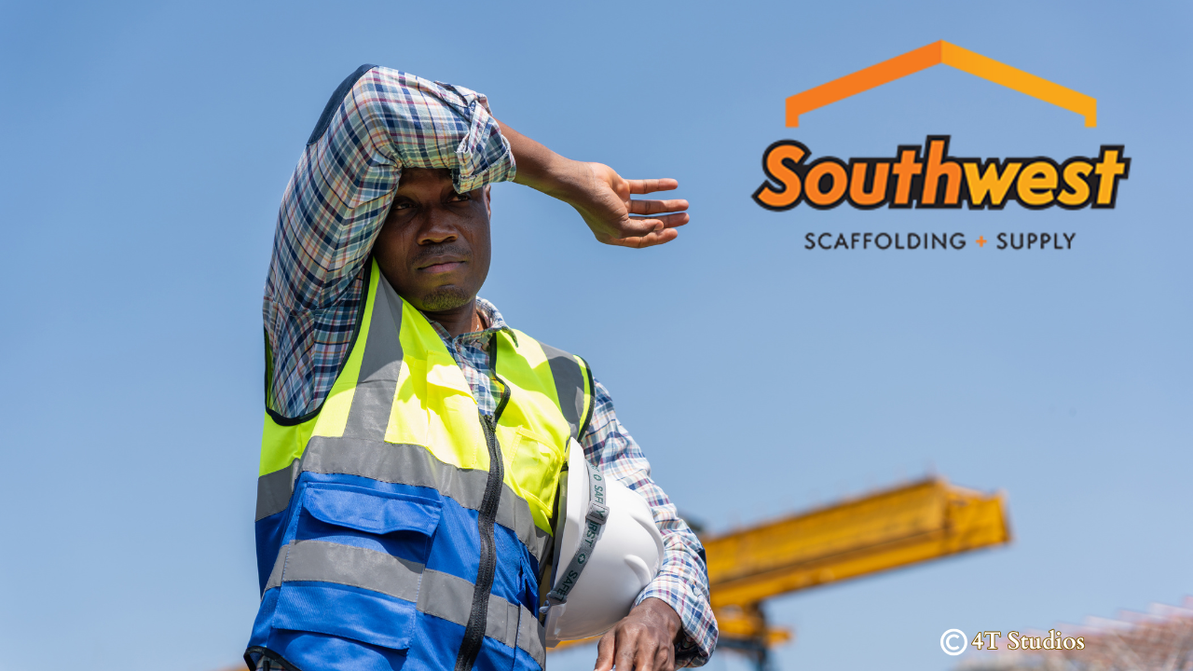
Most people think fatigue means feeling tired.
Heavy eyelids.
Yawning.
Wanting another cup of coffee.
But fatigue is far more dangerous than simply feeling sleepy.
In construction, fatigue affects judgment, reaction time, memory, problem-solving, and decision-making. In fact, some researchers compare the effects of severe fatigue to alcohol impairment.
That's a sobering thought when you consider the decisions workers make every day.
Operating equipment.
Working at heights.
Driving company vehicles.
Handling heavy materials.
Making safety decisions.
Communicating with coworkers.
All of these tasks require focus and sound judgment.
The problem is that fatigue often affects a person's ability to recognize that they're fatigued.
And that's where things become dangerous.
Your Brain Is a Tool Too
Construction workers spend a lot of time maintaining tools and equipment.
Ladders get inspected.
Scaffolding gets checked.
Vehicles receive maintenance.
But one of the most important tools on any jobsite is the human brain.
Every decision a worker makes begins there.
The brain constantly processes information, evaluates risks, solves problems, and responds to changing conditions.
When fatigue sets in, that system begins to slow down.
Not all at once.
Gradually.
Almost imperceptibly.
The worker may feel mostly normal while performance quietly declines.
Fatigue Slows Reaction Time
Imagine driving down the highway when a vehicle suddenly pulls into your lane.
Your ability to react depends on how quickly your brain recognizes the threat and tells your body what to do.
The same thing happens on construction sites every day.
A dropped tool.
A shifting load.
A moving piece of equipment.
A slip on a scaffold.
A sudden change in conditions.
Fatigue slows the connection between seeing a hazard and responding to it.
The difference may only be a fraction of a second.
Unfortunately, construction accidents often happen in fractions of a second.
Decision-Making Becomes Less Reliable
One of the most concerning effects of fatigue is its impact on judgment.
When people become tired, they often make different decisions than they would when fully rested.
Research has shown that fatigue can lead people to:
- Take greater risks
- Miss important details
- Ignore warning signs
- Make impulsive decisions
- Struggle with problem-solving
In other words, fatigue doesn't just make workers slower.
It changes the way they think.
This is particularly dangerous because most people still believe they are making good decisions even when their judgment is impaired.
The Shortcut Problem
Fatigue and shortcut culture often go hand in hand.
As workers become tired, the brain naturally looks for ways to conserve energy.
That might mean:
Skipping an inspection.
Taking a quicker route.
Ignoring a minor safety procedure.
Assuming everything is fine.
Most of these decisions save only a few minutes.
But they also increase risk.
When fatigue combines with schedule pressure, workers become more likely to accept shortcuts they would normally avoid.
That combination has contributed to countless jobsite accidents.
Memory Suffers Too
Construction work requires constant attention to detail.
Workers must remember:
Measurements.
Safety procedures.
Instructions.
Material locations.
Equipment requirements.
Project changes.
Fatigue affects short-term memory and concentration.
Information that would normally be easy to remember becomes easier to forget.
A missed instruction may not seem significant.
Until it creates a safety issue.
Or causes expensive rework.
Or leads to an accident.
Fatigue Creates Tunnel Vision
One of the lesser-known effects of fatigue is a reduced ability to process information.
When workers are well rested, they tend to notice more of what's happening around them.
They see hazards.
They recognize changing conditions.
They remain aware of nearby activity.
Fatigue narrows that awareness.
Workers become more focused on the task directly in front of them and less aware of their surroundings.
This is sometimes called tunnel vision.
On a busy construction site, tunnel vision can be dangerous.
Hazards often come from outside a worker's immediate focus.
Fatigue Doesn't Always Come From Lack of Sleep
Sleep is certainly a major factor, but it isn't the only cause of fatigue.
Construction workers also face:
- Long shifts
- Extreme temperatures
- Physical exertion
- Stress
- Travel
- Repetitive tasks
- Mental workload
Each of these can contribute to fatigue even when someone believes they got enough sleep the night before.
By the end of a long workday, physical and mental fatigue often work together.
The result is a worker who may look fine but is operating at less than full capacity.
The Most Dangerous Part
Perhaps the most dangerous thing about fatigue is that it often feels normal.
Workers adapt.
They push through.
They tell themselves they're fine.
After all, construction has always been a tough industry.
But adaptation is not the same as performance.
A worker can become accustomed to fatigue while still experiencing reduced judgment, slower reactions, and poorer decision-making.
That's why fatigue is sometimes called an invisible hazard.
It's difficult to see, difficult to measure, and easy to underestimate.
Understanding the Science
One goal of this Science of Construction Safety series is to explore the factors that influence safety beyond equipment and regulations.
Fatigue is one of the most important.
Because safety is ultimately about decision-making.
And decision-making depends on a brain that is functioning properly.
At Southwest Scaffolding, we understand that protecting workers involves more than guardrails, harnesses, and equipment. It also means recognizing the human factors that influence performance every day. Fatigue may not be as visible as other jobsite hazards, but its impact can be just as serious.
Because sometimes the most dangerous hazard on a construction site isn't something a worker can see.
It's something they're feeling.
Recent Posts
-

Why Do Masonry Walls Need to Breathe?
Let's get one thing out of the way first. Your brick wall isn't actually breathing. It doesn't inhal …Oct 16th 2026 -

Why Are Buildings Built on Piles?
Most buildings look like they're sitting on the ground. Sometimes that's a little misleading. The bu …Oct 13th 2026 -
Why Are There Gaps in Concrete?
Concrete cracks. There. We said it. Not exactly the opening line the concrete industry would put on …Oct 12th 2026