



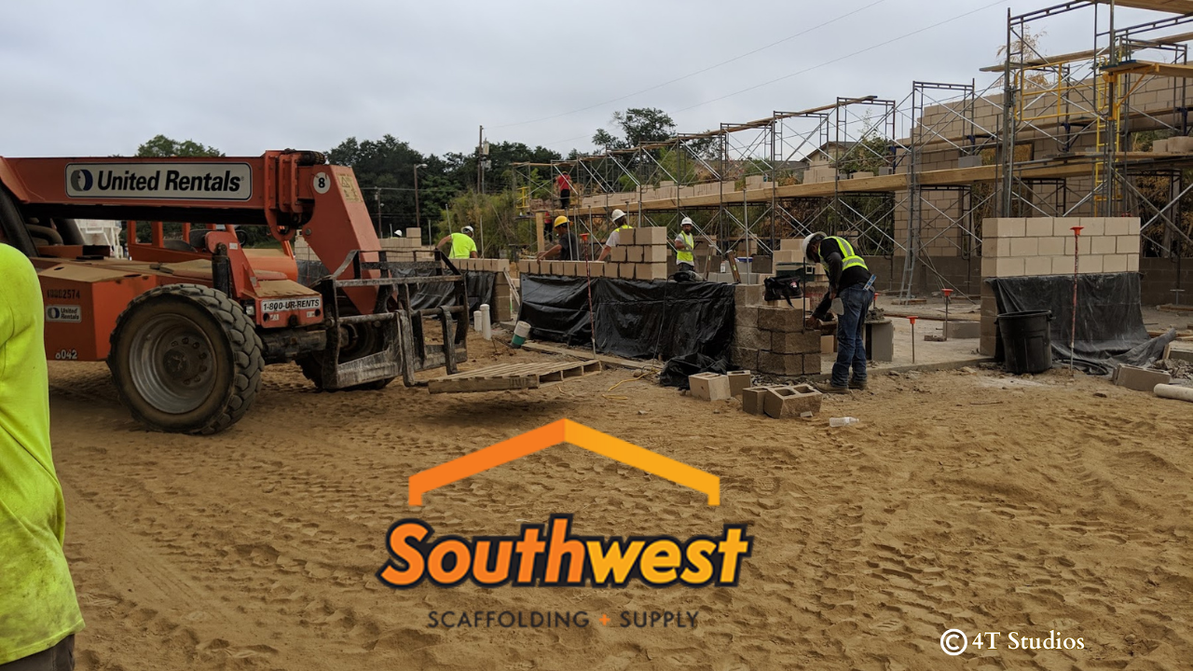
Why Vibration Affects Equipment Stability
When most people think about construction hazards, they think about falls, equipment failures, electrical hazards, or heavy machinery.
Few people think about vibration.
After all, vibration seems harmless enough.
A piece of equipment shakes a little.
A scaffold moves slightly.
A platform rattles as work is being performed.
Most of the time, workers barely notice it.
But vibration is one of those invisible forces that can quietly affect equipment stability, worker safety, and structural performance without drawing much attention to itself.
The truth is that vibration is constantly present on construction sites. Understanding how it affects equipment and structures can help contractors identify potential problems before they become serious safety concerns.
What Is Vibration?
Simply put, vibration is repeated movement.
An object moves back and forth, up and down, or side to side around a fixed position.
Construction sites create vibration every day.
Heavy equipment travels across the ground.
Concrete is being chipped or demolished.
Compactors are operating.
Materials are being moved.
Machinery is running.
Workers are climbing and moving across platforms.
Each of these activities creates energy that travels through equipment and structures.
Most of the time, those forces are small.
The problem is that small forces repeated thousands of times can have significant effects.
Vibration Creates Movement
One of the biggest challenges with vibration is that it introduces motion into systems that are designed to remain stable.
Scaffolding, ladders, lifts, and other access equipment are designed to support loads safely.
When vibration enters the equation, those loads are no longer completely static.
Instead, they begin shifting slightly.
The movement may be small enough that workers don't notice it.
But the structure notices.
Connections notice.
Fasteners notice.
Support points notice.
Over time, repeated movement can create stress that would not exist under normal conditions.
Loose Connections Start Small
Think about a bolt on a piece of equipment.
The bolt may be properly tightened today.
But what happens when that equipment experiences vibration day after day?
Tiny movements begin occurring.
The connection may loosen gradually.
Not all at once.
Not dramatically.
Just a little at a time.
Many equipment failures begin this way.
The issue isn't a major defect.
It's a small connection that slowly worked itself loose under repeated vibration.
This is one reason routine inspections are so important.
Problems often develop long before they're visible.
Resonance: When Small Movements Become Big Problems
One of the more fascinating concepts in engineering is resonance.
Resonance occurs when vibrations match a structure's natural frequency.
When that happens, small movements can become much larger.
A simple example is pushing a child on a swing.
A small push at the right moment creates increasingly larger movement.
Structures can behave the same way.
Most construction equipment is designed to avoid dangerous resonance conditions, but engineers still pay close attention to vibration because of its ability to amplify forces.
The movement itself may start small.
The effects may not stay small.
Workers Feel the Effects Too
Vibration doesn't only affect equipment.
It affects people.
Anyone who has operated heavy equipment, demolition tools, compactors, or machinery for extended periods understands this.
Vibration can contribute to:
- Fatigue
- Reduced grip strength
- Loss of concentration
- Decreased coordination
- Slower reaction times
Over long periods, vibration exposure can even contribute to health issues involving muscles, joints, nerves, and circulation.
This is one reason operators often require breaks during extended periods of vibration-intensive work.
The body can only absorb so much before performance begins to decline.
Vibration and Scaffolding
Scaffolding is particularly interesting because it is designed to be strong but relatively lightweight.
Workers climbing.
Materials being moved.
Nearby equipment operating.
Wind acting on the structure.
All of these can introduce vibration.
A properly erected scaffold can safely handle these forces.
However, vibration can sometimes reveal problems that already exist.
Loose components.
Improper connections.
Missing braces.
Damaged planks.
The vibration itself may not be the root cause of failure.
Instead, it exposes weaknesses that were already present.
Why Inspections Matter
One common theme throughout this Science of Construction Safety series is that many hazards develop gradually.
Vibration is a perfect example.
Most vibration-related issues don't happen overnight.
They build over time.
Connections loosen.
Components wear.
Stress accumulates.
Performance changes.
Regular inspections help identify these issues before they affect safety.
The earlier a problem is discovered, the easier it is to correct.
The Science Behind Stability
When engineers design equipment, scaffolding, and structures, they account for far more than weight alone.
They consider movement.
They consider forces.
They consider vibration.
Because stability is not simply about supporting a load.
It's about supporting a load while real-world conditions constantly try to change that load.
That's where the science becomes important.
Small Movements Matter
At Southwest Scaffolding, we believe understanding the forces acting on a jobsite helps create safer working environments. Vibration may seem minor compared to other hazards, but it plays a role in equipment performance, worker safety, and structural stability every day.
Because sometimes the biggest problems don't begin with dramatic failures.
They begin with small movements that nobody thought mattered.
Recent Posts
-
Why Do Masonry Walls Need to Breathe?
Let's get one thing out of the way first. Your brick wall isn't actually breathing. It doesn't inhal …Oct 16th 2026 -

Why Are Buildings Built on Piles?
Most buildings look like they're sitting on the ground. Sometimes that's a little misleading. The bu …Oct 13th 2026 -
Why Are There Gaps in Concrete?
Concrete cracks. There. We said it. Not exactly the opening line the concrete industry would put on …Oct 12th 2026