



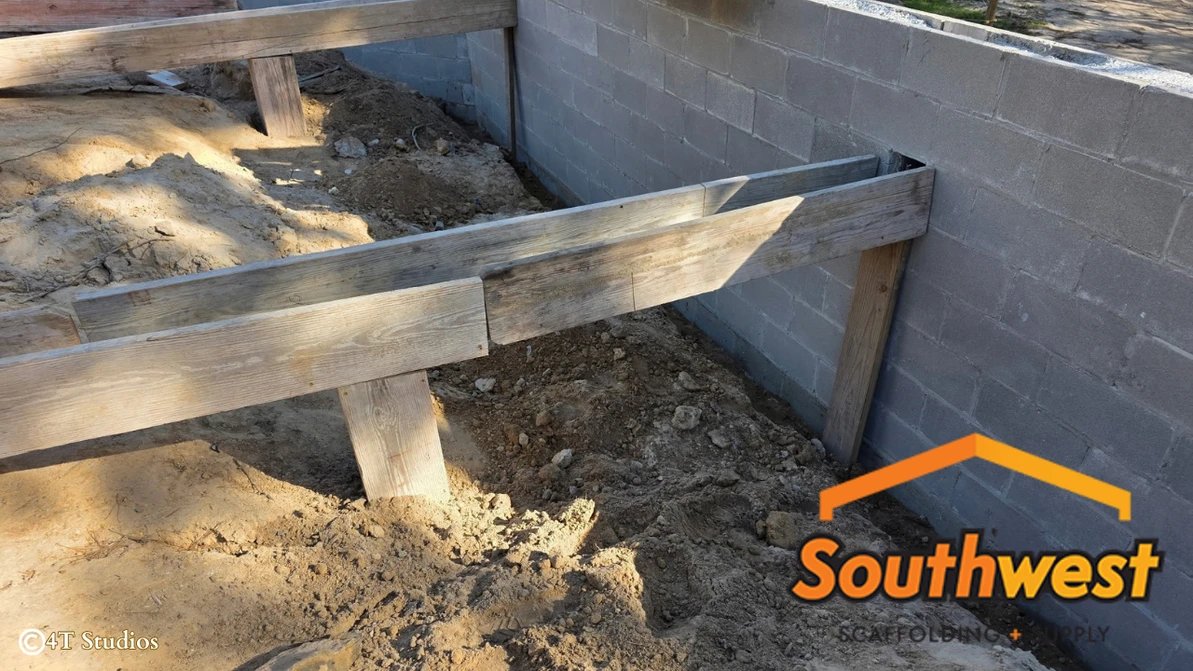
Why Is It Built Like That?
Construction is full of things that look wrong until you understand why they're right.
A skyscraper moves in the wind.
A bridge has gaps in it.
Concrete is intentionally cut after it's poured.
Old brick walls let moisture move through them.
A crane lifts enormous loads while a giant stack of weight hangs off the other end.
Roads buckle when it gets hot.
And somewhere along the way, somebody decided manholes should be round.
Most of us walk past these things every day without giving them much thought.
But somebody did.
An engineer calculated it.
An architect designed around it.
A contractor figured out how to build it.
A crew put it together.
And eventually somebody else is going to have to figure out how to inspect, repair, maintain, or replace it.
So we're starting a new series at Southwest Scaffolding called Why Is It Built Like That?
And we're going to ask some questions.
Sometimes the Weird Part Is the Important Part
People naturally expect buildings and structures to be solid.
Don't move.
Don't bend.
Don't crack.
Don't leave gaps.
That sounds reasonable.
It just isn't always how construction works.
Sometimes movement is necessary.
Sometimes a gap is intentional.
Sometimes flexibility is safer than rigidity.
Sometimes water needs a way out instead of another product trying to keep it in.
And sometimes that strange-looking piece of a structure is quietly doing a very important job.
Construction gets interesting when you stop looking at what something looks like and start asking what it's actually doing.
Take a bridge.
Most people probably don't think much about the fact that a bridge moves.
They'd probably prefer that it didn't.
But bridges expand and contract as temperatures change. They move under traffic. They respond to wind and other forces.
Engineers know that.
So they design for it.
That joint you feel when you drive onto a bridge isn't necessarily something somebody forgot to finish.
It may be there because somebody knew exactly what would happen if they didn't leave room for movement.
That's the kind of thing we're going after in this series.
Construction Is Full of Controlled Problems
Here's something people outside the industry don't always realize.
A lot of construction isn't about eliminating a force or a problem.
It's about controlling it.
We aren't stopping gravity.
We're designing for it.
We aren't stopping the wind.
We're figuring out what it will do to the building.
We aren't preventing every bit of water from ever touching a structure.
We're giving water somewhere to go.
We can't stop the ground from being the ground, so sometimes buildings need piles that reach down to better soil or rock.
Concrete is going to shrink, expand, and sometimes crack.
So instead of pretending it won't, we plan where movement can happen.
That's one of the things I love about construction.
Sometimes the smartest solution isn't fighting nature.
It's understanding what nature is going to do anyway and building accordingly.
Some Answers Are Hiding in Plain Sight
Water towers are a perfect example.
Why put thousands of gallons of water way up in the air?
Seems like a lot of trouble.
Until you realize that height helps create water pressure.
Suddenly that weird giant tank standing over town makes a lot more sense.
Cooling towers have that unmistakable curved shape for a reason too.
Crane counterweights aren't there because somebody had extra concrete lying around.
Even the round manhole cover has a surprisingly practical explanation.
Once you know why these things are built the way they are, it's hard to stop noticing them.
That's exactly what we want.
Some of the Best Questions Sound Stupid
Construction people sometimes have a bad habit of assuming everybody should already know what we know.
They don't.
And neither do we.
A mason can know masonry inside and out and still learn something from an ironworker.
A roofer may know things a concrete contractor has never had a reason to think about.
An engineer can explain exactly why a structure behaves the way it does, while the person who has spent 30 years repairing those structures can tell you what happens to that design after three decades of weather and use.
Construction is enormous.
Nobody knows all of it.
So we're not afraid of simple questions.
Why does that move?
Why is that curved?
Why is there a gap there?
Why did they put that underground?
Why didn't they just make it solid?
Why is that building sitting on hundreds of piles?
And one of my personal favorites:
Who thought of this?
Sometimes the answer goes back hundreds or even thousands of years.
Sometimes it's surprisingly modern.
And sometimes the answer is basically, "Because people learned the hard way what happens when you don't."
Construction has quite a few of those.
The Answer Usually Leads Somewhere Else
That's another reason this series could get interesting.
Ask why skyscrapers sway and pretty soon you're talking about wind, structural movement, building shape, dampers, and how workers safely access the outside of something hundreds of feet in the air.
Ask why old masonry walls need to breathe and suddenly you're talking about lime mortar, moisture movement, modern coatings, trapped water, and why a product that works beautifully on a new building can damage a historic one.
Ask why roads buckle and you end up talking about heat, expansion, joints, materials, and maintenance.
One simple question can open up an entire side of construction most people never see.
And we're going to follow it.
Because Somebody Still Has to Build It
There's another side to all of this that fits Southwest Scaffolding particularly well.
A drawing can show exactly how something is supposed to work.
Eventually somebody has to build it.
Then somebody has to reach it again.
Buildings need maintenance.
Bridges need inspection.
Concrete needs repair.
Industrial structures need service.
Historic buildings need restoration.
Towers need painting.
Equipment wears out.
The clever engineering that makes a structure work doesn't eliminate the need for people to get their hands on it.
Sometimes it makes figuring out how to reach it a whole lot more interesting.
That's where access, equipment, planning, and skilled trades become part of the story.
Start Asking Why
That's what Why Is It Built Like That? is really about.
Not turning everybody into an engineer.
Not burying people in calculations.
And definitely not making construction sound more complicated than it needs to be.
We're simply going to look at familiar things and ask why they work the way they do.
Why are bridges allowed to move?
Why do skyscrapers sway?
Why are there gaps in concrete?
Why are some buildings built on piles?
Why do old masonry walls breathe?
Why are water towers so high?
Why are cooling towers shaped like that?
Why do cranes need those enormous counterweights?
Why do roads buckle in extreme heat?
And seriously...
Why are manholes round?
Construction is everywhere.
Once you understand a little more about what's happening behind it, you start seeing things differently.
So that's exactly what we're going to do.
We're going to look at the things contractors build, repair, climb, inspect, maintain, and occasionally cuss at, and ask one simple question:
Why is it built like that?
Recent Posts
-
Why Is It Built Like That?
Construction is full of things that look wrong until you understand why they're right. A skyscraper …Oct 6th 2026 -
"The Ground Looks Level Enough"
Construction has several highly scientific measuring instruments. Levels. Lasers. Transits. Surveyin …Oct 5th 2026 -

Scaffolding Sagrada Família
Scaffolding Sagrada Família Most contractors hope their projects don't run behind schedule. Then the …Oct 5th 2026