


The history of Rolling Towers - Southwest Scaffolding
Efficiency on a job site is not just about speed. It is about movement.
Before rolling scaffolding towers, crews had to constantly dismantle and rebuild sections just to keep up with the work. That meant lost time, extra labor, and unnecessary frustration.
Rolling towers solved that problem by making scaffolding mobile.
Before Rolling Towers: Constant Rebuilding
Traditional scaffolding systems were stationary.
Once built, they stayed in place. If work moved down the wall or across a structure, crews had two options:
- Work from a less-than-ideal position
- Tear down and rebuild the scaffold
Neither option was efficient.
The Introduction of Mobility
Rolling towers added wheels, but more importantly, they added flexibility.
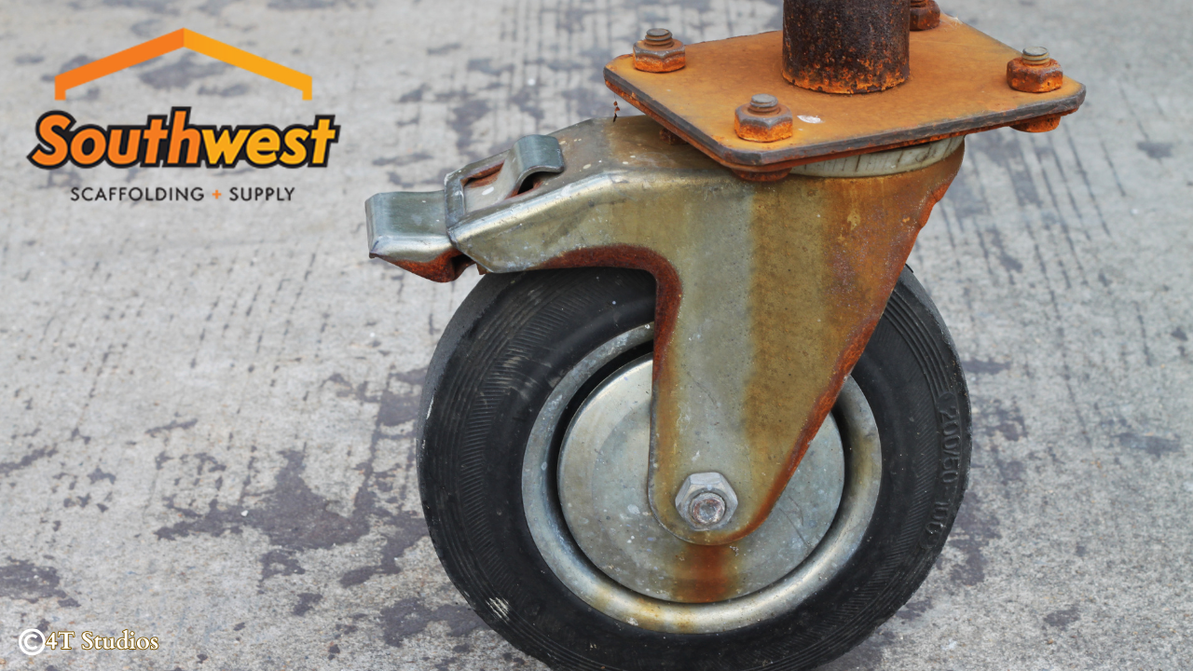
By placing scaffolding on casters, crews could reposition entire sections quickly without disassembly. Locking mechanisms kept the structure stable during use, while still allowing movement when needed.
This simple change had a major impact on productivity.
How Rolling Towers Improved Job Site Workflow
Mobility changed how crews approached their work.
Instead of planning around fixed scaffolding, they could move with the job. This reduced downtime and allowed for smoother transitions between tasks.
Rolling towers are especially useful for:
- Interior work
- Finishing tasks
- Long, continuous walls
Anywhere movement is constant, mobility matters.
Safety and Stability Considerations
Mobility does not replace safety.
Modern rolling towers are designed with stability in mind, including:
- Locking casters
- Guardrails
- Rated platforms
Standards set by the Occupational Safety and Health Administration help ensure these systems are used correctly and safely.
When used properly, rolling towers provide both flexibility and protection.
Why Contractors Rely on Rolling Towers
The biggest benefit is time savings.
Reducing teardown and rebuild cycles keeps crews focused on the work that matters. Over the course of a project, that can make a significant difference in labor costs and timelines.
It also reduces physical strain. Moving a tower is easier than rebuilding one.
Where Rolling Towers Fit Today
Rolling scaffolding towers are now a standard part of many job sites.
They are not a replacement for all scaffolding systems, but they are a powerful tool when mobility is needed.
Contractors who use them effectively can move faster and work more efficiently without sacrificing safety.
Key Takeaways
- Rolling towers eliminate constant teardown and rebuild
- Mobility improves workflow and reduces downtime
- Modern systems balance movement with stability
- Proper use is essential for safety and performance
Coming Next in the Series : Bracing and Screw Jacks
Recent Posts
-

Why Do Masonry Walls Need to Breathe?
Let's get one thing out of the way first. Your brick wall isn't actually breathing. It doesn't inhal …Oct 16th 2026 -

Why Are Buildings Built on Piles?
Most buildings look like they're sitting on the ground. Sometimes that's a little misleading. The bu …Oct 13th 2026 -

Why Are There Gaps in Concrete?
Concrete cracks. There. We said it. Not exactly the opening line the concrete industry would put on …Oct 12th 2026