


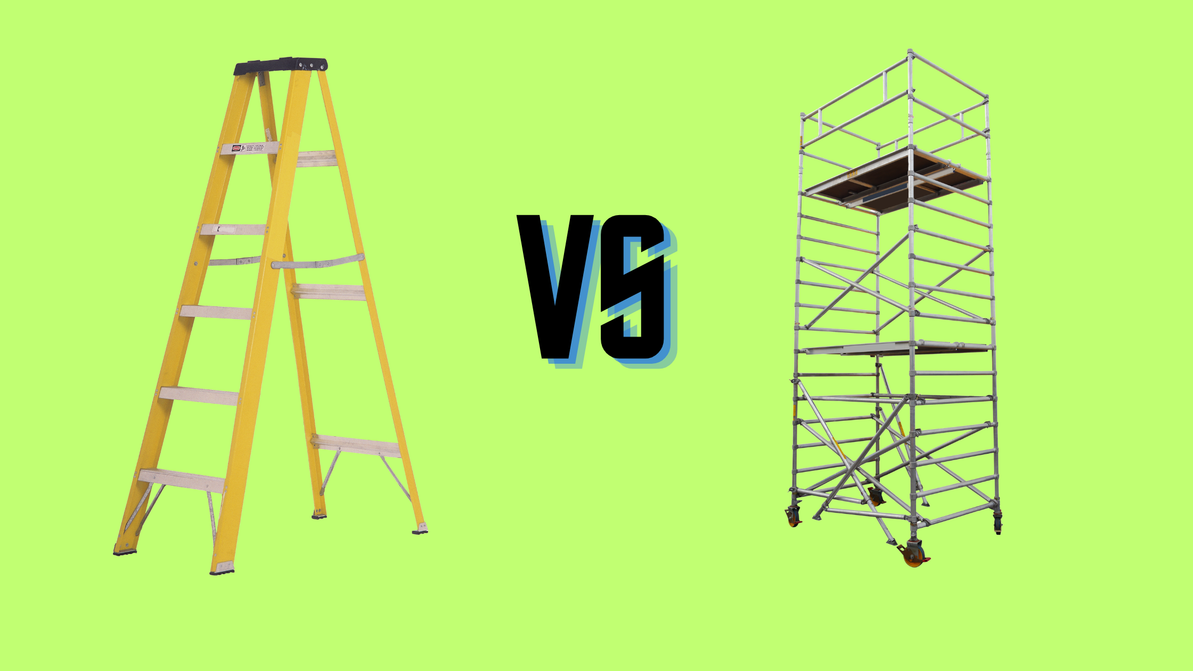
Scaffolding vs. Ladders: Best Options for Roofing Projects
Ladders are common.
Scaffolding is strategic.
Both have a place on roofing projects. The difference lies in how they are used — and when.
Too often, access decisions are made out of habit rather than evaluation. A ladder is available. It’s familiar. It feels efficient.
But efficient and appropriate are not always the same thing.
When Ladders Make Sense
Ladders are effective tools for:
-
Short-duration tasks
-
Quick inspections
-
Minor repairs
-
Light material handling
-
Access to low-slope residential structures
When properly set, secured, and used within their intended scope, ladders can be safe and efficient.
But ladders are access tools — not work platforms.
The moment a ladder becomes the primary workstation, risk begins to increase.
When Scaffolding Becomes the Smarter Solution
As project complexity increases, so should the access solution.
Scaffolding often becomes the safer, more efficient choice when projects involve:
-
Multiple workers operating simultaneously
-
Heavy material staging
-
Extended time at height
-
Steep roof pitches
-
Multi-story or commercial structures
-
Frequent trips up and down for tools or supplies
Roofing is physically demanding. Repeated ladder climbs while carrying bundles, tools, or debris compounds fatigue quickly.
Fatigue is rarely discussed — but it is a major contributor to falls.
When workers are tired:
-
Balance suffers
-
Focus narrows
-
Shortcuts become tempting
-
Reaction time slows
Scaffolding reduces climb frequency. It creates stable working platforms. It allows materials to be staged safely and within reach. It provides opportunities for guardrail systems and controlled access points.
And importantly — it supports productivity.
A stable crew works faster than a cautious, fatigued one.
The Strategic Difference
The decision between scaffolding and ladders should be based on:
-
Project duration
-
Roof pitch and surface type
-
Structure height
-
Crew size
-
Material volume
-
Weather conditions
-
Site constraints
There is no one-size-fits-all solution.
But there is always a safer answer.
Professional roofing operations evaluate access as part of the project plan — not as an afterthought. The right choice protects workers, controls liability, and keeps timelines intact.
Because when access is unstable, everything else becomes unstable too.
At Southwest Scaffolding, we work with contractors and property owners to determine the right access strategy before work begins.
Not every job requires scaffolding.
But every job requires a decision made intentionally.
Planning a roofing project this season?
Before the first ladder goes up, contact Southwest Scaffolding for safe, professional roof access solutions.
Because safety isn’t optional.
It’s structural.
Recent Posts
-

Why Do Masonry Walls Need to Breathe?
Let's get one thing out of the way first. Your brick wall isn't actually breathing. It doesn't inhal …Oct 16th 2026 -

Why Are Buildings Built on Piles?
Most buildings look like they're sitting on the ground. Sometimes that's a little misleading. The bu …Oct 13th 2026 -
Why Are There Gaps in Concrete?
Concrete cracks. There. We said it. Not exactly the opening line the concrete industry would put on …Oct 12th 2026