



Scaffolding Massive Bridges
Scaffolding Massive Bridges
Sometimes the work you need to reach isn't 300 feet above the ground.
It's 300 feet above water, traffic, or absolutely nothing.
Welcome to bridge scaffolding.
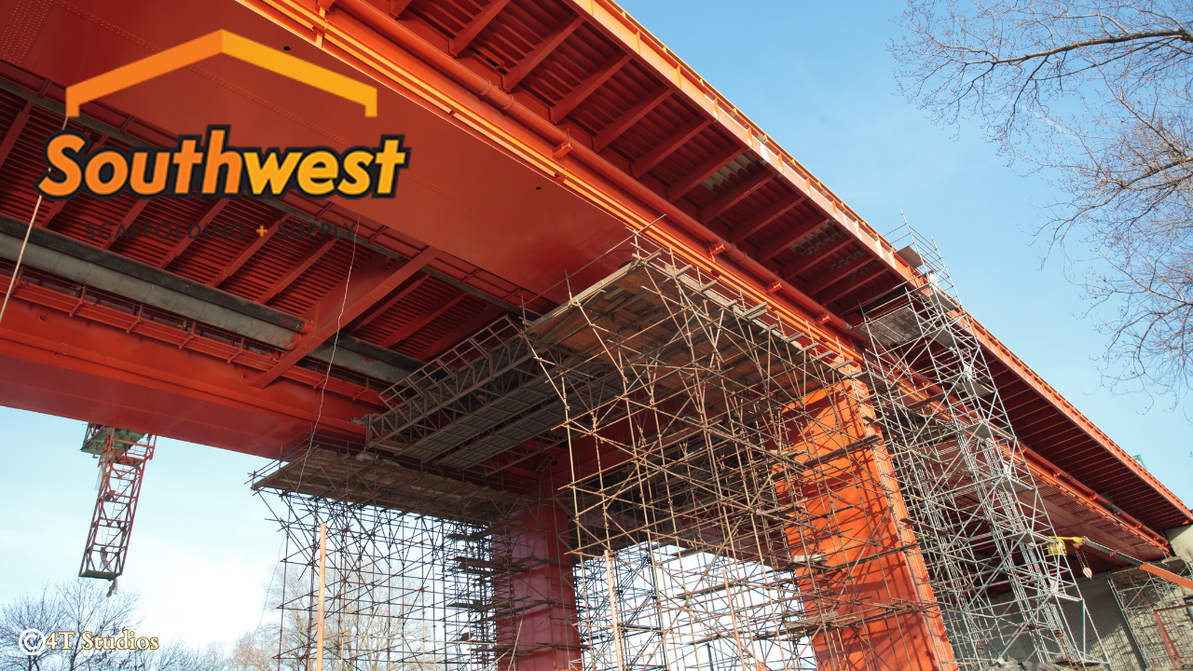
Bridges present some of the most unusual access challenges in construction. Unlike a building, where much of the work is accessible from the ground or from relatively predictable elevations, the areas requiring maintenance on a bridge may be underneath the structure, between massive structural members, above active traffic, or suspended over water.
And bridges don't get to stop being bridges just because somebody needs to work on them.
Traffic may still need to move.
Ships may still need to pass underneath.
Trains may still need to cross.
That makes scaffolding a massive bridge an interesting combination of engineering, logistics, safety, and sometimes a little creativity.
Sometimes Up Is the Easy Direction
Most people think scaffolding means going up.
Bridge work frequently means going down.
Workers may need access to the underside of the bridge deck, structural steel, bearings, connections, utility lines, concrete surfaces, or other components that can't easily be reached from above.
And there may be nothing underneath them.
No ground.
No floor.
No convenient place to start stacking scaffold frames.
That's where suspended scaffolding and other specialized access systems become incredibly useful.
Instead of building upward from the ground, the working platform may need to be supported from the bridge itself.
The entire access problem gets turned upside down.
Water Complicates Everything
Bridges over water introduce another challenge.
You can't simply park equipment underneath the work.
Depending on the bridge and location, access may involve barges, boats, suspended platforms, or other specialized systems.
Then there are tides.
Currents.
Waves.
Wind.
Marine traffic.
Weather.
Suddenly the environment underneath the bridge becomes just as important as the bridge itself.
If materials fall, they're not landing on an empty construction site.
They're going into a river, harbor, or shipping channel.
That makes containment and material control particularly important.
Traffic Doesn't Want to Stop
Now put the same bridge over a busy highway.
Thousands of vehicles may pass beneath the work every day.
Closing the road completely may not be practical.
That means contractors sometimes have to perform maintenance while traffic continues moving below.
Work zones have to be carefully controlled.
Tools and materials need to be secured.
Falling-object protection becomes critical.
Deliveries and scaffold installation may need to happen during limited traffic closures or overnight work windows.
A scaffold can't simply solve the contractor's access problem.
It also has to work around everyone else using the bridge.
Bridges Move
Here's something people outside construction don't always think about.
Bridges move.
They have to.
Traffic creates vibration.
Wind creates movement.
Temperature changes cause materials to expand and contract.
Long spans are specifically designed to accommodate movement.
That means temporary access systems installed on or around a bridge exist within a structure that isn't perfectly motionless.
Connections, loads, clearances, and scaffold design all have to account for the actual conditions of the structure.
The bridge may look completely still from a distance.
From an engineering standpoint, it isn't.
Wind Gets Serious
Bridges are often located in exposed environments.
Across rivers.
Across valleys.
Across bays.
High above surrounding terrain.
That can mean significant wind exposure.
Workers feel it.
Materials feel it.
Temporary access systems feel it.
Containment systems can make the situation even more interesting.
Painting and blasting operations may require enclosures to contain debris and coatings.
Those enclosures add surface area.
And surface area gives wind something to push against.
What begins as a containment decision quickly becomes a structural consideration.
As we keep discovering throughout this series, everything in construction is connected.
Corrosion Never Really Stops
Many large bridges contain enormous amounts of steel.
Steel and moisture have a complicated relationship.
Add salt from coastal environments or winter road treatments and corrosion becomes an ongoing maintenance challenge.
Protective coatings help.
But coatings don't last forever.
Eventually surfaces need inspection, preparation, repair, and recoating.
And someone has to reach them.
That may mean workers operating underneath bridge decks, around structural members, between beams, or high above water.
Scaffolding often becomes the temporary workplace that allows long-term preservation of the permanent structure.
Containment Can Become a Project of Its Own
Bridge restoration sometimes involves abrasive blasting, paint removal, coating work, concrete repair, or other activities that generate debris.
You can't simply allow that material to fall into traffic or waterways.
Containment systems may need to surround the work area.
Now the scaffold isn't only providing access.
It's helping create a temporary controlled work environment.
Workers need room.
Ventilation may need consideration.
Debris needs to be managed.
Loads need to be calculated.
Wind still matters.
The temporary structure begins performing multiple jobs at once.
Everything Is Bigger
Massive bridges have a way of making ordinary construction tasks enormous.
A small repair may be hundreds of feet from the nearest practical access point.
A painting project may involve acres of steel surface.
Scaffold components may need to travel long distances across or beneath the bridge before reaching the work area.
Workers may spend significant time simply getting to their position.
Material handling becomes a logistical operation.
And moving the access system as work progresses can become a project within the project.
That's why planning is so important.
On large infrastructure projects, wasted movement becomes expensive very quickly.
The Public Rarely Sees the Hard Part
Most people drive across a bridge without thinking much about what keeps it there.
They don't see inspections.
They don't see corrosion repairs.
They don't see bearing replacement.
They don't see concrete restoration.
They don't see the workers underneath the deck.
And they certainly don't think about the temporary access systems that allow those workers to reach the structure.
That's usually a good thing.
Infrastructure maintenance works best when the public barely notices it happening.
Temporary Access Protecting Permanent Connections
Bridges connect cities.
Communities.
Businesses.
People.
Keeping those structures operating requires constant inspection and maintenance, much of it performed in places that were never designed to be easy to reach.
That's where access becomes part of infrastructure preservation.
At Southwest Scaffolding, we know that sometimes the biggest challenge isn't figuring out how to repair something.
It's figuring out how to safely get workers close enough to repair it.
And massive bridges take that challenge to another level.
Because sometimes the work isn't 300 feet above the ground.
It's 300 feet above water, traffic, or absolutely nothing.
Recent Posts
-

Why Do Masonry Walls Need to Breathe?
Let's get one thing out of the way first. Your brick wall isn't actually breathing. It doesn't inhal …Oct 16th 2026 -

Why Are Buildings Built on Piles?
Most buildings look like they're sitting on the ground. Sometimes that's a little misleading. The bu …Oct 13th 2026 -
Why Are There Gaps in Concrete?
Concrete cracks. There. We said it. Not exactly the opening line the concrete industry would put on …Oct 12th 2026