

How to Lead a Toolbox Talk That Doesn’t Put People to Sleep
We’ve all been there. You gather the crew for a safety meeting, and within 60 seconds, half the eyes are glazed over, someone’s checking their phone, and someone else is wondering if they have time to grab a donut before the real work starts.
But safety talks don’t have to be boring. In fact, the best toolbox talks are short, sharp, and memorable — and they could be the reason someone makes it home in one piece.
Here’s how to make your safety meetings something your crew actually listens to (and maybe even appreciates).
What Is a Toolbox Talk?
A toolbox talk (or tailgate meeting) is a quick, focused safety meeting held on the jobsite — usually lasting 5 to 15 minutes. It’s a chance to highlight potential hazards, reinforce safe practices, and build a safety-first culture.
But here's the catch: you only get their attention if you make it worth their time.
7 Tips for Leading an Engaging Toolbox Talk
1. Keep It Short — But Strong
Aim for 10 minutes or less. Rambling is the enemy of attention. Focus on one specific topic that’s relevant to the day’s work.
2. Make It Personal
Use real-life stories — especially ones that hit close to home. “Last month, a guy in Dallas fell off a scaffold because…” sticks better than statistics.
3. Ask Questions
Turn it into a conversation. “What’s one thing you do before climbing a scaffold?” gets minds turning. Call on different crew members — respectfully, not like a pop quiz.
4. Use Visuals or Props
Bring a broken harness, a cracked ladder, or photos of good vs. bad setups. A visual makes a bigger impact than a list of rules. One of my favorite thigs to do is create videos. Short videos are an amazing way to engage employees.
5. Relate It to Today’s Job
“If we’re working 12 feet in the air today, fall protection is priority #1.” Make the safety talk feel like part of the plan, not a side task.
6. Rotate Speakers
Let your foremen, leads, or even crew members run the talk occasionally. It breaks the routine and gives everyone ownership of safety.
7. End With a Quick Action
“Check your harness for these three things.” “Make sure your scaffold tags are updated.” Give them something to do immediately.
BONUS: Free Toolbox Talk Checklist + Sample Script
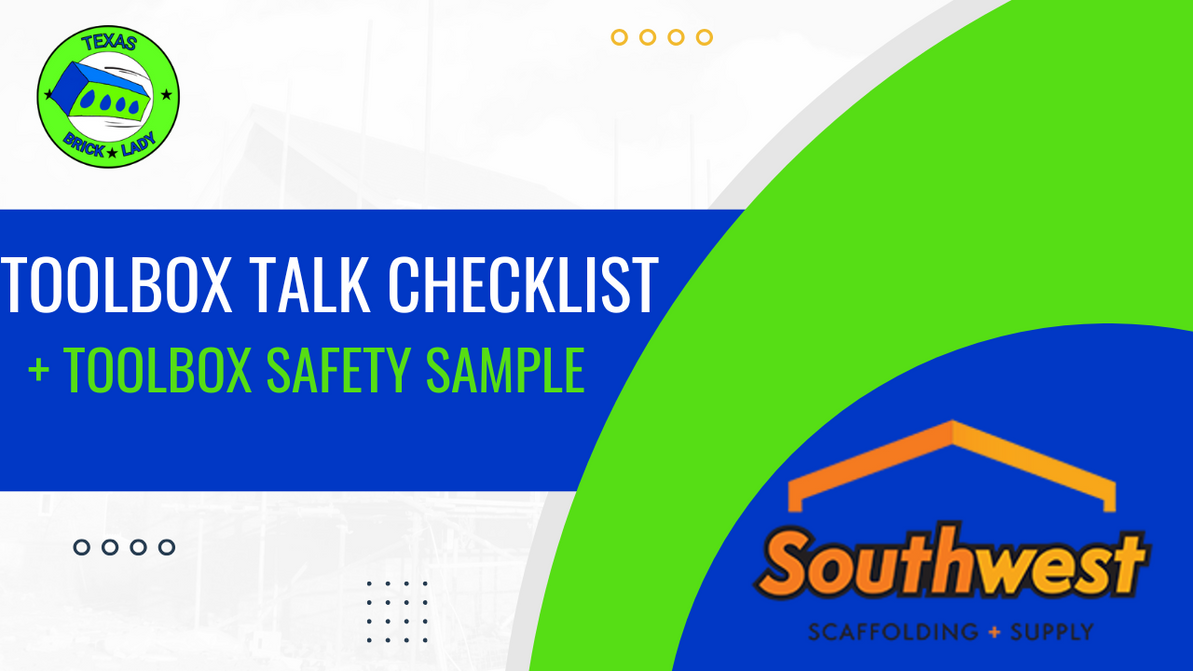
Want to make this easier? We’ve created a printable Toolbox Talk Checklist and a Fall Protection Sample Script to help you keep your meeting on track and impactful.
✅ Keep meetings consistent
✅ Cover OSHA basics
✅ Stay job-relevant
✅ Never run out of topics
Get your FREE checklist and sample talk here: Just copy and paste the link
https://www.texasbricklady.com/product-page/toolbox-talk-checklist-and-sample-talk
Why It Matters (More Than You Think)
A good toolbox talk isn’t about checking a box. It’s about setting the tone. It tells your team, “We care about you. Let’s stay sharp.” And that message? That’s how you build a culture where people look out for each other — not just the Job.
Recent Posts
-

Why Do Masonry Walls Need to Breathe?
Let's get one thing out of the way first. Your brick wall isn't actually breathing. It doesn't inhal …Oct 16th 2026 -

Why Are Buildings Built on Piles?
Most buildings look like they're sitting on the ground. Sometimes that's a little misleading. The bu …Oct 13th 2026 -
Why Are There Gaps in Concrete?
Concrete cracks. There. We said it. Not exactly the opening line the concrete industry would put on …Oct 12th 2026