

The Real Reason Construction Fatalities Still Happen
The construction industry is safer today than it was twenty, thirty, or fifty years ago.
Equipment is better.
Training is better.
Safety standards are better.
Technology is better.
Yet despite all of those improvements, construction remains one of the most dangerous industries in America.
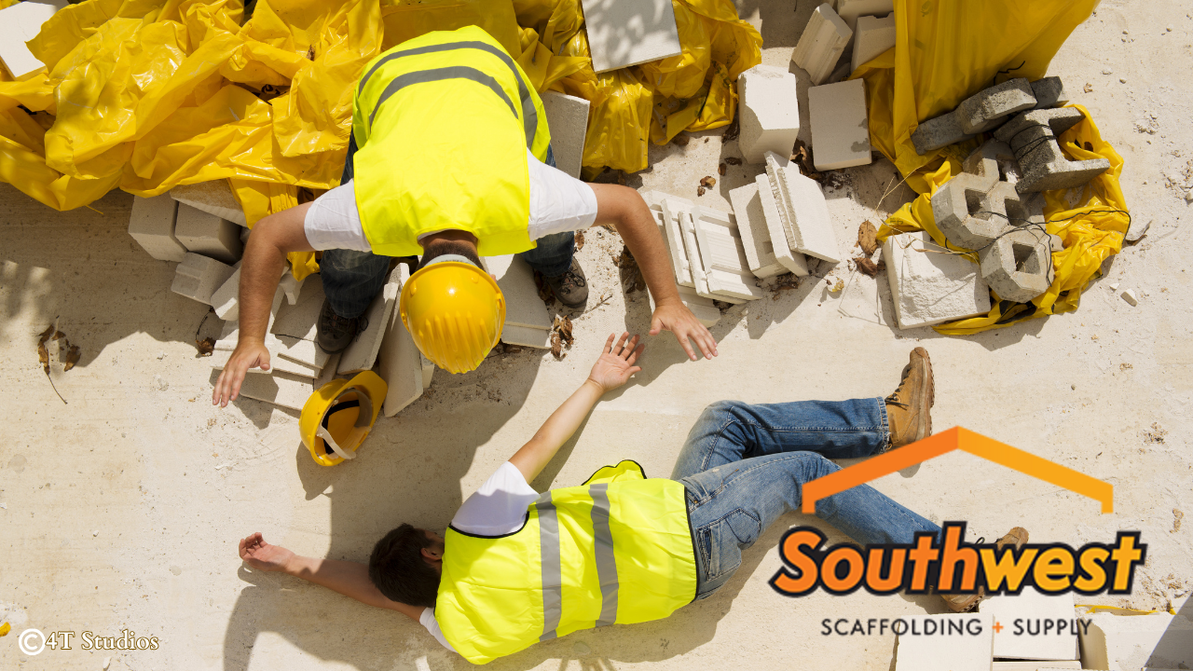
Every year, workers still lose their lives on jobsites.
The question is why.
If we have better equipment, stronger regulations, and more safety training than ever before, why do fatalities continue to happen?
Many people assume the answer is simple.
They blame bad luck.
They blame equipment failures.
They blame workers.
But when investigators examine fatal accidents, they often discover something much more troubling.
Most construction fatalities are not caused by a single catastrophic event.
They are caused by a chain of decisions.
The Fatal Accident That Started Weeks Earlier
When a serious accident occurs, people naturally focus on the moment it happened.
The fall.
The collapse.
The electrocution.
The struck-by incident.
The trench cave-in.
But the truth is that the fatal event itself is often the final link in a chain that started long before anyone was injured.
The warning signs were usually there.
A missing inspection.
A damaged component.
An ignored hazard.
A rushed schedule.
A lack of training.
A shortcut that became routine.
Fatal accidents rarely appear out of nowhere.
More often, they develop slowly until one final event exposes all the weaknesses that already existed.
Complacency Is More Dangerous Than Inexperience
Many people assume new workers face the greatest risk.
Sometimes they do.
But experienced workers can be equally vulnerable.
Why?
Because familiarity can create complacency.
When someone performs the same task every day, it becomes easy to believe nothing will go wrong.
The harness gets skipped because it is only a quick task.
The ladder is used improperly because it saves time.
The scaffold inspection gets rushed because everything looked fine yesterday.
The danger is that workers often stop recognizing risks they see every day.
Experience is valuable.
Overconfidence is dangerous.
Schedule Pressure Changes Behavior
Construction schedules are tighter than ever.
Owners want projects completed faster.
General contractors face increasing pressure.
Subcontractors are expected to do more with fewer resources.
Deadlines matter.
But schedule pressure has consequences.
Workers begin rushing.
Supervisors start accepting shortcuts.
Inspections become less thorough.
Safety meetings become shorter.
Hazards that would normally be corrected get postponed until later.
The problem is that accidents do not care about deadlines.
Gravity does not speed up because a project is behind schedule.
Electricity does not become less dangerous because a milestone is approaching.
The laws of physics do not negotiate.
The "It Won't Happen to Me" Mindset
One of the most common factors in fatal accidents is a false sense of security.
Every worker has heard stories about serious injuries.
Every contractor has read accident reports.
Every supervisor understands the risks.
Yet many people still believe those incidents happen to someone else.
Not their crew.
Not their project.
Not today.
That mindset creates dangerous blind spots.
When workers stop believing accidents are possible, safety procedures begin feeling unnecessary.
That is often the moment risk starts increasing.
Communication Failures Kill
Construction projects involve multiple trades, multiple supervisors, multiple schedules, and multiple priorities.
Communication is what keeps everything connected.
When communication breaks down, hazards multiply.
Workers may not know another trade is operating overhead.
Equipment may be moved without notice.
Hazards may not be reported.
Changes may not be communicated.
Assumptions take the place of information.
And assumptions can be deadly.
Many fatal accidents involve information that someone knew but failed to communicate effectively.
Safety Culture Is the Difference
The safest jobsites are not necessarily the ones with the most rules.
They are the ones with the strongest safety culture.
A strong safety culture means workers feel comfortable speaking up.
It means supervisors listen when concerns are raised.
It means hazards are addressed immediately.
It means safety is treated as part of the job rather than an obstacle to production.
Most importantly, it means leadership consistently demonstrates that safety matters.
Workers pay attention to actions far more than words.
If leadership cuts corners, crews notice.
If leadership ignores hazards, crews notice.
If leadership prioritizes production over safety, crews notice.
Culture always starts at the top.
The Real Reason Fatalities Still Happen
The construction industry does not have a knowledge problem.
Most hazards are well understood.
Most safety procedures are clearly defined.
Most workers know what safe practices look like.
The real challenge is execution.
Fatalities continue to happen because people are human.
People become complacent.
People get rushed.
People take shortcuts.
People assume someone else checked.
People convince themselves that this one exception will be fine.
That is why safety can never be treated as a one-time training session or an annual meeting.
It requires constant attention.
Every day.
Every project.
Every task.
At Southwest Scaffolding, we believe every worker deserves to return home safely at the end of the day. Quality equipment, proper planning, regular inspections, and a strong safety culture all play a role in making that happen.
Because most fatalities are not caused by a lack of knowledge.
They happen when people stop applying what they already kno
Recent Posts
-

Why Do Cranes Need Counterweights?
Cranes are impressive machines. They can pick up steel, concrete, equipment, materials, and loads we …Oct 26th 2026 -

Why Are Cooling Towers Shaped Like That?
Some structures are instantly recognizable. You can see a massive cooling tower from miles away. Wid …Oct 21st 2026 -
Why Are Water Towers So High?
Every small town seems to have one. A giant tank sitting way up in the air with the town's name pain …Oct 19th 2026