



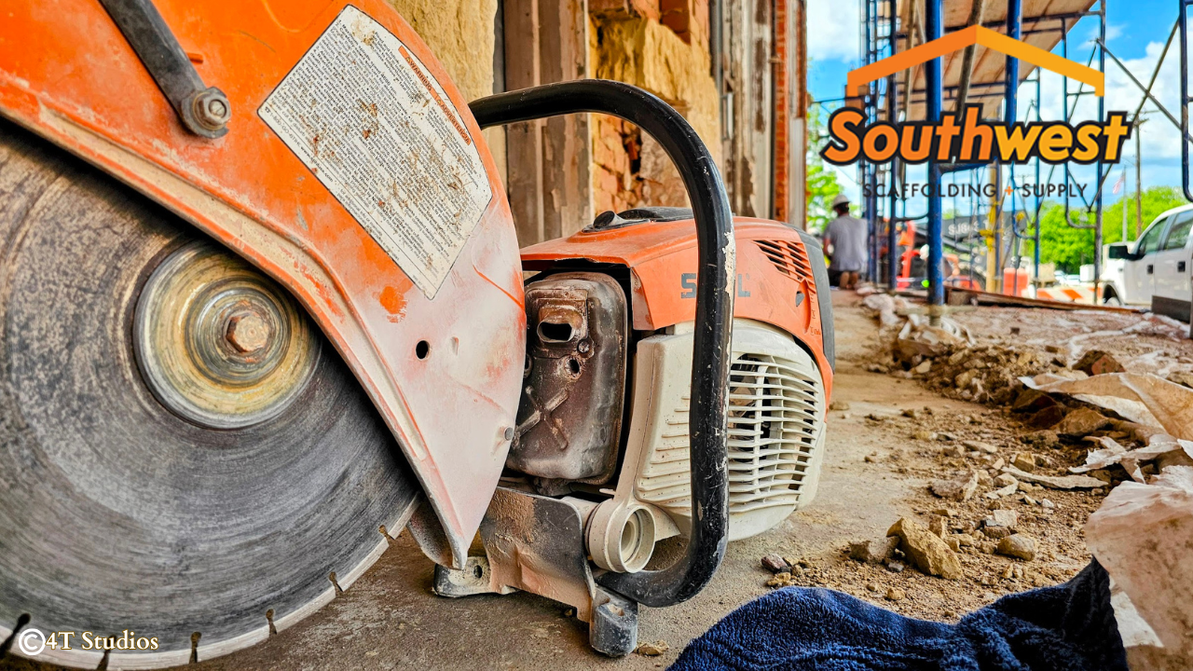
Masonry Saws (Gas vs Electric) - Southwest Scaffolding
Few tools changed masonry production more than the masonry saw.
Before powered cutting equipment became common, masons shaped brick and stone almost entirely by hand using chisels, hammers, and scoring tools. While skilled craftsmen produced incredible work, the process was slow, labor intensive, and difficult to scale on larger projects.
The introduction of masonry saws dramatically improved speed, consistency, and efficiency across the industry.
Today, masonry saws remain one of the most important tools on construction sites, especially for crews working with brick, block, stone, and concrete materials.
Early Masonry Cutting Was Time Consuming
For centuries, cutting masonry materials required patience and physical labor.
Builders relied heavily on:
- Chisels
- Brick hammers
- Stone cutting tools
- Manual scoring methods
These techniques worked, but they often created inconsistent cuts and required significant skill to perform efficiently.
As commercial construction expanded and projects became more demanding, contractors needed faster and more reliable cutting methods.
The Rise of Powered Masonry Saws
The introduction of powered masonry saws transformed the trade.
Instead of manually shaping every piece, contractors could now produce cleaner and more accurate cuts with much greater speed. This improved:
- Production rates
- Material consistency
- Workflow efficiency
- Overall project timelines
Wet cutting systems also helped reduce dust while improving blade life and cutting performance.
Over time, masonry saws became standard equipment for professional masonry crews.
Gas Masonry Saws: Power and Mobility
Gas-powered masonry saws became popular because they offered portability and strong cutting power without requiring electrical access.
These saws work especially well for:
- Remote job sites
- Outdoor projects
- Heavy-duty cutting applications
- Large masonry materials
Gas saws allow crews to move freely around active construction areas without depending on extension cords or nearby power sources.
That flexibility makes them valuable on large commercial projects and developing job sites where electrical infrastructure may still be limited.
However, gas saws also create:
- More noise
- Exhaust fumes
- Increased maintenance needs
- Additional fuel management requirements
For some environments, those factors matter.
Electric Masonry Saws: Cleaner and More Controlled
Electric masonry saws became increasingly popular as job sites focused more on indoor work, noise reduction, and cleaner operation.
Electric systems often provide:
- Quieter performance
- Reduced emissions
- Easier startup
- Lower maintenance requirements
They are especially useful for:
- Indoor construction
- Renovation projects
- Controlled cutting environments
- Areas with limited ventilation
Many contractors also appreciate the smoother and more controlled cutting feel electric saws can provide during detailed masonry work.
The tradeoff is mobility. Electric saws depend on available power sources, which may limit flexibility on some projects.
How Modern Masonry Saws Continue to Improve
Today’s masonry saws are designed for both performance and job site durability.
Manufacturers continue improving:
- Blade technology
- Water delivery systems
- Dust control
- Motor efficiency
- Cutting precision
Modern saw systems help crews maintain faster production while improving accuracy and reducing material waste.
On busy projects, those improvements can significantly affect profitability and workflow.
Safety and Job Site Efficiency
Cutting masonry materials creates serious demands on both equipment and workers.
Organizations like the Occupational Safety and Health Administration continue emphasizing the importance of:
- Dust control
- Proper guarding systems
- Hearing protection
- Safe cutting procedures
Reliable saw systems help contractors maintain safer and more organized work environments while improving production efficiency.
Why Reliable Equipment Matters
Masonry saws operate under extremely demanding conditions.
Dust, vibration, moisture, and heavy cutting loads can quickly wear down low-quality equipment. Contractors need saws capable of handling daily job site abuse while maintaining accuracy and reliability.
Dependable cutting equipment helps crews:
- Reduce downtime
- Improve cut consistency
- Increase productivity
- Maintain cleaner workflow throughout the project
On professional masonry projects, reliable equipment matters.
Southwest Scaffolding
At Southwest Scaffolding, contractors and masonry crews can find masonry saws, cutting equipment, and job site tools designed for demanding construction environments. Whether the project requires gas-powered mobility or cleaner electric operation, having reliable cutting equipment helps crews work more efficiently and maintain professional results.
The right tools help keep projects moving safely and productively.
Key Takeaways
- Early masonry cutting relied heavily on manual labor and hand tools
- Powered masonry saws improved speed, consistency, and efficiency
- Gas saws provide mobility and power for outdoor and large-scale work
- Electric saws offer cleaner and quieter operation for controlled environments
- Reliable cutting equipment helps support safer and more productive job sites
Recent Posts
-

Why Do Masonry Walls Need to Breathe?
Let's get one thing out of the way first. Your brick wall isn't actually breathing. It doesn't inhal …Oct 16th 2026 -

Why Are Buildings Built on Piles?
Most buildings look like they're sitting on the ground. Sometimes that's a little misleading. The bu …Oct 13th 2026 -

Why Are There Gaps in Concrete?
Concrete cracks. There. We said it. Not exactly the opening line the concrete industry would put on …Oct 12th 2026