
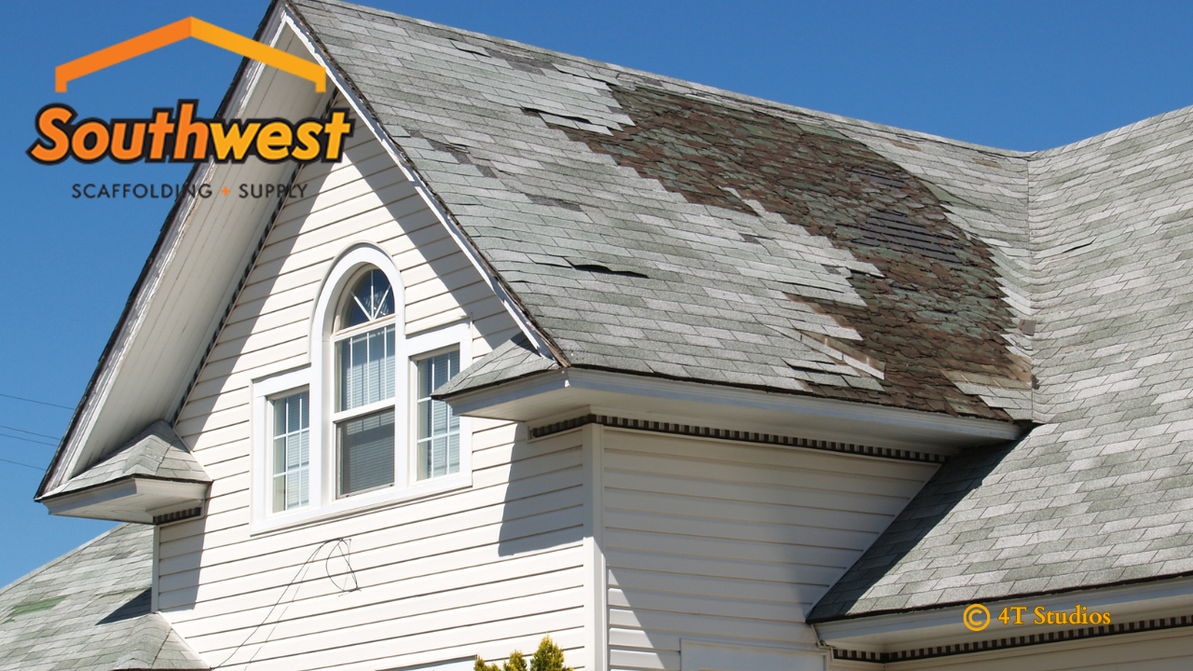
Building a Roof Safely Starts Before the First Shingle
Most roofing accidents don’t happen because someone ignored safety.
They happen because safety was never built into the plan.
Roofing is often viewed as a mobilize-and-move trade. Materials arrive. Dumpsters are placed. Crews climb. Work begins.
But by the time boots hit the roof, many of the most important safety decisions have already been made — or missed.
Safe roofing starts long before the first shingle is removed.
Safety Begins in the Planning Phase
Before materials are delivered, several critical questions should already have answers:
-
How will workers safely access the roof?
-
Where will materials be staged?
-
What fall protection systems will be in place?
-
How will debris be managed and removed?
-
What are the weather conditions projected for the duration of the job?
-
Who is responsible for safety oversight on site?
These are not paperwork questions.
They are structural decisions.
When access and staging are improvised on arrival, crews adapt in real time. And adaptation at height increases risk.
Planning reduces improvisation.
Improvisation increases exposure.
Access Is Not an Afterthought
One of the most overlooked aspects of roof safety is access strategy.
Too often, a ladder is placed wherever space allows. Materials are carried manually because staging was not pre-coordinated. Crews make repeated climbs because no platform was integrated into the workflow.
Access decisions influence:
-
Worker fatigue
-
Fall exposure
-
Material efficiency
-
Site congestion
-
Timeline stability
When access is designed intentionally — whether ladder-based or scaffold-supported — everything downstream becomes safer and more efficient.
Storm Season Changes the Equation
Spring roofing season in Texas brings additional unpredictability.
Morning dew.
Afternoon wind shifts.
Pop-up storms.
Roof surfaces change quickly, and staging areas can become unstable with little warning.
Proper planning accounts for:
-
Weather monitoring
-
Secured material storage
-
Stable work platforms
-
Clear debris pathways
A roof replacement may be temporary.
The consequences of a fall are not.
Professional Projects Are Built, Not Reacted To
The difference between a reactive job site and a professional one is simple:
Professional projects are built before they begin.
They include:
-
Site assessments
-
Access evaluations
-
Equipment inspections
-
Defined staging plans
-
Clear safety communication
When safety is integrated into the project plan, it stops being an obstacle.
It becomes infrastructure.
At Southwest Scaffolding, we believe roof safety begins before crews arrive and continues until the final cleanup.
Because building a roof safely doesn’t start with shingles.
It starts with decisions.
Planning a roofing project this season?
Before the first ladder goes up, contact Southwest Scaffolding for safe, professional roof access solutions.
Because safety isn’t optional.
It’s structural.
Recent Posts
-

Building a Roof Safely Starts Before the First Shingle
Most roofing accidents don’t happen because someone ignored safety. They happen because safety was n …Feb 26th 2026 -

Scaffolding vs. Ladders — Which Is the Right Access Solution?
Ladders are common.Scaffolding is strategic. Both have a place on roofing projects. The difference l …Feb 25th 2026 -
The 5 Biggest Fall Risks on Roofs
Roofing combines elevation, motion, debris, power tools, material staging, and constantly changing w …Feb 24th 2026