


Bracing and Screw Jacks: The Components That Keep Scaffolding Stable
Bracing and Screw Jacks: The Components That Keep Scaffolding Stable
When people think about scaffolding, they usually picture frames, platforms, and guardrails.
What they often do not think about are the components working quietly in the background to keep the entire structure stable. Bracing and screw jacks may not be the most visible parts of a scaffold system, but they are some of the most important.
Without proper support and leveling, even well-built scaffolding can become unsafe, inefficient, or difficult to work from.
Early Scaffolding Had a Stability Problem
In the early days of scaffolding, stability depended heavily on craftsmanship and experience.
Wood scaffolding systems were often built directly on uneven ground using whatever materials were available. Crews relied on wedges, stacked lumber, and improvised supports to level structures.
The problem was consistency.
As projects became taller and heavier, builders realized that stability could no longer depend entirely on guesswork.
The Introduction of Bracing
Bracing was one of the biggest improvements in scaffolding design.
Diagonal braces helped distribute force across the structure and reduced unwanted movement. Instead of relying only on vertical support, scaffolding systems could now resist swaying and shifting caused by movement, wind, and uneven loads.
This was especially important as commercial construction expanded and projects became more complex.
Modern bracing systems now provide:
- Increased rigidity
- Better load distribution
- Improved worker confidence at height
- More consistent structural performance
Without proper bracing, scaffolding loses much of the strength designed into the system.
Why Screw Jacks Changed the Industry
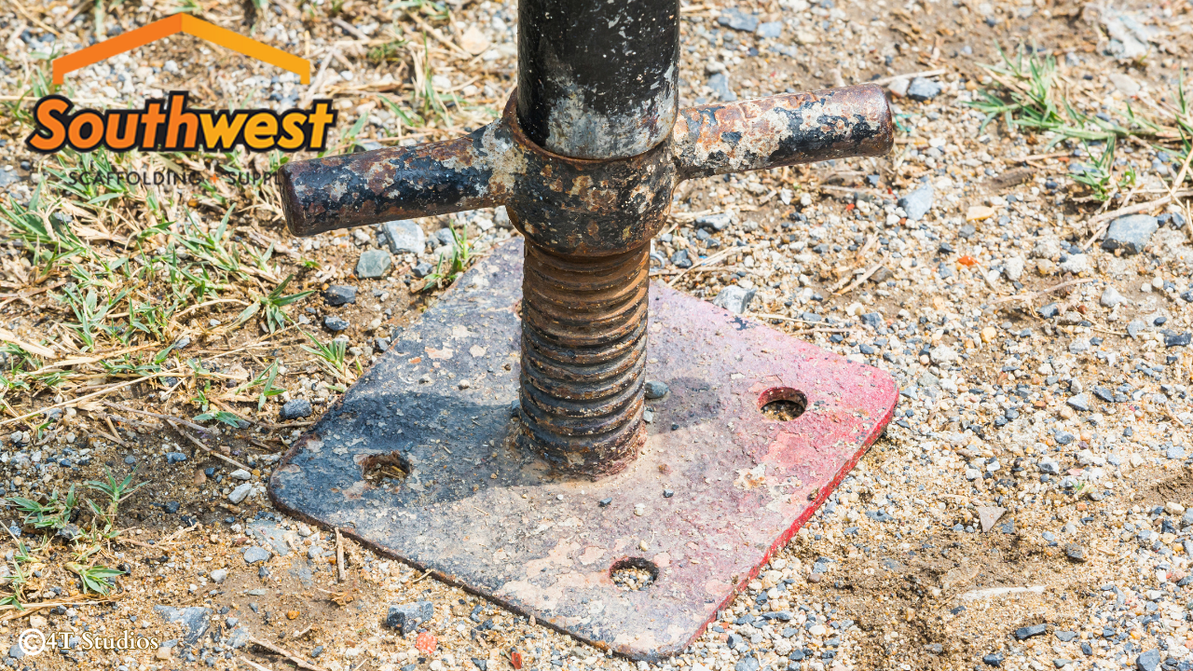
Screw jacks solved another major problem: uneven ground.
Before adjustable bases became common, leveling scaffolding was time-consuming and unreliable. Crews often used wood blocks or makeshift solutions to compensate for slopes and elevation changes.
Screw jacks introduced precision.
By allowing workers to adjust the height at the base of the scaffold, crews could create level working platforms even on difficult terrain. This improved both safety and efficiency.
Today, screw jacks are used to:
- Level scaffold systems
- Improve load stability
- Compensate for uneven surfaces
- Support safer working conditions
It is a simple component, but one that dramatically improved the reliability of scaffold setups.
Modern Job Site Expectations
Today’s job sites move fast, and contractors expect scaffolding systems to perform consistently under pressure.
That means stability cannot be optional.
Organizations like the Occupational Safety and Health Administration have established standards for scaffold safety, including proper support, leveling, and structural integrity.
Bracing and screw jacks play a major role in meeting those expectations.
When installed correctly, they help reduce:
- Excessive movement
- Uneven loading
- Setup delays
- Safety risks
These are the kinds of details that can impact both productivity and liability on a project.
Why Quality Components Matter
Not all scaffold components perform the same.
Worn-out braces, damaged threads, or improperly fitted components can create issues long before a visible failure occurs. Contractors need systems they can trust to handle real job site conditions day after day.
Reliable components help crews:
- Set up faster
- Work more confidently
- Reduce adjustments during the project
- Maintain safer working conditions
On busy job sites, those advantages matter.
Southwest Scaffolding
At Southwest Scaffolding, contractors can find scaffold components designed to keep systems stable, secure, and job-site ready. From bracing to screw jacks and complete scaffold systems, having dependable equipment helps crews stay productive and work more safely.
Key Takeaways
- Bracing helps distribute force and stabilize scaffold systems
- Screw jacks allow precise leveling on uneven surfaces
- Both components play a major role in scaffold safety and efficiency
- Proper setup improves productivity and reduces job site risk
Coming Next in the Series
Coupling Pins, Couplers, and Clamps: The Small Components That Hold It All Together
Recent Posts
-
Bracing and Screw Jacks: The Components That Keep Scaffolding Stable
Bracing and Screw Jacks: The Components That Keep Scaffolding Stable When people think about scaffol …May 12th 2026 -
Rolling Towers: How Mobile Scaffolding Improved Job Site Efficiency
Efficiency on a job site is not just about speed. It is about movement. Before rolling scaffolding t …May 11th 2026 -
The History of System Scaffolding: How Non-Stop Systems Changed Job Site Efficiency
Not all scaffolding is built the same. For years, traditional scaffolding relied heavily on pipes, c …May 8th 2026