
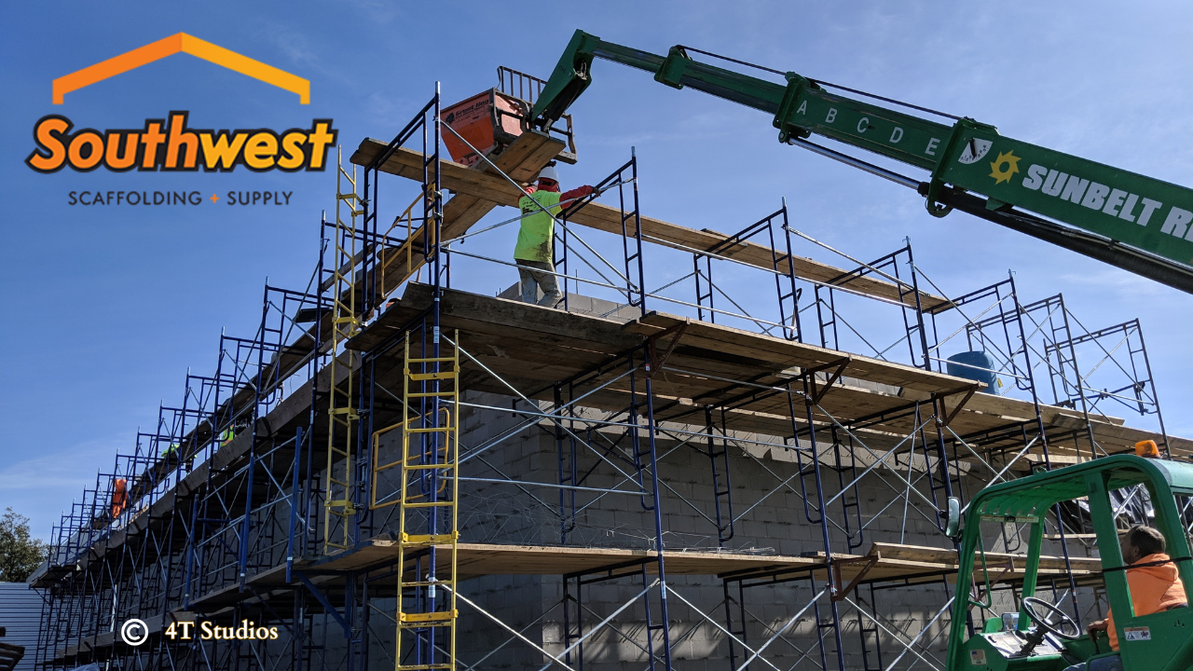
Trades Spotlight Series - Masons and Stucco
Painting is a trade that’s all about accuracy, and while Masonry and stucco are also about accuracy, more importantly, it's about size, weight, and timing.
And guess what? This is another trade where scaffolding is non-negotiable. It’s literally part of the work being performed.
? Why Masons & Stucco Crews Need Scaffolding
Painting is about finishing existing surfaces. Masonry and stucco crews are literally building them. That means:
Heavy materials (block, brick, mortar buckets, etc.)
Working in lifts (multiple levels of a wall at a time)
Continual access to the entire wall face
For these crews, scaffolding allows them to:
Stay organized with material close by
Stay level (reduce excessive climbing and descending)
Be efficient on long wall sections Move with less strain (no more climbing up and down)
? You’re NOT going to see masonry or stucco crews on a ladder. Without scaffolding, they simply can’t get the job done (and would be risking serious injury if they tried).
?️ Masonry & Stucco Always Requires Scaffolding When… …it comes to walls. Whether block, brick, or full stucco (scratch/brown/finish coats), scaffolding is needed:
For ANYTHING off the ground
Stone veneer Columns or architectural features
Commercial building and tall residential construction
? Side-note. If you ever catch someone climbing a ladder to lay block or apply stucco – smack them (figuratively speaking, we aren’t psychic and can’t be responsible for your actions).
⚠️ Things to Consider: Safety & Scaffold Setup
Since this trade takes our platforms to the MAX… setup and maintenance is crucial. As always, common sense applies. But here are a few things specific to masons and stucco crews.
✅ Proper Assembly and Brace
Frames should be plumbed, leveled, and pinned!
Cross bracing should be complete (no skipping corners)
We can’t stress enough the importance of mud sills for this trade.
? Think about how heavy every load is going on these scaffolds. Failure due to improper assembly isn’t just about someone falling. The scaffold itself can collapse – taking everyone with it.
? Decking: Secure Platforms and Planking
Platforms should be fully planked with scaffold planks.
They should be secured to the frame.
Pay special attention to how planks will be used around material staging areas.
? You may need to support humans on these scaffolds. But you’re definitely FILLING them up with materials. Make sure your planking can handle the load.
? Proper Guardrails & Toe Boards
Required any time workers are above ground level.
Material also has a way of falling off scaffolds. Guardrails and toe boards help prevent this.
? Access Points Matter Too
Frames should be built with proper access or ladder systems.
Remember, don’t ever climb the cross braces! Also- Keep access clear. (Even when materials are constantly moving in/out)
⚖️ Watch Your Load Weight
We already know masonry and stucco are heavy. Limits become more important with this trade. Including:
People
Materials (mortar boards, brick/block)
Buckets and tools
? Speaking of overloading scaffolds… this is how most fail in this industry. Add too much weight too fast & you’ll collapse your scaffold.
? Inspect Like Anything Can Change (believe me, it will)
Inspect scaffolds BEFORE starting the job. Daily.
And during the day as loads are added. Look for:
Settling
Overloaded areas
Missing/planks or damaged components
? Keep in mind materials and crews will add a lot of weight to these scaffolds. Something that was safe to climb this morning may not be safe when the first couple lifts of block have been added.
?Fun Masonry & Stucco Facts You Probably Don’t Know
American pride: Did you know most cement (stucco mix) is made in Kansas? Apparently, it’s a big thing in Wichita.
Stucco takes time: Stucco is applied in 3 coats. Each one needs time to properly dry (“kick”) before the next layer can be applied. Because of curing time, scaffolding for stucco will often stay up longer than you’d think.
Staging muscles: Masonry crews are constantly “leapfrogging” materials up and down the scaffold as the wall progresses. This keeps materials as close to the work area as possible without creating excess clutter.
Don’t forget about Mother Nature: Between heat, wind, and rain… weather affects mortar and stucco like nothing else. Scaffolding allows crews to adapt to changing conditions to protect their work.
One of the heaviest/truckiest jobs: Let’s face it. This is one of the more physically demanding jobs in the construction industry. Scaffold setup can help reduce unnecessary stress on the body.
? Last Words Of Wisdom
If painters are the artists of construction… Think of masonry and stucco as the weight lifters.
Scaffold HAS to be strong enough to support:
The materials they will add
The crew climbing on and off
The quality of work being performed
When done correctly, scaffold setup really can make or break a job.
? Next Up: Trade Spotlight: Roofers (Because when “working at height” involves an inclined surface, things get interesting.)
Recent Posts
-

Trades Spotlight - Building Maintenance
Where Access Changes Everything Building maintenance doesn’t get the spotlight very often—but it sho …Apr 4th 2026 -

Trade Spotlight: Sign Installation & Scaffolding (Safety, Setup & Best Practices)
Sign installation is one of those trades most people never think about… until something goes wrong. …Mar 30th 2026 -

Trade Spotlight: Window Installers & Scaffolding (Safety, Setup & Best Practices)
Window installation might not look like one of the riskiest trades—but don’t let that fool you. You’ …Mar 26th 2026