



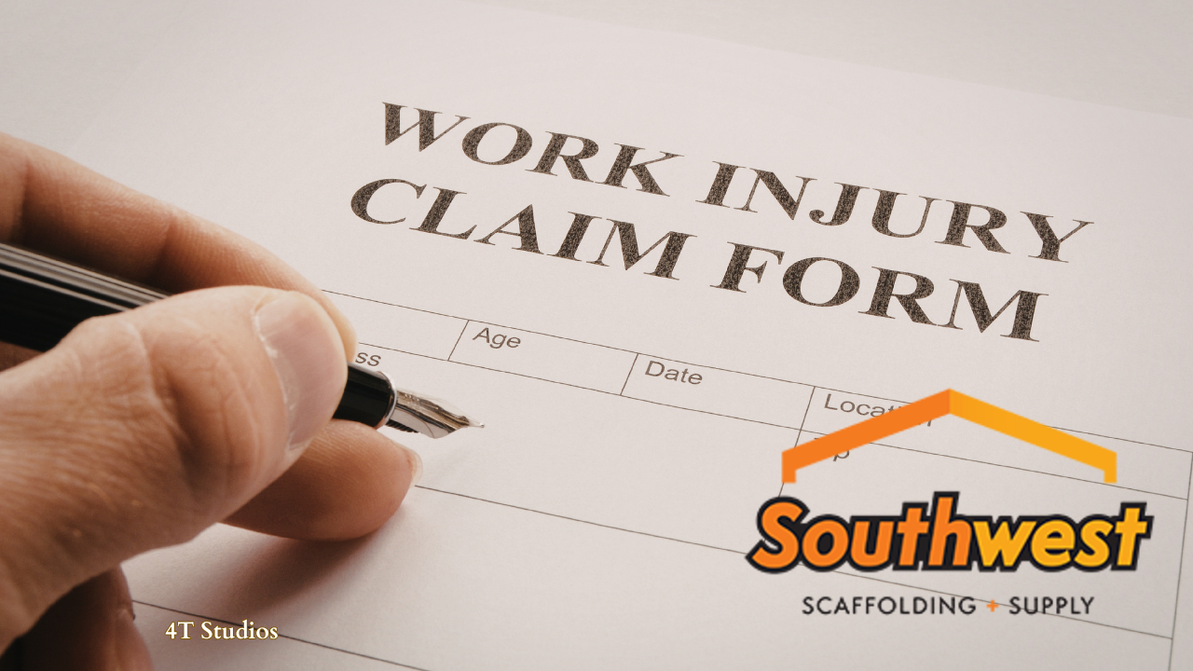
The Cost of a Workers’ Comp Claim: The Bill That Keeps Showing Up outhwest Scaffolding Risk Management Series – Part 3
A workers’ comp claim is one of those things most contractors think they understand.
Someone gets hurt.
A claim gets filed.
Insurance handles it.
That is the surface version.
The reality is a lot heavier, and it sticks around a lot longer than most people expect.
It Does Not End When the Claim Is Filed
Filing the claim is just the starting point.
From there, the impact spreads through your job and your business:
Time gets pulled away from the field
Management shifts into response mode
Crews adjust and slow down
Paperwork and follow-up stack up
And that is before you even start feeling it financially.
The Costs That Don’t Show Up on Day One
Most people think about medical bills and maybe lost wages.
That is only part of it.
Here is where it really starts to hit.
Increased insurance premiums
Claims follow you. One incident can raise your rates for years. Not months. Years.
Experience modification rate (EMR)
This number matters more than most contractors realize. A higher EMR can cost you bids, limit opportunities, and make you look like a risk before you even get in the door.
Administrative drag
Reports, communication with insurance, follow-ups, compliance. Someone in your company is spending real hours managing this instead of building.
Lost workforce stability
An injured worker is not just a number. You lose experience, rhythm, and reliability. Replacing that is never seamless.
Legal exposure
Not every claim stays simple. Disputes, complications, or extended recovery can turn into something much bigger.
Where This Connects Back to Access
A lot of workers’ comp claims start the same way falls do.
Bad access decisions.
Improvised setups
Working in positions that were never meant to be worked from
Rushing instead of resetting properly
Trying to make something work that should have been built right
This is where scaffolding is not just a convenience. It is protection.
When access is properly planned and installed, it gives you:
Controlled working conditions
Reduced fall risk
Less strain and awkward positioning
A safer, more predictable work environment
When it is rushed, it increases the chance that something goes wrong.
And when something goes wrong, the cost does not stop at the job site.
A Scenario That Hits Hard
A worker is trying to get a task done quickly.
The setup is not ideal, but it feels faster to just push through.
They lose footing. It is not a major fall, but it is enough.
Now you have:
A workers’ comp claim
Time off the job
An investigation
Higher insurance exposure
A ripple effect across your crew
And that claim is not gone next week. It follows your company.
Prevention Is the Only Predictable Cost
Most claims are not bad luck.
They come from:
Rushed decisions
Poor planning
Inadequate access
Trying to save time where it should not be saved
The cost of doing it right is controlled.
The cost of a claim is open-ended.
The Bottom Line
A workers’ comp claim is not just an incident.
It is a long-term business cost.
It affects your numbers, your reputation, your ability to win work, and how your company operates day to day.
The companies that stay ahead are not just reacting to incidents.
They are preventing them with better planning, better access, and better decisions before work even starts.
That is where real control comes from.
Coming Next
In Part 4, we are getting into something every contractor feels at some point:
The Cost of Project Delays
This is where small problems turn into big financial pressure fast. :::
Recent Posts
-

The Cost of a Workers’ Comp Claim: The Bill That Keeps Showing Up outhwest Scaffolding Risk Management Series – Part 3
A workers’ comp claim is one of those things most contractors think they understand. Someone gets hu …Apr 30th 2026 -

The Cost of a Fall in Construction: What It Really Takes From a Job Southwest Scaffolding Risk Management Series – Part 2
Falls are one of the most talked about risks in construction. They are also one of the most misunder …Apr 29th 2026 -
The Cost of Property Damage in Construction: More Than Just Repairs Southwest Scaffolding Risk Management Series – Part 1
Property damage is one of the most common issues on a job site. It is also one of the most underesti …Apr 28th 2026