


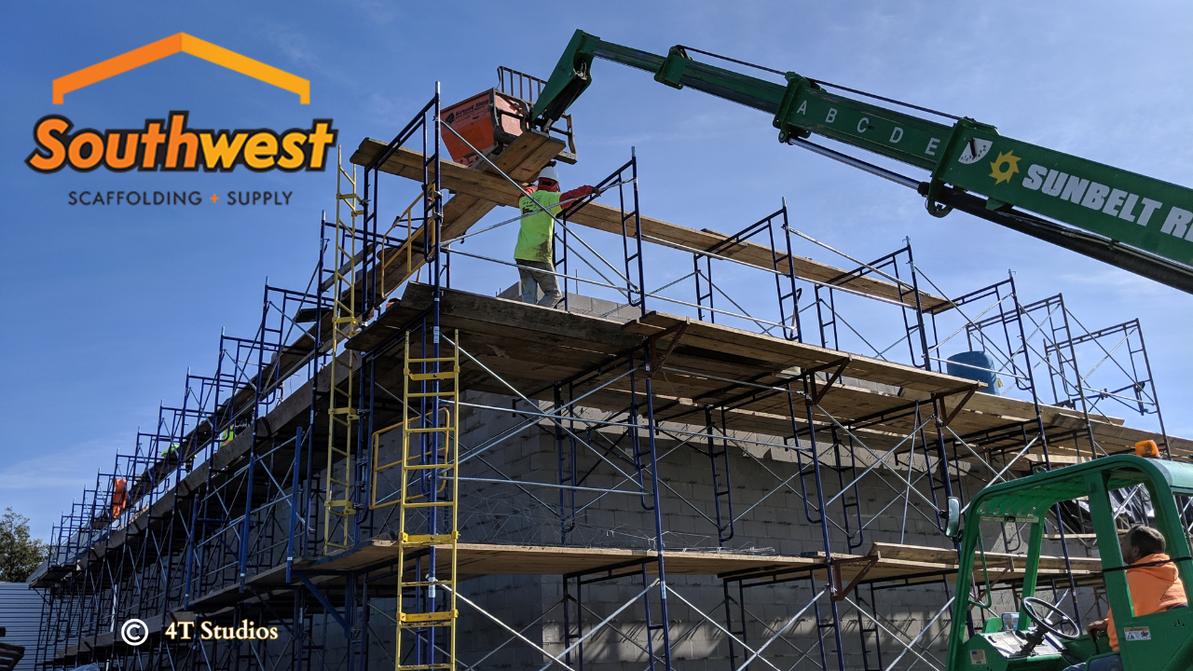
Scaffolding Safety Minute Episode 2- Tie-ins and anchoring
What’s Really Holding Your Scaffold Up?
Let me ask you something most people don’t stop and think about:
What’s actually holding your scaffold up?
Because it’s not just sitting there, minding its business.
It’s relying—completely—on proper tie-ins and anchoring to stay where it’s supposed to.
And when that part gets rushed, skipped, or done halfway?
You’re not dealing with “maybe a problem.”
You’re dealing with a collapse that just hasn’t happened yet.
The Part People Get Too Comfortable With
Tie-ins aren’t extra.
They’re not optional. They’re not “we’ll add them later.”
They’re what keep your scaffold from:
- Tipping
- Swaying
- Folding in on itself
You can build the cleanest, straightest scaffold on the jobsite—but if it’s not tied in correctly, it’s unstable.
All it takes is load, wind, or movement to expose it.
OSHA Isn’t Guessing Here
There’s a rule—and it’s not complicated:
4:1 height-to-base ratio.
That means your scaffold needs to be secured at proper intervals as it goes up.
Example: You’ve got a 20-foot scaffold?
You don’t just “feel like it’s fine.” You tie it in where it’s required—no shortcuts.
Because gravity doesn’t care how confident you are.
Not All Anchor Points Are Created Equal
This is where I see people get real loose with their decision-making.
A “tie-in” only works if what you’re tying into can actually hold.
What works:
- Structural steel
- Solid concrete (with proper anchors)
- Engineered anchor points
What doesn’t:
- Brick veneer
- Decorative elements
- Anything you hope will hold
If it’s not rated, it’s not reliable.
And if it fails, it’s taking your scaffold with it.
The Mistakes That Quietly Set You Up
Let’s call them out, because these are the ones that don’t look like a big deal—until they are:
- Skipping tie-ins because “it feels stable”
- Tying off to whatever’s closest instead of what’s correct
- Ignoring spacing requirements
- Pulling a tie to “get around something” and never putting it back
That last one?
That’s the kind of decision that sits there quietly… until the whole system shifts.
Real Talk
Scaffolds don’t always give you a warning.
They don’t creak and announce, “Hey, I’m about to fail.”
Everything looks fine. Everyone keeps working.
And then suddenly—it’s not fine.
That’s how this goes.
If You Want It Done Right
This isn’t complicated—but it does require discipline:
- Follow proper tie-in spacing. Every time.
- Use anchor points that are actually rated
- Don’t remove ties without a real plan to replace them
- Inspect consistently—not just at setup
Because once that structure starts moving, you don’t get time to rethink it.
Why This Matters
This isn’t about overbuilding.
It’s about not gambling with something that holds people up in the air.
Tie-ins are one of those things that don’t get attention when they’re done right—
But they get all the attention when they’re not.
Next Up
Episode 3: Access Points
Because how your crew gets on and off that scaffold? That’s another place people cut corners—and it shows. :::
Recent Posts
-
The History of System Scaffolding: How Non-Stop Systems Changed Job Site Efficiency
Not all scaffolding is built the same. For years, traditional scaffolding relied heavily on pipes, c …May 8th 2026 -

Risk management - The Cost of Project Delays in Construction: Where Everything Adds Up
Southwest Scaffolding Risk Management Series – Final Delays are one of the most frustrating parts of …May 6th 2026 -
The History of Scaffolding: From Ancient Systems to Modern Job Site Efficiency
Scaffolding is one of those things most people don’t think about...until they’re standing on it. But …May 5th 2026