
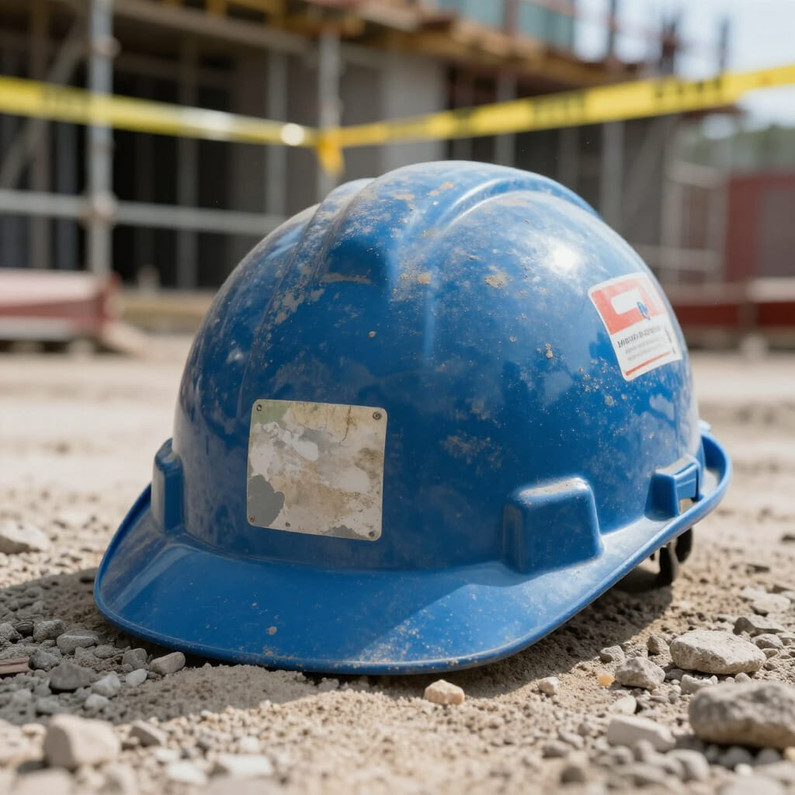
Hard Hat Safety: Check Expiration Dates Regularly
With 2026 well underway, now is the perfect time for a simple but critical safety reminder: check your hard hat light expiration date.
Hard hats are one of the most basic pieces of personal protective equipment (PPE) on a jobsite—but they are also one of the most commonly overlooked when it comes to inspection and replacement. An expired or compromised hard hat may look fine on the outside, but it may not protect you when it matters most. For complete protection, ensure your crew is also using compliant personal protection equipment.
How to Check Your Hard Hat Expiration Date
Inside the brim of every hard hat is a small circular date stamp. This marking shows the manufacture date, not the purchase date.
That distinction matters.
The lifespan of a hard hat begins at the manufacturer, not when it was bought or first worn.
Hard Hat Lifespan: What You Need to Know
- Five (5) years is the maximum lifespan for a hard hat shell under ideal conditions.
- If the hard hat is exposed to harsh weather or sunlight, particularly UV exposure, it should be replaced every 2–3 years.
- Hard hats used outdoors, especially in hot climates like Texas, often degrade faster than expected. Always consult inspection sheets to maintain site safety standards.
Temperature Exposure: Heat Matters More Than You Think
Extreme heat accelerates the breakdown of hard hat materials.
Hard hats can lose their protective integrity when:
- Stored in trucks or equipment cabs during hot weather
- Left in direct sunlight for extended periods
- Used near welding operations or other high-heat environments
Even if there is no visible damage, repeated heat exposure can weaken the shell and reduce impact resistance. If your hard hat has been consistently exposed to extreme temperatures, replacement may be necessary before the expiration date. Regular test results for safety gear often show how environmental factors impact performance.
Chemical Exposure: Damage You Can’t See
Certain chemicals can weaken a hard hat without leaving obvious signs. This is a critical consideration on jobsites where masonry chemicals are in frequent use.
Exposure to:
- Solvents
- Fuels
- Oils
- Harsh cleaning chemicals
…can compromise the hard hat material and reduce its ability to protect against impact or penetration. If a hard hat has been exposed to chemicals, it should be evaluated carefully and replaced if there is any doubt about its integrity.
Impact Damage: When in Doubt, Replace It
If something falls on your hard hat—even if there is no visible damage—the hard hat should be replaced immediately. Just as you would replace worn scaffold board replacement parts, protective gear must be kept in prime condition.
Impact can damage the internal structure of the shell in ways you cannot see, leaving you unprotected during a future incident.
Suspension System: Inspect Before Every Use
The suspension system is just as critical as the hard hat shell itself. In some cases, a high-quality fall protection harness can provide secondary safety when working at heights.
Before every use, inspect:
- The harness
- The cradle
- The headband
Any signs of:
- Cracking
- Fraying
- Brittleness
- Loss of flexibility
…require immediate replacement, even if the hard hat shell has not expired. A compromised suspension system cannot properly absorb impact energy.
Stickers, Paint, and Markers: What’s Safe (and What’s Not)
We understand—replacing a hard hat can be tough, especially when it’s covered in hard-earned stickers that represent experience and pride on the job.
Good news:
- Stickers are acceptable and do not break down the hard hat material.
However:
- Paint and permanent markers should never be used.
- Chemicals in paint and markers can weaken the shell and reduce its protective capabilities.
ANSI Standards: Make Sure Your Hard Hat Is Still Compliant
Hard hats should meet ANSI Z89.1 standards, which establish performance and testing requirements.
If your hard hat:
- Does not meet current ANSI standards
- Has outdated classifications
- Was manufactured before updated requirements
…it should be replaced to ensure compliance and proper protection. Much like ensuring scaffold guardrails meet specifications, PPE compliance is mandatory.
Jobsite Accountability: Safety Is a Shared Responsibility
Hard hat safety is not solely the responsibility of the worker. Proper base plates and stable equipment are also essential to prevent falling object hazards.
Employers and site supervisors play a critical role in jobsite safety and should:
- Verify PPE compliance
- Ensure hard hats are within their service life
- Remove expired or damaged hard hats from service
A safe jobsite requires accountability at every level.
A Simple Reminder That Can Save a Life
Hard hats are not about looking cool—they are about making sure everyone goes home safely at the end of the day. Using proper extension ladders and safe access is just as important as head protection.
If your hard hat is expired, damaged, chemically exposed, heat compromised, or no longer compliant with standards, it must be replaced. Check our FAQs for more site safety information.
At Southwest Scaffolding, safety isn’t a checkbox—it’s a responsibility we take seriously on every jobsite, every day.
Recent Posts
-
Trades Spotlight - Roofers ,Where Height, Slope, and Safety All Collide
Roofing is one of the few trades where the surface you’re standing on is part of the hazard. Add hei …Mar 23rd 2026 -
Trades Spotlight Series - Masons and Stucco
Painting is a trade that’s all about accuracy, and while Masonry and stucco are also about accuracy …Mar 18th 2026 -

Trades Spotlight -Painters
If you’ve ever watched a professional painter tackle a multi-story house or commercial building… you …Mar 17th 2026