
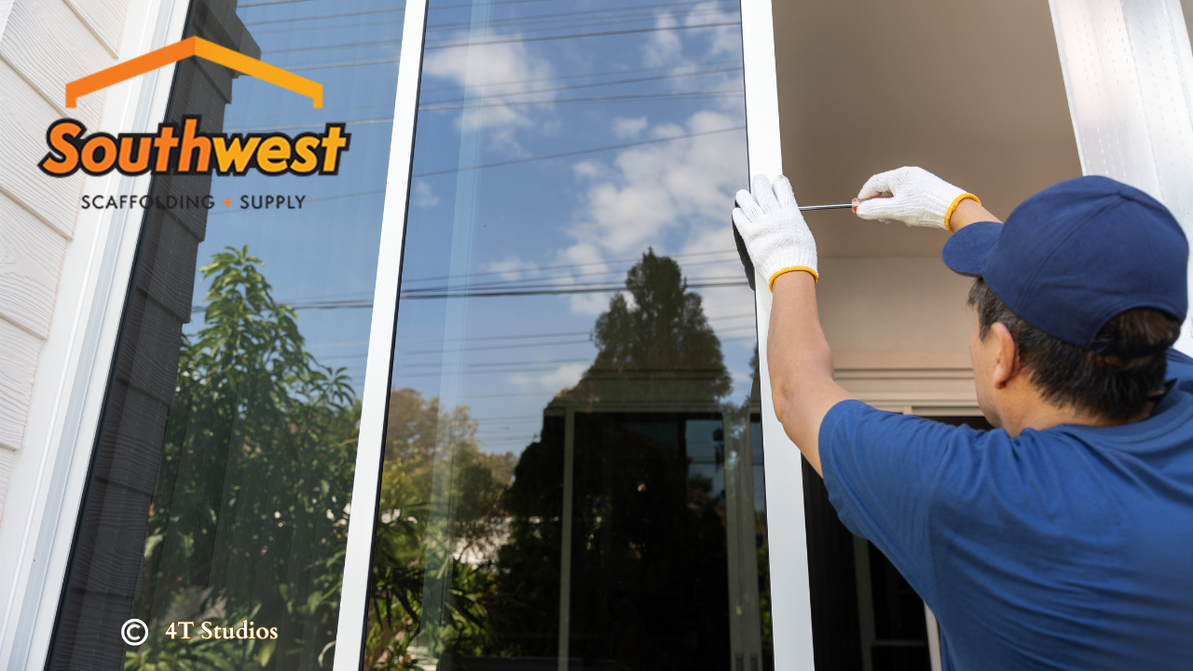
Trade Spotlight: Window Installers & Scaffolding (Safety, Setup & Best Practices)
Window installation might not look like one of the riskiest trades—but don’t let that fool you.
You’re dealing with:
- Open wall cavities
- Glass (heavy, fragile, and unforgiving)
- Heights and exterior access
- Tight tolerances where “close enough” doesn’t cut it
And that’s exactly why scaffolding plays a bigger role than most people realize.
? Why Window Installers Use Scaffolding
For window crews, scaffolding isn’t about convenience; it’s about control and accuracy.
It allows installers to:
- Work level and square with the opening
- Safely handle and position large glass units
- Access both interior and exterior sides when needed
- Maintain consistent pressure for sealing and fastening
? Try setting a large window from a ladder, and you’ll immediately understand why this matters.
?️ When Scaffolding Is the Right Choice
Scaffolding should be used when:
- Installing windows on second story or higher
- Working with large or custom units
- Performing full replacements (especially exterior removal)
- Handling commercial storefront or curtain wall systems
- Needing multiple crew members working the same opening
? If the install requires teamwork, precision, and stability, scaffolding should be part of the plan.
⚠️ Safety & Setup: What Matters Most
Window installation combines fall risk with fragile materials—so setup has to be dialed in.
✅ Correct Assembly and Bracing
- Scaffold must be plumb, level, and fully secured
- Cross bracing installed correctly, no shortcuts
- Stable base is critical, especially near foundations and landscaping
? You’re not just protecting workers—you’re protecting the product too.
? Secure Planking and Platforms
- Fully decked platforms for stable footing
- No gaps where tools—or worse, glass—can slip
- Planks secured to prevent movement during installation
? One shift in footing can mean a dropped window. That gets expensive fast.
? Guardrails Where Required
- Guardrails provide essential fall protection
- Especially important when working around open wall spaces
- Toe boards help prevent tools from falling below
? Openings + height = serious risk. Guardrails help control it.
? Safe Access Points
- Proper ladder or built-in scaffold access only
- Keep pathways clear for carrying glass safely
- Never climb while handling materials
? If access isn’t clean, installs slow down—or accidents speed up.
⚖️ Proper Load Limits
- Windows can be heavier than they look, especially double or triple-pane units
- Factor in:
- Multiple workers
- Glass units
- Tools and sealants
? Overloading a platform while handling fragile materials is a bad combination.
? Routine Inspection
- Inspect the scaffold before each shift
- Re-check after moving or adjusting platforms
- Watch for:
- Loose planks
- Unstable footing
- Obstructions in access paths
? Conditions change quickly on active jobsites—stay ahead of it.
? Industry Insights You Might Not Know
- Modern windows are heavier: Energy-efficient glass (double/triple pane) adds significant weight.
- Installation is a team effort: Larger units often require 2–4 people working in sync.
- Air sealing is critical: Proper install isn’t just about fit—it’s about preventing air and water infiltration.
- Damage risk is high: One mistake doesn’t just affect safety—it can destroy a high-dollar product instantly.
? Final Word
Window installation sits at the intersection of precision and risk.
Scaffolding helps crews:
- Stay stable
- Work accurately
- Handle materials safely
- Protect both the structure and the product
Because when you’re setting glass at height…
there’s no room for “good enough.”
Recent Posts
-

Trade Spotlight: Window Installers & Scaffolding (Safety, Setup & Best Practices)
Window installation might not look like one of the riskiest trades—but don’t let that fool you. You’ …Mar 26th 2026 -

Trades Spotlight - Roofers ,Where Height, Slope, and Safety All Collide
Roofing is one of the few trades where the surface you’re standing on is part of the hazard. Add hei …Mar 23rd 2026 -
Trades Spotlight Series - Masons and Stucco
Painting is a trade that’s all about accuracy, and while Masonry and stucco are also about accuracy …Mar 18th 2026