
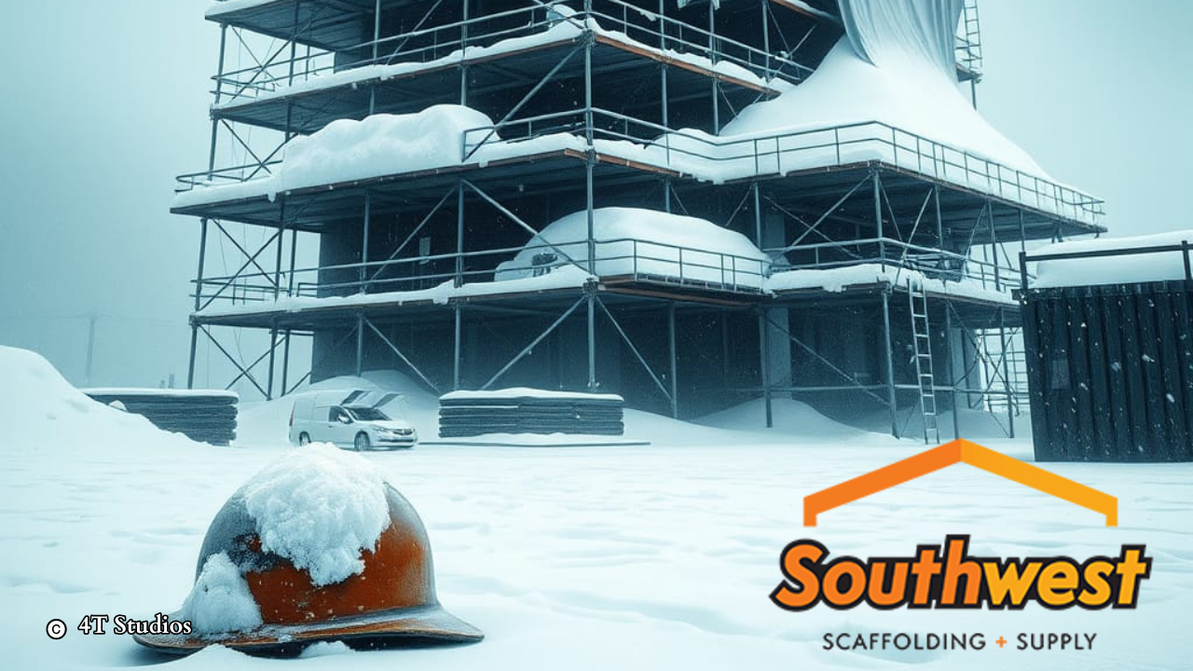
Working With Scaffolding in Winter
Winter may slow construction down, but it doesn’t stop it, and when scaffolding is involved, cold-season hazards require a higher level of attention. Ice, snow, freezing temperatures, and strong winds can turn a standard setup into a serious safety risk.
Below is a guide on how weather impacts scaffold stability and what precautions you should take before anyone steps onto a platform.
How Winter Weather Affects Scaffolding Safety and Stability
1. Ice on Platforms and Access Points
Ice buildup is the biggest cold-weather threat. Even thin layers create slip hazards. Ensuring your scaffold boards are clear of frost is critical.
- Ice adds weight to the scaffold structure.
- Ladders, planks, and guardrails can become slick.
- Freezing rain can coat couplers and locking mechanisms.
2. Snow Load Stress
Heavy snow accumulation can stress scaffold frames well beyond intended load capacity. Reviewing scaffold test results can help you understand these limits.
- Wet snow is significantly heavier than dry snow.
- Accumulated snow can hide hazards or cause planks to shift.
3. High Winds and Cold Fronts
Winter winds hit harder, especially on elevated platforms like scaffold towers.
- Wind chill affects a worker's grip and reaction time.
- Gusts make sheeting or tarps act like sails if not secured.
- Sudden weather changes can turn a setup unstable in minutes.
4. Frozen Soil and Foundation Issues
Cold ground may seem solid, but frost heave can cause shifts in base plates and screw jacks.
- Shifts in leveling jacks
- Uneven settling
- Misalignment of vertical frames
Precautions to Take During Winter Weather
1. Conduct Frequent Inspections
- Check platforms in the morning for ice and snow.
- Re-inspect after lunchtime when temperatures shift.
- Look closely at locking devices—ice can prevent full lock-in.
2. Remove Ice and Snow Properly
- Use plastic tools to prevent damage to planks or metal.
- Never use salt—it corrodes scaffolding.
3. Secure Windbreaks and Tarps
If you’re enclosing ring lock scaffolding, tie off sheeting at every point.
4. Monitor Weather Constantly
- Wind forecasts should be checked daily.
- Delay work if freezing rain or heavy snow is on the way.
5. Protect the Base
- Lay down mudsills on non-frozen stable ground.
- Avoid building directly on snowpack.
6. Keep Workers Warm and Alert
Ensure all scaffold guardrails are in place as cold can impair worker balance.
7. Train Crews on Winter Hazards
Proper use of extension ladders in icy conditions should be a training priority.
Southwest Scaffolding provides high-quality scaffolding sets built to perform safely all year long. Make sure every scaffold on your site is winter-ready by using proper scaffolding accessories.
Recent Posts
-

Trades Spotlight - Building Maintenance
Where Access Changes Everything Building maintenance doesn’t get the spotlight very often—but it sho …Apr 4th 2026 -

Trade Spotlight: Sign Installation & Scaffolding (Safety, Setup & Best Practices)
Sign installation is one of those trades most people never think about… until something goes wrong. …Mar 30th 2026 -

Trade Spotlight: Window Installers & Scaffolding (Safety, Setup & Best Practices)
Window installation might not look like one of the riskiest trades—but don’t let that fool you. You’ …Mar 26th 2026