
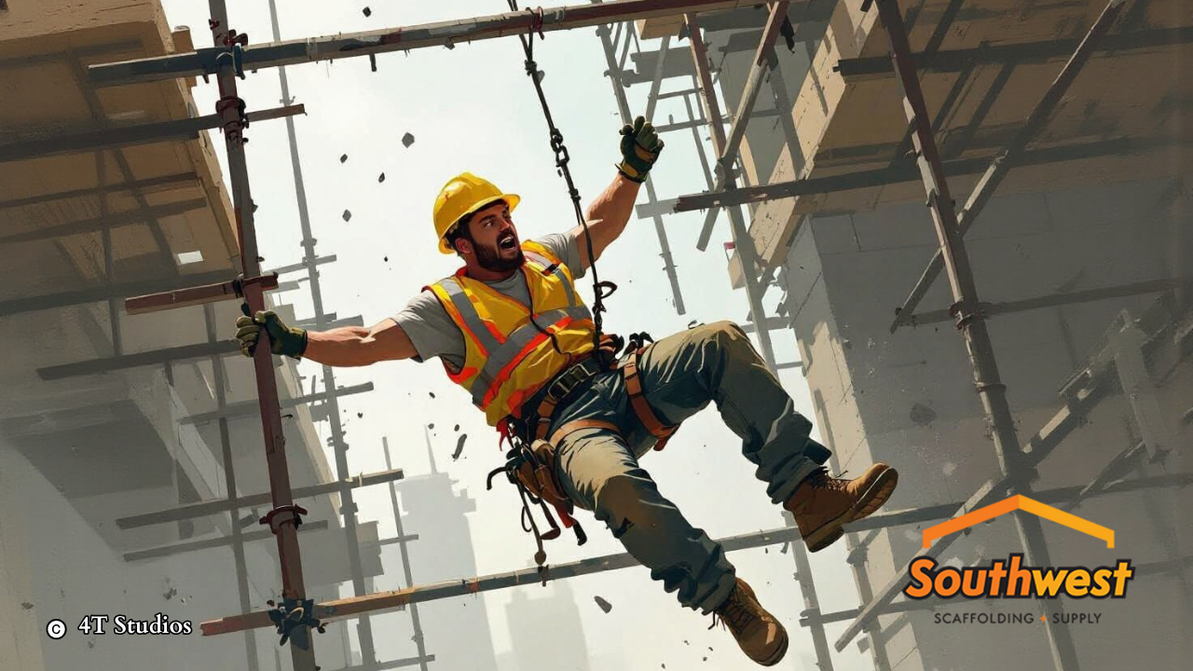
Why Scaffolding Continues to Rank Among OSHA’s Top Violations
Scaffolding has consistently landed on OSHA’s Top 10 Most Frequently Cited Violations list for at least 25 years—going all the way back to the turn of the century. Prior to 2011, scaffolding violations were consistently ranked #1. Since 2016, scaffolding has remained in the Top 5, and as of 2025, it still ranks #7.
That kind of longevity on the list begs the question: why hasn’t this problem gone away?
The short answer is simple:
Scaffolding is often treated as temporary, when in reality it is a critical structure supporting lives. When it’s rushed, modified in the field, or erected without proper training and oversight, violations (and injuries) follow. Using professional-grade scaffolding sets ensures structural integrity from the start.
Below are the most common reasons scaffolding continues to rack up OSHA citations—and how to prevent them.
Common Reasons for Scaffolding Violations
1. Lack of Fall Protection
Falls remain the leading cause of serious injuries and fatalities on construction sites, and scaffolding is no exception.
Common violations include:
-
Missing or incomplete guardrail systems
-
No midrails or toe boards
-
Failure to provide personal fall arrest systems where required
-
Workers removing guardrails for “just a minute” and not reinstalling them
OSHA requires fall protection at heights of 10 feet or more on supported scaffolds. Guardrails are the primary method, but in some situations, personal fall arrest systems are required.
Prevention tip:
Never allow work to proceed on a scaffold that does not have a complete, compliant fall protection system in place—no exceptions, no shortcuts.
2. Inadequate or Improper Planking
Planking issues are another major source of violations and accidents.
Common problems include:
-
Using cracked, split, or weather-damaged planks
-
Planks that are too narrow or not scaffold-grade
-
Gaps between planks that exceed allowable limits
-
Overhanging or unsecured planks that can shift
Scaffold planks must be designed to support the intended load, fully deck the platform, and be installed according to manufacturer and OSHA requirements. Quality scaffold boards are essential for meeting these standards.
Prevention tip:
Inspect planks daily. If a plank looks questionable, it doesn’t belong on the scaffold—period.
3. Structural Instability and Overloading
Scaffolds must be capable of supporting their own weight plus at least four times the intended load. Violations occur when:
-
Scaffolds are not properly braced or tied in
-
Base plates or mud sills are missing or inadequate
-
Uneven or unstable ground is ignored
-
Materials are stockpiled beyond design limits
Structural instability is especially dangerous because failure can be sudden and catastrophic. Always verify the foundation with base plates and screw jacks.
Prevention tip:
Ensure scaffolds are erected according to engineered plans or manufacturer specifications and tied in at the proper intervals.
4. Improper Access to Scaffold Platforms
One of the most common—and most preventable—violations is improper access.
Examples include:
-
Workers climbing cross braces
-
No ladder or stair system provided
-
Access points blocked by materials or debris
OSHA clearly states that cross braces are not a means of access. Safe passage requires dedicated ladders or stairways.
Prevention tip:
Provide ladders, stair towers, or built-in access systems designed specifically for scaffold use—and keep them clear at all times.
Training Requirements: Where Many Jobsites Fall Short
A major reason these violations persist is lack of proper training.
OSHA requires that:
-
Workers who use scaffolding be trained by a qualified person
-
Training must cover:
-
Electrical hazards
-
Fall hazards
-
Proper use and load capacities
-
Correct handling of materials on scaffolds
-
-
Retraining is required if:
-
Worksite conditions change
-
New equipment is introduced
-
Unsafe behavior indicates training deficiencies
-
Erectors and dismantlers require additional specialized training due to the increased risk involved. Reviewing scaffold test results can be a helpful part of this training.
Bottom line: If your crew doesn’t understand scaffolding, no amount of equipment will make the job safe.
Scaffold Inspection: Your First Line of Defense
OSHA requires scaffolds to be inspected by a competent person:
-
Before each work shift
-
After any alteration
-
After weather events, such as high winds or heavy rain
A proper inspection should include:
-
Foundation and base support
-
Bracing, ties, and anchorage
-
Planking condition and placement
-
Guardrails and toe boards
-
Access points
-
Load conditions
-
Signs of damage or unauthorized modifications
Prevention tip:
If something changes—materials added, sections removed, weather shifts—inspect again.
How to Keep Your Project Off OSHA’s List
Scaffolding violations are not unavoidable. They happen when safety is treated as optional instead of essential.
To reduce risk:
-
Hire a professional scaffolding company
-
Follow engineered or manufacturer-approved designs
-
Train workers properly—and retrain when needed
-
Assign a competent person to oversee scaffolding daily
-
Never rush erection, modification, or dismantling
-
Stop work when conditions are unsafe
At Southwest Scaffolding, we believe scaffolding should support productivity without compromising safety. When scaffolding is done right, it protects workers, keeps projects on schedule, and keeps contractors out of OSHA’s Top 10.
Recent Posts
-
Why Checking Your Hard Hat Could Save Your Life
With 2026 well underway, now is the perfect time for a simple but critical safety reminder: check yo …Jan 12th 2026 -

Cold-Weather Scaffolding: When Winter Changes the Rules
Although Texas—home to Southwest Scaffolding’s headquarters—hasn’t experienced much of a winter this …Jan 6th 2026 -

What’s Ahead for Construction in 2026 — What Every Contractor & Scaffolding Pros Needs to Know
As we head into 2026, the construction industry is at a pivotal moment — shaped by technology, labor …Dec 31st 2025