
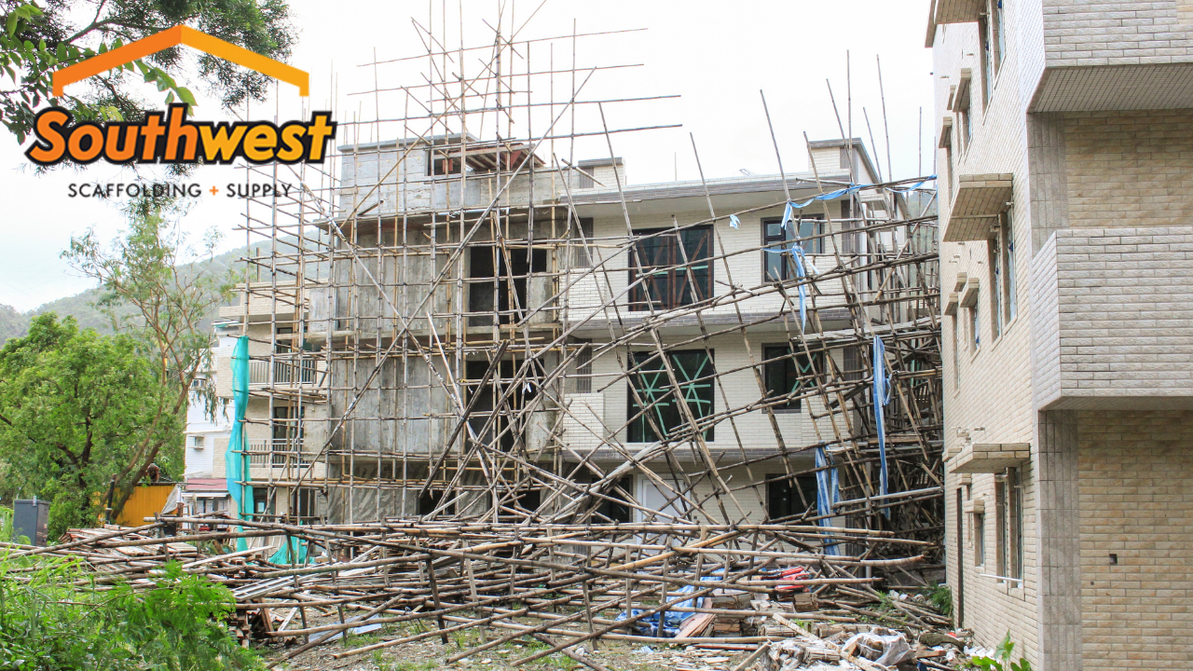
Scaffolding Safety: What Happens When Installed Wrong
Lessons Learned (Without Naming Names)
Scaffolding is one of those things most people don’t think about—until something goes wrong. When it’s installed correctly, it fades into the background and simply does its job. When it’s installed incorrectly, the consequences can be immediate, expensive, and in some cases, life‑threatening.
At Southwest Scaffolding, we’ve seen firsthand what happens when shortcuts are taken. This article isn’t about calling anyone out. It’s about learning from real‑world situations so contractors, owners, and facility managers can avoid repeating the same mistakes.
Common Mistakes We See with Improper Scaffolding Installation
Improper scaffolding isn’t always dramatic at first glance. Often, it looks fine—until weight, weather, or time exposes the problem.
1. Inadequate Base and Foundation
One of the most common issues is scaffolding erected on unstable or uneven ground without proper base plates, mud sills, or leveling.
What happens:
- Settling or shifting over time
- Leaning towers
- Sudden collapse after rain or soil movement
A solid foundation isn’t optional—it’s the starting point for everything above it.
2. Missing or Improper Bracing
Bracing is often skipped or reduced to “save time.” This is one of the fastest ways to compromise the entire structure.
What happens:
- Excessive sway
- Reduced load capacity
- Failure under normal working conditions
If the scaffold moves when someone climbs it, that’s already a warning sign. Proper cross braces are essential for stability.
3. Overloading the Scaffold
Scaffolding is engineered for specific loads, including workers, tools, and materials. When those limits are ignored, problems follow quickly.
What happens:
- Bent frames or planks
- Joint and connection failures
- Progressive collapse
Overloading doesn’t always cause an immediate failure—but it weakens the system until it does. Always check scaffold test results to understand capacity.
4. Improper Access Points
Ladders, stair towers, and access points are frequently installed incorrectly or not installed at all.
What happens:
- Workers climbing frames instead of using proper access
- Increased fall risk
- OSHA citations and jobsite shutdowns
Safe access isn’t a convenience—it’s a requirement. Utilizing extension ladders or internal stairs is the industry standard.
5. Lack of Guardrails and Fall Protection
Missing guardrails, toe boards, or improperly installed fall protection is still one of the most cited scaffolding violations.
What happens:
- Increased fall hazards
- Dropped tools and materials
- Serious injuries or fatalities
If someone can fall from it, it needs protection. Reliable scaffold guardrails and personal fall protection harnesses are non-negotiable.
The Hidden Costs of Improper Scaffolding
When scaffolding is installed incorrectly, the fallout goes far beyond the structure itself.
- Job delays while issues are corrected
- Costly rework or complete teardown and rebuild
- OSHA fines and violations
- Insurance claims and increased premiums
- Damaged reputations with owners and GCs
In many cases, the “cheaper” option ends up being the most expensive decision on the job.
Lessons Learned (Without Naming Names)
Over the years, we’ve seen the same patterns repeat:
- Temporary setups becoming long‑term installations
- Untrained crews modifying scaffolding in the field
- Projects outgrowing the original scaffold design
- No one assigned responsibility for inspections
The common thread? Scaffolding treated as an afterthought instead of a critical system.
How Professional Installation Prevents Disasters
Professional scaffolding installation isn’t just about putting pieces together—it’s about planning, engineering, and accountability.
Engineered for the Project
A professional provider evaluates:
- Site conditions
- Load requirements
- Duration of use
- Access and fall protection needs
The scaffold is designed for your job, not a generic scenario. Whether you need scaffold towers or complex setups, engineering matters.
Trained, Experienced Crews
Professional crews:
- Follow OSHA standards
- Install proper bracing, access, and protection
- Understand how changes affect the system
They know what shortcuts look like—and why they shouldn’t be taken.
Ongoing Inspections and Support
Scaffolding isn’t a “set it and forget it” system.
Professional services include:
- Regular inspections
- Adjustments as the project evolves
- Fast response if conditions change
This keeps crews safe and projects moving.
The Bottom Line
Incorrectly installed scaffolding puts people, projects, and businesses at risk. The lessons are clear: shortcuts cost more than they save.
Professional scaffolding installation helps prevent accidents, avoid delays, and protect everyone on the jobsite.
If scaffolding is part of your project, it deserves the same level of planning and professionalism as every other critical system.
Southwest Scaffolding partners with contractors, restoration companies, and facility managers to provide safe, compliant, professionally installed scaffolding solutions.
Because the best projects are the ones where everyone goes home safely.
Recent Posts
-
Trades Spotlight - Roofers ,Where Height, Slope, and Safety All Collide
Roofing is one of the few trades where the surface you’re standing on is part of the hazard. Add hei …Mar 23rd 2026 -
Trades Spotlight Series - Masons and Stucco
Painting is a trade that’s all about accuracy, and while Masonry and stucco are also about accuracy …Mar 18th 2026 -

Trades Spotlight -Painters
If you’ve ever watched a professional painter tackle a multi-story house or commercial building… you …Mar 17th 2026