
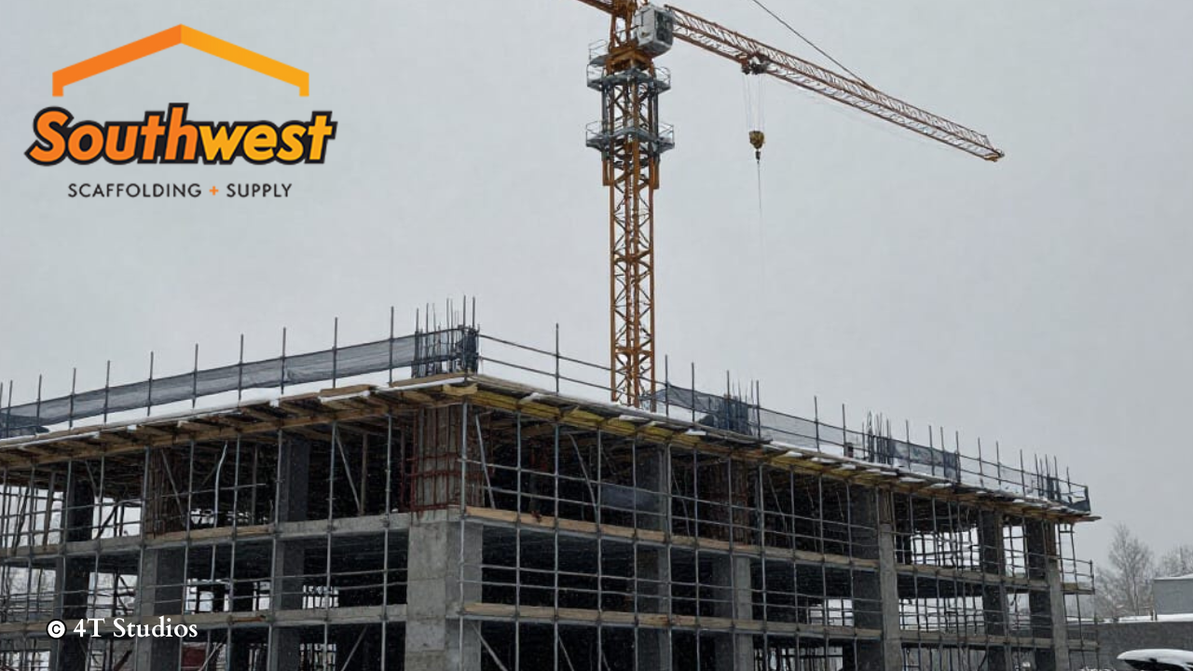
Cold-Weather Scaffolding: When Winter Changes the Rules
Although Texas—home to Southwest Scaffolding’s headquarters—hasn’t experienced much of a winter this year, cold-weather scaffolding safety remains a top priority for our team. Why? Because our readers, partners, and clients span many regions, and winter conditions can drastically change how scaffolding performs.
Whether you’re working through a Midwest freeze, a Northeast snowstorm, or an unexpected cold snap in the South, winter changes the rules. Frozen ground, ice buildup, and material brittleness all introduce risks that demand extra planning, inspection, and experience.
Frozen Ground: A Hidden Foundation Risk
One of the most overlooked winter hazards is frozen or thawing ground.
When soil freezes, it may appear solid—but as temperatures fluctuate, thawing can cause uneven settling beneath scaffold base plates and mudsills. This movement can compromise the scaffold’s stability, even if it was properly erected initially.
Cold-weather best practices include:
- Verifying soil conditions before installation
- Using appropriate mudsills or engineered foundations
- Re-inspecting footing after temperature swings or precipitation
- Never assuming frozen ground equals stable ground
At Southwest Scaffolding, winter installations always include footing evaluations specific to seasonal conditions. Properly utilizing screw jacks is essential for maintaining a level and safe structure during soil shifts.
Ice and Snow Buildup: Slips, Loads, and Falling Hazards
Ice and snow don’t just make surfaces slippery—they add unexpected weight and create falling-object hazards.
Common winter-related issues include:
- Ice accumulation on platforms and guardrails
- Snow loading increasing stress on scaffold components
- Icicles forming overhead, posing risks to workers below
- Reduced traction on access points like ladders and stair towers
Routine snow and ice removal, combined with slip-resistant scaffold boards and controlled access protocols, are essential for keeping crews safe.
Material Brittleness: When Cold Weakens Equipment
Cold temperatures can affect scaffolding materials more than many realize.
Steel components may become more brittle, increasing the risk of cracking under stress. Planks, couplers, and pins can also behave differently in freezing conditions, especially if they’ve already experienced wear. Reviewing scaffold test results can provide insight into how equipment performs under extreme stress.
That’s why winter scaffolding demands:
- More frequent inspections
- Removal of damaged components using quality replacement parts
- Strict adherence to manufacturer specifications
- Experienced installers who know what early warning signs look like
Professional scaffolding crews understand how cold impacts materials—and when it’s time to replace, not reuse. This is particularly important for modular systems like ring lock scaffolding where component integrity is key.
Wind, Visibility, and Worker Exposure
Winter often brings higher winds and reduced visibility, both of which increase fall risks. Add bulky cold-weather PPE and fatigued workers to the mix, and small mistakes can become serious incidents. Utilizing high-quality personal protection equipment is a non-negotiable requirement for winter site safety.
Mitigation strategies include:
- Wind monitoring and shutdown thresholds
- Enhanced tie-ins and cross braces for stability
- Adjusted work schedules to avoid extreme conditions
- Clear communication and jobsite-specific safety plans
Why Professional Installation Matters Even More in Winter
Cold-weather scaffolding is not the time for shortcuts.
What works in mild conditions may fail when temperatures drop. Professional installation ensures scaffolding is designed, erected, and maintained with winter variables in mind—protecting workers, schedules, and budgets. Specialized setups like non-stop scaffolding require expert oversight to ensure safety in harsh climates.
At Southwest Scaffolding, safety isn’t seasonal. Whether it’s January in Minnesota or February in Texas, our standards stay the same. We provide complete scaffolding sets that are engineered for reliability in any environment.
Final Thoughts
Winter doesn’t just make jobs harder—it makes them different. Frozen ground, ice buildup, and material brittleness all demand increased attention and expertise. For more information, you can browse our FAQs to learn more about maintaining your equipment year-round.
Even in regions experiencing a mild winter, it only takes one cold snap to expose weaknesses in planning or installation. That’s why Southwest Scaffolding remains focused on cold-weather safety—no matter the forecast.
Recent Posts
-

Trade Spotlight: Sign Installation & Scaffolding (Safety, Setup & Best Practices)
Sign installation is one of those trades most people never think about… until something goes wrong. …Mar 30th 2026 -
Trade Spotlight: Window Installers & Scaffolding (Safety, Setup & Best Practices)
Window installation might not look like one of the riskiest trades—but don’t let that fool you. You’ …Mar 26th 2026 -
Trades Spotlight - Roofers ,Where Height, Slope, and Safety All Collide
Roofing is one of the few trades where the surface you’re standing on is part of the hazard. Add hei …Mar 23rd 2026